
Pakistan’s role in Afghan jihad and Taliban’s hostile policy
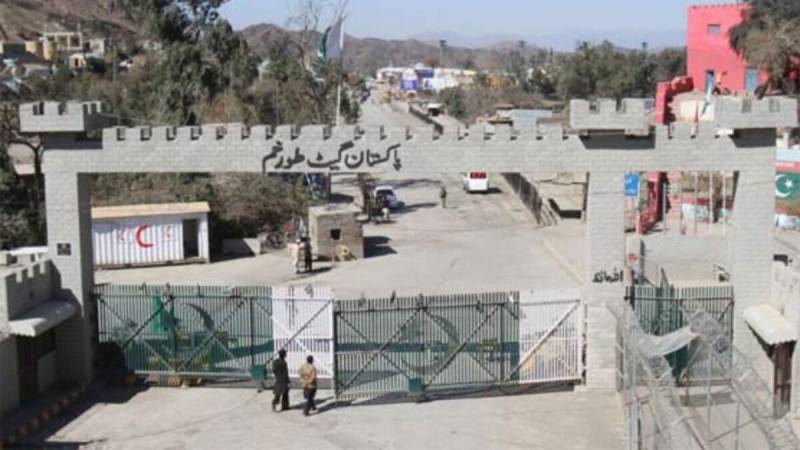

History is the witness: when the entire world turned its back on Afghanistan including those like India who claimed to be their friends, Pakistan was the only neighbour that did not leave them stranded. Between December 1979 and February 1989, during the Soviet invasion and occupation, an estimated 1.8 million Afghans lost their lives, including nearly 300,000 children. Throughout that period and in the decades that followed, Pakistan kept its doors open for over five million Afghan refugees. We didn’t just provide them with shelter and safety; we gave them access to education, healthcare, livelihoods and extensive humanitarian support.
Many of these refugees built deep social and economic roots in Pakistan. So much so, that when the time eventually came for them to return home, many families were visibly emotional as they bid farewell to the country that had become their second home. Beyond this humanitarian effort, Pakistan played a decisive role in supporting the Afghan resistance, which ultimately forced the (erstwhile) Soviet Union to withdraw its forces.
But what has Pakistan received in return? We have faced attacks on our security forces, a surge in terrorism on our soil backed by India, aggressive posturing, hateful rhetoric and the reality of banned terrorist groups finding safe havens across the border. The great irony is that India, which for years labelled the Taliban as terrorists, abruptly shifted its policy after the Taliban returned to power in August 2021. This new policy is clearly driven by an anti-Pakistan agenda. New Delhi has not only restored diplomatic ties with the interim Taliban government but is actively strengthening them, a development that does not bode well for regional peace. From Baluchistan to Karachi, the nexus between Israel, India and Afghanistan, along with India’s proxy war against Pakistan, has been completely exposed.
Since the end of 2024, Pakistan has seen a horrific spike in terrorist activities, with 2025 and the current year, 2026, proving to be particularly bloody. It is deeply disappointing that the Taliban government is now focused on building defence ties with the very country whose military interference once brought immense suffering to the Afghan people.
This raises a painful question: why has Afghanistan’s attitude changed so drastically toward the one country that sheltered millions of its people and stood by it during its darkest hours? Despite Islamabad’s repeated concerns, Afghan authorities have refused to distance themselves from terrorist groups or take any real action to dismantle their networks. This remains the case even as Pakistan provides evidence on global platforms showing that foreign powers, specifically India and Israel—are using Afghan soil to destabilize Pakistan through terrorism. The Taliban interim government has failed to live up to the Doha Agreement. They have not established a government that truly represents all people, nor have they managed to protect the basic rights of women. Despite Pakistan providing political, diplomatic and humanitarian support for over four decades, the Afghan authorities have consistently ignored our security concerns and turned down multiple offers to cooperate on stopping cross border terrorism.
According to reports from the United Nations and other international bodies, Afghanistan has once again become a sanctuary for militants. Groups active there include Al Qaeda, ISIS Khorasan, the Islamic Movement of Uzbekistan, the East Turkestan Islamic Movement, the TTP and the BLA. A Russian report even suggests there are 23 different terrorist organizations operating in the country. Pakistan also has evidence that some of these groups receive financial and logistical help from foreign actors, though the countries involved naturally deny these claims. Many of these militant groups are openly recruiting, spreading their ideology and planning attacks on Afghan soil. We have seen them target mosques, markets and funerals and they have even started using modern technology like drones.
The real tragedy is that the very individuals and groups who found refuge in Pakistan for decades using our schools, hospitals and businesses, are now using Afghan soil against us under the protection of their own government. The TTP currently enjoys backing from influential Taliban factions and foreign elements and their ranks have now been joined by former Taliban fighters and members of the old Afghan security forces.
It is worth remembering that during Mullah Omar’s rule from 1996 to 2001, Pakistan-Afghanistan relations were at their peak and the western border remained relatively peaceful and secure. At the time, India was one of the Taliban’s fiercest opponents because of their religious and ideological policies. The relationship deteriorated after the 2001 US-led invasion and the rise of the Western-backed government under Hamid Karzai, when India emerged as a major strategic partner for Kabul. Using its diplomatic missions and intelligence networks in Afghanistan and Iran, India fuelled activities against Pakistan and the Taliban. This was also when the TTP began regrouping in the tribal areas and parts of Balochistan. Throughout the two-decade war, the United States blamed Pakistan for Afghanistan’s instability while, according to the author, pursuing policies that weakened Pakistan. Even after the August 2021 withdrawal, the US continued to blame Pakistan to deflect from its own political and military failures.
To uproot the cancer of terrorism, Pakistan must move beyond reacting to incidents and make counterterrorism a permanent pillar of its national security policy. Terrorist attacks should be met with immediate action to destroy their hideouts, training grounds and support networks, as no state has a higher duty than protecting its sovereignty and citizens. It is unfortunate that despite decades of political, diplomatic and humanitarian support for Afghanistan, Pakistan’s security concerns have received so little regard. Lasting peace and improved relations are possible only if both countries base their ties on mutual respect, each other’s security and a firm commitment to eliminating terrorism.