
Senator Aon Abbas slams govt for denying Imran Khan meeting with family, lawyers
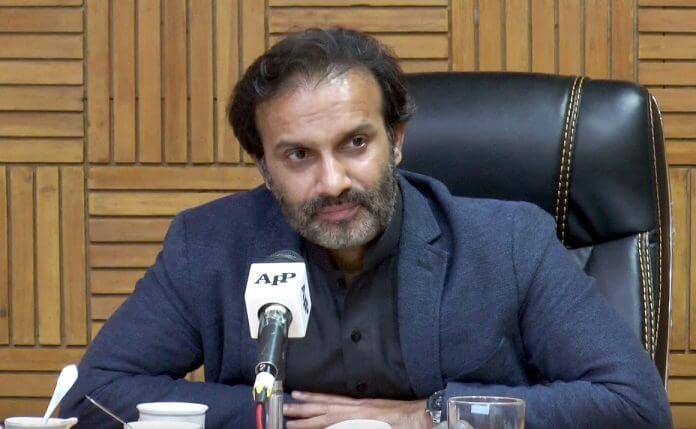

A tense Senate session on Monday witnessed sharp criticism from Senator Aon Abbas, who accused state institutions of denying basic rights to the jailed former prime minister Imran Khan and failing to address deepening economic and governance challenges.
Speaking during the ongoing session, Aon Abbas said the PTI founder had not been allowed a meeting with his family or lawyers for more than a month and a half, despite being detained for over 800 days. He claimed the system appeared “afraid of a single prisoner,” questioning the state’s approach to political incarceration.
He also drew attention to the case of Noreen Niazi, whose 73-year-old brother is imprisoned. Abbas alleged that the elderly man was being mistreated, “soaked with cold water outside the jail in bitter weather,” calling the practice inhumane and unacceptable.
In a pointed reference to past controversies, Aon Abbas asked who had first leaked the story of Ajmal Kasab, and who had claimed he lived in Pathankot — remarks aimed at highlighting what he described as inconsistent national narratives.
He also referenced former Prime Minister Nawaz Sharif’s recent remarks that those who “brought Imran Khan” should now be held accountable. “If accountability is to be done, then start this work from the beginning,” Abbas said.
Turning to the economy, the senator warned that corruption amounting to 3.5 percent of GDP was now openly visible, while inflation continued to crush households. He claimed that: Flour prices in Punjab have surged to Rs 4,500 per 20kg, sugar has reached Rs 250 per kg, and that many of the owners of sugar mills “are sitting in Parliament.”
Abbas cautioned that if Punjab restricted the supply of wheat, other provinces could retaliate by limiting gas supplies, potentially triggering inter-provincial tensions.
Aon Abbas argued that if the country wished to move forward, the PTI founder must be allowed regular meetings with his family and legal team. He rejected the notion that the former premier had any intention of fleeing Pakistan. “If he had to leave the country, he would have done so in the first month,” he said. “Keep the founder of PTI in jail for a hundred years — he will still remain silent.”
The Senate is expected to continue its deliberations amid growing political polarization and public frustration over inflation, governance failures, and human rights concerns.
Speaking during the debate, Barrister Gohar said the country’s governance structure had reached a stage where “corruption cannot end in Pakistan unless a clear system of reward and punishment is enforced.” He criticized the practice of awarding billion-rupee contracts to individuals who “have neither the ability nor the team,” warning that such decisions were driving the country deeper into financial crisis.
Referring to the energy sector, Gohar noted that the Power Division’s circular debt has climbed to Rs 10 billion, and questioned the government’s abrupt policy shifts. “Earlier, the government encouraged solar energy; now it is discouraging it. These contradictions are destroying investor confidence,” he warned.
He also addressed rising taxation pressures under IMF conditions, stating that the government was “wringing only those already in the tax net,” while failing to broaden the base. Smuggling and inefficiencies in customs, he said, were inflicting further losses on the economy.
Criticizing the Special Investment Facilitation Council (SIFC), Barrister Gohar said it had initially promised $60 billion in investment, then revised its target to $1 billion, and has now “scaled down its claims even further.” The world, he noted, repeatedly flags corruption as a threat to Pakistan’s survival, yet structural reforms remain elusive.
The session also heard concerns from Senator Dinesh Kumar, who revealed that Gulf states have halted or severely restricted visas for Pakistani citizens, causing humiliation and major travel barriers. He urged the Interior Ministry and Pakistani missions abroad to take up the issue immediately.
On aviation, Senator Tariq Fazal Chaudhry informed the House that Pakistan is currently operating only two ATR aircraft, with passenger numbers dropping by 41 percent. He confirmed that PIA is undergoing a re-privatization process, and said the concerns raised by senators — particularly those relating to Quetta — would be conveyed directly to the airline’s CEO.
The Senate’s discussions highlighted deepening public worries: from mismanagement in the energy sector and shrinking airline operations to deteriorating international mobility for Pakistanis. Barrister Gohar’s address, in particular, underscored the perception that systemic corruption and policy inconsistency remain foremost threats to economic stability.
The House is expected to continue its deliberations as calls grow louder for structural reforms and coherent policymaking.