
Power Without the People: Why Pakistan's Political Elite Continues to Resist Genuine Devolution
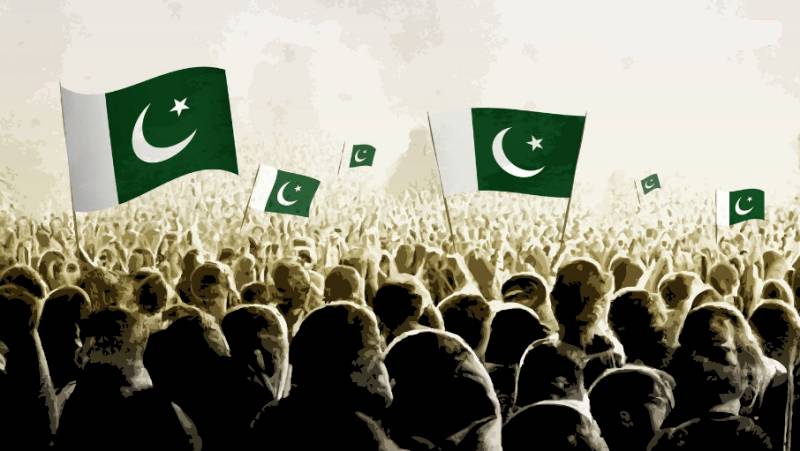

For more than seven decades, Pakistan has experimented with different constitutional arrangements, political systems, and democratic transitions. Yet one promise has remained largely unfulfilled: the meaningful devolution of political and administrative power to the grassroots. Despite constitutional guarantees, repeated commitments, and growing public demand for efficient governance, local governments remain among the weakest institutions in Pakistan. Successive governments led by PML-N, PPP, PTI, JUI, and several regional parties have publicly supported decentralisation while simultaneously delaying or weakening local government structures once they assumed power. Pakistan's major political parties are reluctant to empower the people they claim to represent.
Devolution redistributes authority, financial resources, and administrative control away from provincial capitals and influential politicians toward locally elected representatives. Such a shift naturally reduces the concentration of power enjoyed by provincial governments and political elites. For parties accustomed to centralised decision-making, this represents a high political cost.
The 18th Constitutional Amendment, passed in 2010, was widely celebrated as a landmark achievement in Pakistan's democratic evolution. It transferred numerous subjects from the federal government to the provinces, strengthening provincial autonomy. However, the process largely stopped there. Instead of passing authority further down to districts, tehsils, and union councils, many provincial governments effectively became miniature centralised governments themselves. Islamabad surrendered authority to provincial capitals; provincial capitals became increasingly reluctant to share that authority with local communities.
One of the principal reasons behind resistance to local governments is political control over development funds. Members of provincial and national assemblies have traditionally exercised considerable influence over public development projects. Roads, schools, hospitals, drainage systems, and water supply schemes frequently become political instruments through which elected legislators strengthen electoral support. A genuinely empowered local government system would transfer many of these responsibilities to mayors, district councils, and union councils, reducing legislators' direct influence over resource allocation.
Political patronage remains another powerful factor. Pakistan's electoral politics continues to depend heavily on personalised networks rather than strong institutional governance. Constituents often approach legislators not only for legislation but also for individual administrative matters, including transfers, employment, utility connections, licenses, and local infrastructure. Such dependence enhances the political influence of parliamentarians. Strong local governments would shift much of this interaction toward locally elected representatives, thereby reducing the political leverage enjoyed by provincial and national politicians.
Financial considerations further explain the reluctance toward decentralisation. Local governments require constitutionally protected financial transfers, independent taxation mechanisms, and transparent budgeting systems. Many provincial governments remain unwilling to surrender financial discretion because centralised control over public finances enables greater political bargaining and administrative influence. Control over budgets often translates into political survival.
Institutional rivalry also contributes to the problem. Provincial bureaucracies frequently resist extensive decentralisation because it reduces administrative authority. Senior civil servants traditionally exercise substantial control over district administration. Strong elected local governments inevitably require bureaucratic accountability to local representatives, creating institutional tensions between elected leadership and administrative structures.
Another significant factor is political competition. Local government elections produce new political leadership outside traditional party hierarchies. Successful mayors, district chairpersons, and union council representatives often develop independent political influence, potentially challenging established provincial leaders within their own parties. Many party leaderships therefore prefer maintaining centralised candidate selection and organisational control rather than nurturing autonomous local leadership.
This phenomenon is not confined to one political party. Different governments have adopted similar approaches despite ideological differences. The PPP has frequently emphasised democracy and constitutional rights, yet local government elections in Sindh have often experienced delays and disputes. The PML-N has traditionally favoured administrative efficiency but has also preferred centralised provincial decision-making while governing Punjab. PTI introduced ambitious local government reforms during different phases of governance, yet implementation frequently faced administrative revisions, restructuring, and delays. Religious and regional parties have likewise prioritised provincial and parliamentary politics over consistently strengthening local democratic institutions. Consequently, the issue reflects structural political incentives rather than partisan ideology alone.
The consequences are visible in the daily lives of ordinary Pakistanis. Basic municipal services—including sanitation, waste management, drinking water, street lighting, local roads, public parks, and neighbourhood infrastructure—often suffer because responsibility is dispersed among multiple government departments with overlapping jurisdictions. Citizens rarely know which institution bears ultimate responsibility, while bureaucratic procedures delay timely responses.
The absence of strong local governments also weakens democratic accountability. National and provincial legislators are primarily elected to formulate laws, oversee governments, and shape public policy. Instead, they spend significant portions of their time addressing municipal complaints that should ordinarily fall within the jurisdiction of local councils. This mismatch prevents legislators from concentrating fully on national legislation while simultaneously leaving local governance underperforming.
Economic development is equally affected. Cities require responsive planning, zoning, transport management, environmental regulation, and investment promotion.
Without empowered municipal institutions capable of making timely decisions, urban expansion frequently becomes unplanned, infrastructure deteriorates, and investors encounter administrative uncertainty. Efficient local governments have historically played essential roles in economic modernisation across many successful democracies.
Public trust also suffers. Citizens evaluate democracy largely through everyday public services rather than constitutional debates.
When garbage remains uncollected, roads deteriorate, water shortages persist, and municipal complaints remain unresolved, dissatisfaction with democratic institutions grows regardless of broader political achievements. Weak local governance therefore contributes directly to declining public confidence in democratic processes.
The solution requires political courage rather than constitutional innovation. Pakistan already possesses constitutional foundations that recognise local government. What remains necessary is sincere implementation.
Provincial governments should conduct regular, constitutionally protected local government elections without unnecessary delays. Local governments must receive predictable financial transfers, clearly defined administrative authority, and operational independence. Independent provincial finance commissions should distribute resources transparently while ensuring accountability through modern auditing and public oversight.
Equally important is redefining the role of legislators. Members of parliament and provincial assemblies should focus on legislation, policymaking, national oversight, and strategic development rather than acting as municipal administrators. Strong local governments would allow each tier of government to perform its constitutionally appropriate responsibilities more effectively.
Political parties themselves also need internal democratisation. Encouraging grassroots leadership, empowering local party organisations, and supporting capable municipal representatives would strengthen democratic culture rather than weaken party cohesion. Successful local leaders often become experienced national leaders over time, creating healthier political succession.
Ultimately, genuine devolution is not merely an administrative reform; it is a democratic philosophy. Democracy becomes meaningful only when citizens possess real influence over decisions affecting their daily lives. Pakistan's persistent governance challenges cannot be resolved solely through changes at the federal or provincial levels. Sustainable progress requires empowering neighbourhoods, towns, districts, and cities with the authority and resources to solve local problems efficiently.
Pakistan's political leadership frequently speaks about strengthening democracy, improving governance, and serving the people. Those commitments will ultimately be judged not by speeches or election manifestos but by the willingness to transfer power downward. True democratic maturity is measured not by how much authority leaders accumulate, but by how much authority they are prepared to transfer downward.