
Sudan’s civil war and the Ummah’s apathy

The African Continent is vast, rich in natural resources and historically subjected to immense suffering. European colonial powers—including France and Britain as well as Belgium, the Netherlands, Italy and Spain—exploited their military strength to impose oppressive control, committing atrocities against the local black population that remain unparalleled in their severity. Even in the present day, major powers continue to engage in competing struggles for dominance over Africa’s resources, further aggravating tribal, regional and religious divisions. Although African nations have attained a considerable degree of independence from foreign rule, they have not fully freed themselves from the lingering influence of colonialism, which continues to entangle them in complex economic, political and social challenges.
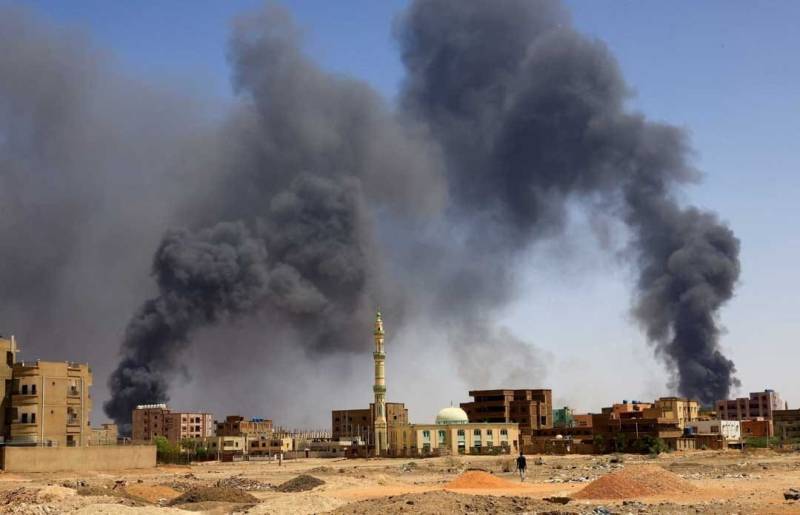
Sudan, an important African nation, has become a battleground for global colonial powers’ conspiracies. On this land, the brutal struggle for power and precious mineral resources has been exemplified by the recent capture of the city of Al-Fasher in West Darfur by the Rapid Support Forces (RSF). The barbarity and savagery witnessed during this takeover have left me at a loss for words to describe the catastrophe inflicted upon innocent civilians. It is lamentable to witness the world’s, especially the Muslim world’s, apathy towards this crisis. After an 18-month siege, the RSF unleashed unprecedented violence and terror in Al-Fasher following their capture. In just three days, over fifteen hundred innocent civilians were killed, to the point where satellite images showed blood flowing in the city. Mass hangings occurred and millions of people fled to other areas.
According to the United Nations and human rights organizations, the RSF blocked food and medicine from reaching civilians, forcing many to eat animal food amid unbearable hunger. The healthcare system has been destroyed, hospitals reduced to rubble and nearly 10 million children are deprived of education. At a UN Security Council meeting, Sudan’s ambassador, Al-Harith Idris Al-Harith Muhammad, stated, “What is happening in Al-Fasher is not merely a civil war but an organized genocide. Women’s honour is violated, children are brutally murdered and communities are reduced to dust. This is a systematic continuation of ethnic cleansing ongoing since 2023.” Al-Fasher is no longer a city; it has become a mass grave. The entire country faces famine, mass migration and widespread violence. This war is fought between the Sudan Armed Forces (SAF), led by General Abdel Fattah al-Burhan and the Rapid Support Forces (RSF), led by Mohammed Hamdan Dagalo, known as Hemetti.
Meanwhile, Israel’s interest in Sudan amid the current crisis stems not from temporary political ties or military relations, but from deeper strategic objectives and geographical strategies. Experts argue that Israel’s focus on Sudan is because the country holds a highly important location on the Red Sea coast, a position that is not only at the crossroads of Africa and the Middle East but also plays a decisive role in international maritime trade, energy transportation and the tug of war among global powers. The Red Sea, stretching from the Gulf of Aden to the Suez Canal, is becoming a new strategic pivot in global politics. Israel’s presence in this region allows it to monitor Iran’s maritime influences, limit the progress of Chinese investment and gain intelligence control over sea routes. This region acts as a natural bridge between North Africa, the Gulf and the Middle East, enabling Israel to secure its regional and global interests simultaneously.
The majority of Sudan’s population consists of Muslims and the country was once considered one of the larger nations in the Muslim world in terms of area. In 2005, South Sudan was granted autonomy and ultimately separated in 2011, becoming a sovereign country through a referendum under the aegis of the United States, France and Britain, supervised by the United Nations. Shariah laws were introduced in Sudan in 1983; however, their implementation led to a civil war between Northern and Southern Sudan, where Christians are in the majority. This conflict lasted 22 years, claiming nearly 2 million lives and resulting in South Sudan’s secession.
Sudan’s vast area, strategic location at the crossroads of Africa and the Arab world, proximity to neighboring countries, the Horn of Africa, the Indian Ocean and the Sahara Desert, along with its natural wealth, gives it global significance. Its Blue and White Nile rivers, extensive forests, oil reserves and minerals—including gold, chromium, salt and gypsum—enhance its stature. The map of the war has been redrawn in Al-Fasher’s decline, shifting the balance of power. The mineral-rich region of Darfur is now almost entirely under RSF control, considered its tribal base. Since the outbreak of the current conflict, both sides have been fighting over gold mines and smuggling routes, which fund their military operations. Competition over Darfur’s resources, centuries old, has turned gold and other minerals into tools of political and economic warfare, deepening the humanitarian crisis and hindering peace.
Global imperialism has worsened the conflict, with powers pushing for further division through an independent Darfur. Millions risk becoming impoverished and homeless, while innocent children continue to fall victim to violence and aid workers face attacks. International powers are increasingly interested in Sudan’s energy, defence, forestry, mining, minerals and agriculture sectors. China’s growing influence in Africa and West Asia has unsettled the West, while Sudan’s strategic position remains a thorn in Israel’s side, which seeks to contain its influence toward the Gulf of Aden. Muslim countries must step forward or the consequences will fall on the Ummah itself.