
Pakistan, Saudi Arabia launch talks on vaccine manufacturing
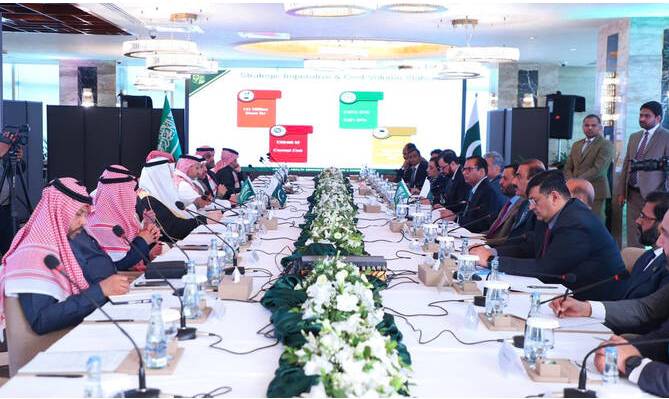

Pakistan on Tuesday started talks with a Saudi Arabian delegation on establishing local vaccine manufacturing units, as Islamabad seeks to reduce import dependence and prepare for the eventual end of international funding support for its national immunization programme, reported 24NewsHD TV channel.
According to the Ministry of National Health Services, the eleven-member Saudi delegation is led by Nizar Al-Hariri, senior adviser to Saudi Arabia’s minister of industry, who is visiting Pakistan as part of efforts to deepen bilateral cooperation in health, pharmaceutical manufacturing, and industrial collaboration.
The talks come amid Pakistan’s broader push to strengthen health security and industrial capacity.
The country of more than 240 million people currently imports all vaccines used in its national immunization campaigns, relying heavily on international partners to help cover costs.
Officials say local vaccine manufacturing would not only strengthen health security but also help conserve foreign exchange and support Pakistan’s longer-term economic stability as the country looks to cut costly imports and build export-oriented industrial capacity.
“Practical progress is being made toward the local production of vaccines for 13 diseases in Pakistan,” the health ministry said in a statement, quoting Federal Health Minister Syed Mustafa Kamal, who met the delegation in Islamabad.
Pakistani officials presented detailed briefings on current vaccine demand, existing infrastructure, and production capacity.
“Collaboration between Pakistan and Saudi Arabia in the health sector will set an example for the entire region,” the ministry said.
Kamal told the visiting delegation that Pakistan is the world’s fifth most populous country, with around 6.2 million children born each year, adding that the country’s annual population growth is roughly equivalent to the population of New Zealand.
He said the government currently provides vaccines for 13 diseases free of cost but does not manufacture any of them domestically, forcing Pakistan to import vaccines at an annual cost of about $400 million.
Reporter: Babar Shehzad Turk