
Beyond the Surface: Judge Maryam Nawaz by Her Work, Not Her Wardrobe
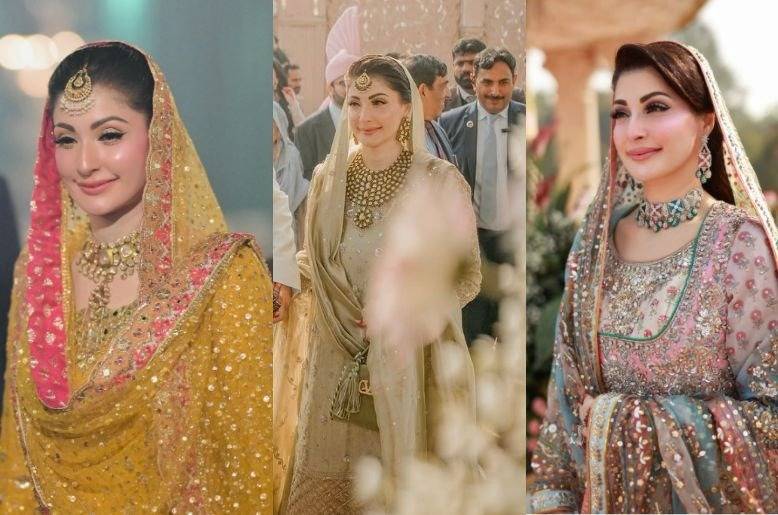

In Punjab’s evolving political landscape, the rise of Chief Minister Maryam Nawaz has been both historic and intensely scrutinized. As one of the most visible women in Pakistani politics today, her leadership marks a significant cultural moment. Yet alongside policy debates and administrative updates, an unusual proportion of public commentary continues to orbit around her appearance, her clothing, her poise, her handbags, and even the brand of shoes she wears. This fixation compels a deeper question as to why a woman in power still has to defend her wardrobe before her work? It is important to state plainly that we cannot and should not penalize a Chief Minister for her good looks, personal grooming, or financial ability to afford luxury brands such as Manolo Blahnik. If she has personal resources and chooses to spend them on designer wear, that choice does not negate her competence, dedication, or seriousness as an administrator. To suggest otherwise is to conflate aesthetic preference with ethical failure. Leadership must be evaluated on policy, governance, and outcomes and not on hemlines or heels. The tendency to reduce her public persona to fashion commentary reflects a broader cultural discomfort with powerful women who refuse to dim their presence. For decades, male politicians have worn tailored suits, expensive watches, and bespoke shoes without their attire becoming a matter of national debate. Their style is interpreted as polished; a woman’s style, however, is often treated as vanity. This double standard reveals more about societal bias than about the leader herself. Yet beyond the surface-level discussions lies a body of work that deserves sober examination.
One of the most consequential areas of reform under her leadership has been education. Infrastructure upgrades in public schools, renewed oversight mechanisms, and initiatives designed to reduce dropout rates demonstrate a commitment to strengthening foundational systems. In many districts, improvements in classroom facilities and student attendance signal that administrative attention is translating into measurable change. Education reform is rarely dramatic; it is incremental, technical, and often underappreciated. But in the long term, these structural corrections hold transformative potential. By prioritizing education, the Chief Minister underscores a belief that sustainable progress begins in classrooms. Better-equipped schools mean not only improved literacy but expanded opportunity. When children, particularly girls in rural areas remain in school longer, the ripple effects extend into economic participation, health awareness, and civic engagement. These are not glamorous achievements that trend on social media. They are quiet investments in the province’s future. Healthcare reform forms another pillar of her governance. Efforts to expand accessibility in rural areas, coupled with a stronger emphasis on women’s health services, address persistent gaps in public provision. Mental health awareness campaigns have also gained visibility, reflecting an understanding that psychological well-being is inseparable from physical health. In a society where mental health has long been stigmatized, even initiating institutional dialogue around it marks a progressive step. Healthcare improvements are rarely accompanied by celebratory headlines. Clinics do not sparkle like designer footwear. Yet when rural mothers gain access to medical consultations, when preventive care reaches underserved populations, and when conversations around mental health begin to normalize, the impact is profound. These policies touch lives directly, sometimes invisibly, but meaningfully. Economic development strategies further illustrate the administration’s pragmatic approach. By supporting small businesses, encouraging entrepreneurship, and seeking investment to generate employment, the government has attempted to create a more dynamic economic environment. Economic reform is often a slow-moving engine; its success is measured not in immediate applause but in rising employment rates and business resilience. Families who secure stable incomes rarely attribute their stability to a single speech or policy announcement but governance frameworks make that stability possible.
Despite these substantive initiatives, media narratives frequently pivot back to personal aesthetics. Such commentary risks trivializing governance and reinforcing the idea that women in leadership must either suppress their femininity or be dismissed as superficial. It also distracts from necessary accountability. If critics truly wish to challenge policy decisions, they should do so with evidence, data, and reasoned argument and not with commentary on wardrobe choices. There is also a crucial distinction between public funds and private means. A public office-holder must be held accountable for transparent use of state resources. However, if an individual possesses personal wealth and chooses to purchase luxury items from it, that decision is a matter of private discretion. To equate personal spending with administrative failure is to blur ethical boundaries in misleading ways. Moreover, political polarization complicates fair assessment. Supporters may exaggerate achievements; opponents may dismiss them outright. Yet mature democratic discourse demands nuance. It is possible to disagree with a party’s ideology while acknowledging effective administrative measures. Recognizing merit where it exists does not constitute blind loyalty, it reflects intellectual honesty. Constructive criticism should focus on measurable outcomes, implementation gaps, and areas requiring improvement. The hostility directed toward women leaders often carries an additional layer of gendered animosity. Personal attacks, insinuations, and commentary on appearance become tools of delegitimization. Such tactics not only undermine individual authority but also discourage broader female participation in politics. When young women observe that leadership invites disproportionate personal scrutiny, they may hesitate to step forward. In this sense, the discourse surrounding the Chief Minister has implications beyond her tenure; it shapes the environment for future leaders.
To her credit, the Chief Minister has frequently redirected attention toward policy and service delivery rather than engaging in retaliatory rhetoric. By emphasizing governance over grievance, she models a political tone that aspires, at least rhetorically, to constructive engagement. Whether one agrees with every decision or not, that redirection toward substance is noteworthy. Ultimately, the central question remains, how should we evaluate leadership? If we allow aesthetic commentary to dominate political analysis, we impoverish our democratic culture. Public discourse becomes shallow, personality-driven, and easily manipulated. Conversely, when we focus on policy impact, education metrics, healthcare accessibility, economic indicators, we elevate the quality of civic conversation. Leaders then rise or fall on measurable performance rather than on visual impressions. Punjab stands at a moment where incremental reform matters more than spectacle. Roads repaired, schools improved, clinics expanded, these are the markers of progress that shape daily life. They lack the drama of viral clips, yet they define lived reality for millions. A pair of luxury shoes neither builds a school nor closes one. A designer handbag neither creates jobs nor eliminates them. Policies do. Competence is not contradicted by elegance. Authority is not undermined by good looks. Seriousness of purpose does not require aesthetic austerity as proof. To insist otherwise is to impose outdated expectations that constrain women more than they evaluate governance. If we genuinely seek accountability, we must critique budgets, scrutinize implementation, and measure outcomes. If we value progress, we must acknowledge tangible improvements where they occur. If we aspire to a healthier political culture, we must resist the temptation to reduce leadership to spectacle. Punjab’s Chief Minister should be judged, fairly and rigorously on the substance of her governance. Anything less diminishes not only her office, but the maturity of our public discourse.