
New dimensions of Pakistan-Russia relations
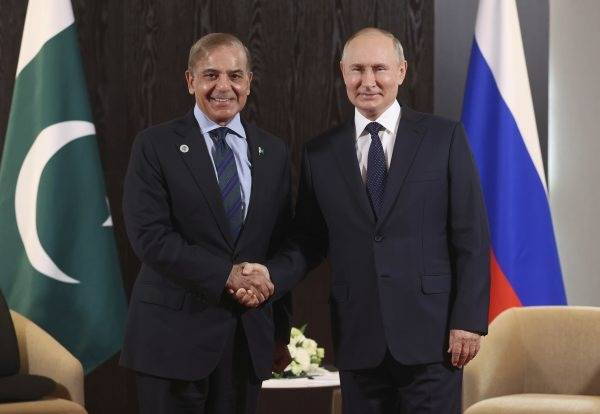

The world map appears to be shifting in the coming years. In this rapidly changing global system, the transfer of the power center from the West to the East is creating new alignments in the region and significantly undermining American dominance. During this time, Pakistan-Russia relations have de-veloped into a strong strategic partnership. In fact, over the past 75 years, the complete breakdown of Pakistan-Russia relations has not occurred; rather, these multifaceted ties have undergone signifi-cant evolution based on harmony in various aspects.
Russia’s pivot toward Pakistan after the Ukraine war aligns with its strategic interests, coinciding with Pakistan’s shift from “Look West” to “Look East,” largely influenced by the American stance. Cooperation in counter-terrorism, defense, energy, agriculture and parliamentary links marks a new era of mutual understanding, characterized by the absence of differences. Both nations share strate-gic and geopolitical interests that can yield economic benefits, exemplified by the launch of the first Asian forum for Pakistan-Russia strategic dialogue in 2025 to address unconventional security chal-lenges and promote regional cooperation in Eurasia. Historically, relations have seen many ups and downs since diplomatic ties were established on May 1, 1948, when Andrei A. Gromyko and Paki-stan’s Foreign Minister Zafarullah Khan signed an agreement in New York, leading to embassies in Karachi and Moscow.
The construction of Pakistan Steel Mills in Karachi stands as a prime example of strong Pakistan-Russia relations. The Soviet Union assisted Pakistan in the thermal energy sector and played a key role in the establishment of OGDC for gas exploration and development. The Guddu Thermal Power Plant in Pakistan was also built with the collaboration of Russian experts. Since 2006, Pakistan has been participating in NATO-Russia Council training programs for personnel from Afghanistan and Central Asian states and since 2010, bilateral collaboration in drug control has been on the rise. Cur-rently, hundreds of Pakistani students are studying at Russian universities and in 2011, Russia strongly supported Pakistan’s inclusion in the Shanghai Cooperation Organization.
There are also proper military relations established between Russia and Pakistan and both countries are members of the Shanghai Cooperation Organization. In 2014, Pakistan and Russia initiated joint defense cooperation, which includes military intelligence exchange, joint military exercises and arms sales. This is why high-level military ties have been established between the two countries. Their in-terconnected interests have led to cautious intelligence exchanges, diplomatic consultations and limited defense cooperation, including the annual Druzhba military exercises, which have been ongoing since 2016 and joint naval drills like Arabian Monsoon.
Geographically, Pakistan and Russia are natural partners for each other. Pakistan’s ports can provide Russia with access to the Indian Ocean, while Russia can offer Pakistan a secure trade route to Cen-tral Asia and Europe, connecting Moscow to the world. In return, Russia organizes access for Paki-stan to European markets through connections via the Caspian, Volga and Don rivers, as well as through the Black Sea and the Baltic Sea, helping to avoid conflicts in congested maritime choke-points. Stability in Afghanistan is in the interest of both countries and as a result, the positions of Islamabad and Moscow on this issue have now become consistent and clear. Pakistan seeks a stable western neighbor to manage its internal security issues and activate transit projects like CASA-1000 and TAPI.
Despite this, trade between Pakistan and Russia remains very limited. Although there has been a slight increase in bilateral trade, the volume does not meet Pakistan’s needs nor correspond to Rus-sia’s capacities. One significant reason for this is Pakistan’s reliance on the Western financial system and the international sanctions imposed on Russia, which have slowed the pace of practical coopera-tion. With a population of over 240 million, Pakistan represents an emerging consumer market, while Russia holds global significance in energy, industry and raw materials, with a $2.02 trillion economy and reserves exceeding $580 billion, providing a large market for Pakistan along with a di-verse industrial base, civilian nuclear knowledge and professional expertise. Pakistan’s energy needs are constantly rising and Russia can be a suitable partner in this regard. Cooperation in areas such as oil, gas, wheat and edible oils will not only provide Pakistan with alternative sources but also open new markets for Russia. According to research by the Pakistan Business Council, Pakistan’s untapped export potential in Russia is estimated to be around $2.8 billion. Pakistan’s energy demand is increasing at an annual rate of over 8 percent, aligning with Russia’s capabilities, as Russia is the sec-ond-largest exporter of natural gas and the third-largest producer of oil. Pakistan imports more than $1.5 billion worth of wheat and edible oil annually, with Russia’s share in the global market being approximately 20 percent and 14 percent, respectively.
The time has come to transform Pakistan-Russia relations from strategic statements into institu-tional economic partnerships. Regional organizations like the Eurasian Economic Union (EAEU) and the Economic Cooperation Organization (ECO) can connect Pakistan to Eurasian trade, while alterna-tive banking systems, energy projects—particularly the Pakistan Stream Gas Pipeline—and transit infrastructure can strengthen ties. Built on solid economic foundations, this relationship can be genuine and lasting. Since the end of the Cold War, both countries have sought to enhance trade, currently around one billion dollars annually, with potential for growth through barter. Resolving Pakistan’s electricity and gas issues could reduce dollar dependency, with Russia—and China—playing a key role. Russia’s renewed regional engagement challenges India’s ambitions of becoming a regional enforcer with American backing. Pakistan’s growing relations with major powers like China and Russia signal development, stability and resilience, sending a strong message to those op-posing its progress and prosperity.