
Iran's Khamenei names Hezbollah leader as Lebanon 'representative'
FM Araghchi says US 'maximum pressure' will fail as it did in Trump first term
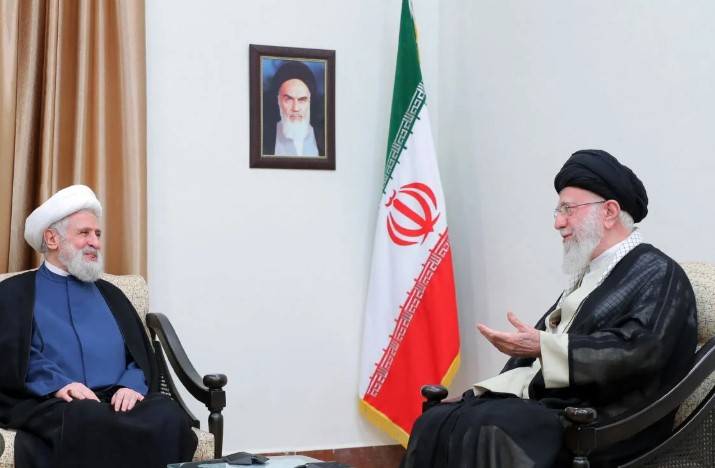

Iran's supreme leader Ayatollah Ali Khamenei has named Hezbollah leader Naim Qassem as his "representative" in Lebanon, Iranian media reported Wednesday.
"The leader of the revolution in a decree introduced Sheikh Naim Qassem, secretary general of Hezbollah, as his representative in Lebanon," Tasnim news agency said.
Tasnim carried a copy of the official decree which said Qassem will represent Khamenei in handling "non-litigious matters" and "managing religious affairs" in Lebanon.
The news agency recalled that Qassem's predecessor Hassan Nasrallah -- who was killed in an Israeli air strike on south Beirut in September 27 -- had held the same title.
Hezbollah is part of the "axis of resistance", an alliance of Iran-backed armed groups opposed to Israel and its US ally.
Khamenei, who has the final say in all matters of state in Iran, has representatives in all of Iran's provinces with a mandate to collect religious funds and perform other duties.
Qassem was named Hezbollah leader in October after heir apparent Hashem Safieddine was killed in an Israeli strike shortly after Nasrallah's death.
Hezbollah is to hold a public funeral for both Nasrallah and Safieddine on February 23. It had put off public commemorations for safety reasons until after a fragile ceasefire with Israel took hold on November 27.
Meanwhile, Iranian Foreign Minister Abbas Araghchi said Wednesday that US President Donald Trump's reimposition of a policy of "maximum pressure" against Iran will end in "failure" as it did during his first term.
"I believe that maximum pressure is a failed experiment and trying it again will turn into another failure," Araghchi told reporters following a cabinet meeting, adding that Tehran was not pursuing nuclear weapons.
During his first term that ended in 2021, Trump pursued a policy of "maximum pressure" against Iran, withdrawing the United States from a landmark nuclear deal between Iran and major powers, and reimposing biting sanctions.
The deal -- known as the Joint Comprehensive Plan of Action (JCPOA)-- imposed curbs on Iran's nuclear programme in return for sanctions relief.
Tehran adhered to the deal until a year after Washington pulled out, but then began rolling back its commitments. Efforts to revive the 2015 deal have since faltered.
On Tuesday, Trump signed an order reinstating the "maximum pressure" policy against Iran over allegations that the country is seeking a nuclear weapons capability.
Iran denies any such ambition, insisting its nuclear programme is solely for peaceful purposes.
"If the main issue is that Iran does not pursue nuclear weapons, it is achievable and is not much of a problem," Araghchi said.
A longstanding religious decree, or fatwa, issued by supreme leader Ayatollah Ali Khamenei, who has the final say in all matters of state, prohibits Iran from possessing a nuclear arsenal.
On Wednesday, Iran's nuclear agency chief Mohammad Eslami insisted that his country remains committed to the nuclear Non-Proliferation Treaty, saying "Iran does not have, and will not have a nuclear weapons programme".
In January, before Trump returned to the White House, Iranian officials held nuclear talks with counterparts from Britain, France and Germany.
Both sides described the talks as "frank and constructive".
Earlier this month, Iranian diplomat Majid Takht-Ravanchi said a new round of talks was expected to be held "within a month" but the "date has not been confirmed yet."