
Pakistan embarking on its fourth economic resurgence, says Ahsan Iqbal
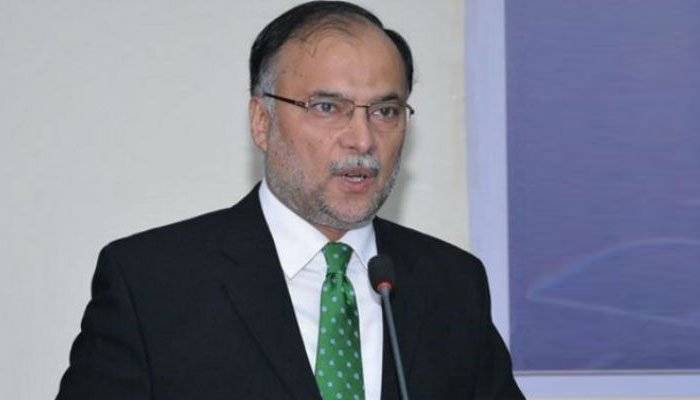

Federal Minister Ahsan Iqbal, addressing a ceremony at the Rawalpindi Chamber of Commerce and Industries (RCCI), emphasized that Pakistan is at a critical turning point, embarking on its fourth economic resurgence.
He traced Pakistan’s economic history, stating that the country took major leaps in 1960 and 1991, but political instability and policy disruptions hindered sustainable progress.
"If Nawaz Sharif's reforms had continued, Pakistan would have been ahead of Malaysia today," he remarked, adding that Vision 2025, introduced in 2013, could have placed Pakistan among the world’s leading economies by 2030 if it had been implemented consistently.
Ahsan Iqbal criticized past judicial and military interventions, stating that Pakistan’s economic foundations were shaken by the actions of a few judges and generals. He pointed out that April 2022 marked a financial crisis where Pakistan was on the verge of default. He credited the PDM government for making difficult but necessary decisions to stabilize the economy, despite facing political backlash.
"We took bitter decisions and paid a price for saving Pakistan from default," he said, acknowledging the impact of high inflation, interest rates, and taxation on the public. However, he highlighted positive economic indicators, such as the policy rate dropping from 23% to 12% and the stock market soaring from 40,000 to over 100,000 points. He stressed that investor confidence was gradually improving, but the real challenge was ensuring long-term economic sustainability.
Looking ahead, he underscored the role of the private sector as the key driver of economic growth, referring to the government’s "Udan Pakistan" initiative aimed at stabilizing and expanding the economy. He pointed out the decline in exports from $200 billion to $30 billion, urging policymakers to increase exports by at least $10 billion annually to regain momentum.
Ahsan Iqbal highlighted the need for tax reforms, stating that Pakistan is among the countries with the lowest tax collection globally. He emphasized the importance of reducing energy costs, expanding green energy projects, and promoting artificial intelligence and IT development.
On the agriculture front, he announced that the government is sending 1,000 agricultural experts to China for advanced training to boost productivity. He also spoke about water scarcity, warning that water is no longer a free commodity anywhere in the world, and urged sustainable resource management.
Discussing education and health, he pointed out that Pakistan’s literacy rate stands at 60%, with malnutrition leading to 40% stunted growth in children. He stressed the need for curriculum reforms, better education standards, and a comprehensive plan to make Pakistan hepatitis-free within the next three years.
Expressing concern over Pakistan’s growing population, projected to reach 400 million by 2040, he said policies must address this challenge to ensure sustainable development. He also condemned Pakistanis living abroad who criticize the country and its institutions, stating that such actions harm Pakistan’s global image.
"We must move forward as a united nation. No country can progress when its own people are sabotaging its image from abroad," he concluded.