
World’s largest iceberg grounds near South Georgia Island, sparing wildlife from disaster
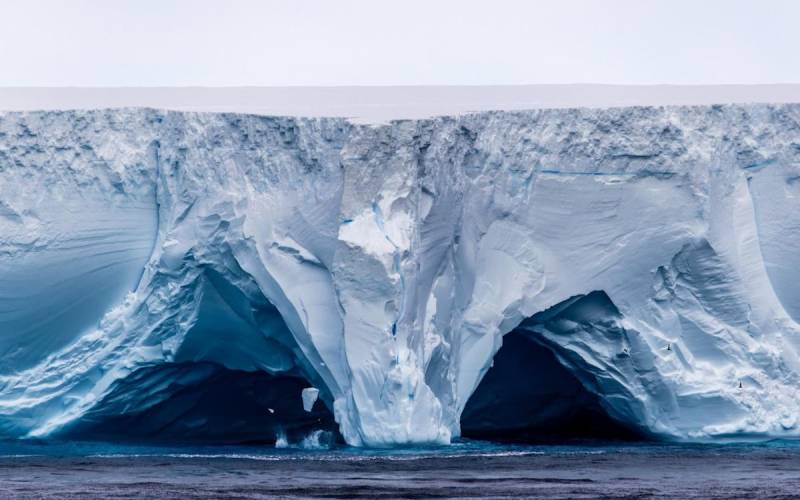

The world’s largest iceberg, A23a, which is twice the size of London, has run aground about 70km from South Georgia Island, potentially sparing the wildlife-rich region from a devastating impact, scientists confirmed.
The 3,300 sq km iceberg, weighing nearly one trillion tonnes, has been drifting north from Antarctica since 2020, raising concerns about its impact on local wildlife, particularly penguins and seals. However, experts from the British Antarctic Survey (BAS) believe the iceberg is now stuck at a depth of 200 meters, preventing it from moving further into the island’s waters.
According to oceanographer Andrew Meijers, it remains unclear whether A23a is permanently grounded or will continue drifting. However, he noted that if the iceberg remains in its current position, it is unlikely to disrupt the region’s delicate ecosystem.
Initially, scientists feared that A23a could block the feeding routes of millions of penguins and seals, forcing them to travel greater distances for food, which could lead to higher mortality rates among their young. However, Meijers suggested that the iceberg’s melting and grounding may actually benefit marine life by releasing nutrients into the water, boosting food availability for the entire ecosystem.
South Georgia Island is home to millions of seabirds and marine mammals, including five million seals and 65 million breeding birds across 30 penguin species. The island’s ecosystem has already been struggling due to a bird flu outbreak, making the presence of A23a an additional concern for conservationists.
While A23a itself does not pose a threat to shipping, smaller ice chunks breaking off from the massive iceberg could create hazards for commercial fishing vessels. A 19km-long piece of the iceberg has already broken off in January, and experts anticipate more fragments will continue to separate over time.
Despite A23a’s impressive size, large icebergs are a natural phenomenon in the Antarctic region. However, scientists warn that ice loss from Antarctica has significantly accelerated in recent years due to climate change. Since 2000, Antarctic ice shelves have lost 6,000 billion tonnes of mass, increasing concerns about rising sea levels.
Experts have cautioned that if global temperatures rise between 1.5 and 2.0 degrees Celsius above pre-industrial levels, sea levels could rise by up to 12 meters, potentially leading to irreversible climate consequences.