
Issue of exorbitant medical college fees raised in Senate
Minister informs House Rs1.8 million minimum standard fee agreed for private medical colleges
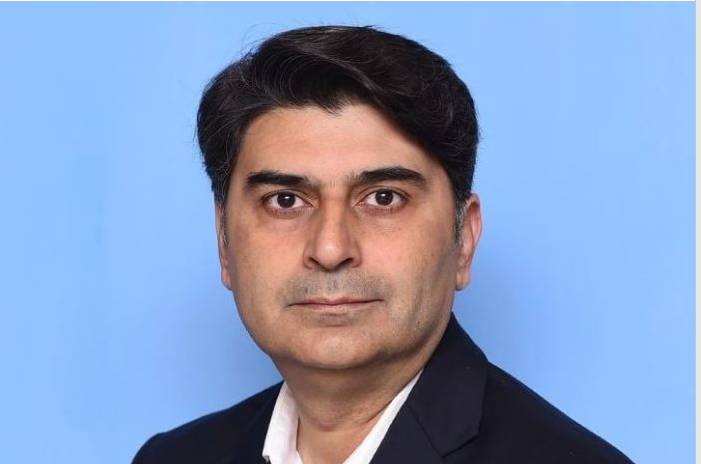

Minister of State for National Health Services, Regulations and Coordination Mukhtar Ahmad Malik on Friday apprised the Senate that a consensus had been reached to fix Rs1.8 million as the minimum standard fee for private medical colleges, while institutions charging fees above would be required to provide proper justification.
Replying to a question raised by Senator Rubina Qaimkhani during Question Hour, the minister said that under the PMDC Act, 2023, the Pakistan Medical and Dental Council (PMDC) did not have the authority to directly reduce the fees of private medical colleges. However, he said the government intervened to protect students and parents from excessive financial burden.
He said the matter was taken up at the federal level and a high-level meeting chaired by the Deputy Prime Minister was held, in which representatives of private medical colleges were invited. After detailed discussions, all sides agreed that Rs1.8 million would serve as the minimum benchmark fee.
Mukhtar Ahmad Malik said it was also decided that any medical college wishing to charge a fee higher than Rs1.8 million would have to submit a clear justification to the PMDC. He said factors such as hospital facilities, compliance with minimum standards, patient turnover and overall academic quality would be considered.
He informed the House that despite this agreement, several private medical colleges later approached the Islamabad High Court, arguing that the PMDC lacked the legal mandate to regulate fees under the existing law. The court subsequently granted a stay order.
The minister said that following the court proceedings, a number of private medical colleges accepted the agreed framework and reduced their fees to Rs1.8 million, while many others across the country did not comply.
Responding to supplementary questions, the minister said that institutions such as Aga Khan Medical College were being handled separately in view of previous court judgments. However, he reiterated that even in such cases, any fee above Rs1.8 million would require justification.
The minister reaffirmed the government’s commitment to ensuring affordable medical education while maintaining standards and transparency.
In reply to another question, the minister also clarified that OPD services at PIMS and the Polyclinic are operating in double shifts. He said the morning OPD runs till 2:00 p.m., after which the evening shift resumes and continues till 8:00 p.m.
He informed the House that routine laboratory investigations are carried out in batches, with most routine test results issued on the same day, while urgent tests prescribed by doctors are prioritised and provided immediately.
Meanwhile, Mukhtar Ahmad Malik also informed the Senate that low agricultural productivity was the result of decades of insufficient research, outdated harvesting methods and poor water management, alongside demand-and-supply driven pricing issues.
Replying to various questions during Question Hour, the minister acknowledged that Pakistan was a developing country and that critical research—particularly in agriculture and seeds—had not been carried out over a sustained period.
He said this gap had directly contributed to low yields and recurring challenges faced by farmers.
He said that pricing remained a key factor in agricultural markets, as prices were largely determined by demand and supply across commodities. Referring to wheat, he said farmers had faced hardship due to a sharp decline in prices, although the reduced wheat prices had helped stabilise flour prices and provided relief to consumers.
The minister pointed out that agriculture accounted for around 58 percent of Pakistan’s economy, making farmer welfare and productivity improvements critical for overall economic stability.
He said Pakistan continued to rely on outdated harvesting techniques, resulting in losses and inefficiencies. In this regard, he noted that the Punjab government had introduced modern agricultural technologies through its agriculture department to support farmers.
Mukhtar Malik said that the Pakistan Agricultural Research Council (PARC) and the National Agricultural Research Centre were working in collaboration with China on cotton seed development and other crops.
He expressed optimism that the introduction of new seed varieties and modern technologies would significantly improve yields in the coming years.
Highlighting Pakistan’s status as a water-scarce country, the minister stressed the need for better water utilisation.
He said parallel efforts were under way to adopt techniques that would enable higher crop output with less water.
In reply to another question by Senator Rubina Naz, the minister said green areas had been legally protected and “locked,” clarifying that no housing societies or commercial activities were allowed in designated green zones.
He urged provincial governments, including Khyber Pakhtunkhwa and Sindh, to follow similar measures to curb unchecked urban sprawl and housing development.
The minister said controlling unplanned growth of housing societies was essential to protect agricultural land and ensure sustainable development across the country.
Reporter Usman Khan