
National Assembly echoes with call for probe into sugar crisis
House passes Pakistan Land Port Authority Bill 2025: NA told 99.5pc discontinued prize bonds redeemed: No shortage of life-saving drugs in country
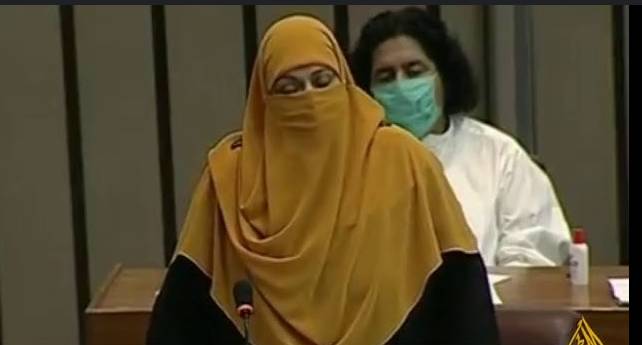

The National Assembly on Thursday was echoed with call for formation of a commission for probing the countrywide sugar crises which sent the price to over Rs200 per kg from Rs55, reported 24NewsHD TV channel.
Jamiat Ulema-e-Islam (JUI-F) MNA Ms Aliya Kamran demanded the formation of commission and also submitted an adjournment motion in this regard.
Aliya Kamran said that nowadays “lawlessness” can be seen all over the country and sugar that was available for Rs55 has now skyrocketed to Rs190 to Rs200.
She questioned has sugarcane farmers ever benefited from such a price spiral?
Those who are involved in black marketing are also not nameless now but poor people are being punished, Aliya Kamran said.
The Prime Minister should come to the House and a commission should be formed on this issue, Aliya Kamran demanded.
Pakistan Land Port Authority Bill
The National Assembly passed the Pakistan Land Port Authority Bill, 2025, with dozens of amendments proposed by PPP lawmaker Syed Naveed Qamar.
The bill was piloted by Minister of State for Interior and Narcotics Control Talal Chaudhry in the House.
Syed Naveed Qamar proposed certain amendments in clauses 2, 4, 5, 6, 9, 11, 14, 16,18,20, 21, 22, 23, 26, 27, 29, 35, 37 and 38, all of which were adopted by the House after the minister raised no objections.
The statement of objects and reasons says that it is expedient to establish a land port authority to provide and administer an integrated system of facilities for cross border movement of goods and passengers at land ports in Pakistan to make provision for its operation, management, development of Land port and matters connected therewith and ancillary matter. It is imperative to establish a robust mechanism to carry out effective coordination with border agencies for trade facilitation in pursuance of the commitments of Pakistan under international agreements and conventions for enhanced land port efficiency and regional port competitiveness.
Prize bonds redeemed
Minister of State for Finance and Revenue Bilal Azhar Kiyani announced that 99.5 percent of discontinued bearer prize bonds have been successfully redeemed and the government may consider relief for the remaining 0.5 percent if a substantial number of verifiable applications are received.
Responding to a query rose by MNA Ms Aliya Kamran, Kiyani informed the National Assembly, that the decision to discontinue bearer prize bonds of Rs40,000, Rs25,000, Rs15,000 and Rs7,500 denominations was made between 2019 and 2021 as part of Pakistan’s commitment to the Financial Action Task Force (FATF) regime.
He said that in each case, investors were given an initial six-month period to redeem or convert their bonds, followed by multiple extensions. In total, some bond types were granted up to nine extensions, with the final deadline expiring in December 2024.
He said bondholders were provided with three redemption options: convert the bearer bonds into registered premium bonds, invest in national savings schemes, or redeem through bank accounts. The minister added that due to robust public awareness efforts, 738.5 billion rupees—out of the total Rs742 billion — had already been redeemed.
Only Rs3.5 billion worth of bonds remain unredeemed, representing 0.5 percent of the total value, he noted. “Even after five years and multiple deadline extensions, a negligible portion remains outstanding,” he said, adding that if verifiable applications are received in significant numbers, the government may consider appropriate measures.
Addressing Ms Kamran’s concern for overseas Pakistanis and those who could not meet deadlines due to special circumstances, the minister said that the government was open to reviewing cases on merit.
During the supplementary discussion, Ms. Aliya Kamran stressed that several overseas Pakistanis had prize bonds stored in personal belongings or lockers and missed the deadline unintentionally. She urged the minister to consider a special relaxation for such individuals in the spirit of goodwill and financial inclusion.
Bilal Azhar Kiyani also acknowledged that the broader goal of the discontinuation and digitization policy was to modernize the financial system and comply with international standards. He said that further details regarding digital transformation in national savings and prize bond reforms could be brought before the House or relevant standing committees for deeper review.
No shortage of life-saving drugs
Parliamentary Secretary for National Health Services, Regulations, and Coordination Dr Nelson Azeem informed the National Assembly that there is neither a shortage of life-saving medicines, including insulin and cancer treatments, nor have their prices increased in the country.
Responding to a calling attention notice raised by Dr Sharmila Faruqui and others regarding the alarming shortage and price hike of life-saving medicines, the Parliamentary Secretary said that there was a temporary shortage of insulin and cancer medicines in May, but the issue has since been resolved.
He said that in addition to imports, insulin and cancer medicines are also being manufactured locally.
Dr. Azeem said that these medicines must be stored at specific temperatures and are therefore available at select medical stores equipped with the necessary facilities.
He said pharmaceutical companies are allowed to increase medicine prices by 3.14% in July but no such increase has been implemented so far.
US trade deal to boost exports
The National Assembly was informed that the recent trade deal signed with the United States will boost Pakistan’s exports and positively impact the economy.
Minister of State for Finance Bilal Azhar Kayani told the house during question hour that the 19% tariff rate offered to Pakistan is the lowest in the South Asian region. He said that bilateral relations with the United States have strengthened as a result of government’s efforts.
He said the government has increased its support for low income families by expanding funding for social welfare programs. He said a total of seven hundred and sixteen billion rupees have been allocated for Benazir Income Support Program, reflecting a twenty one percent increase compared to the previous year.
Parliamentary Secretary for Education Farah Naz Akbar told the house that multiple initiatives have been taken to align the national education system with evolving technological advancements. She said the higher education commission has been regularly reviewing and updating curricula across undergraduate and graduate programs to incorporate global trends and market demands. She said curricula of one hundred and fifty academic disciplines have been developed in alignment with international standards.
Responding to a calling attention notice, Parliamentary Secretary for National Health Services Nelson Azeem said that there is no shortage of life saving medicines including insulin and cancer drugs in the country. He said there is also no increase in their prices.
Rs716b BISP allocation to tackle inflation
The government has substantially increased the allocation for the Benazir Income Support Programme (BISP) from Rs 460 billion to Rs716 billion over the past two fiscal years as part of its broader strategy to mitigate the impact of inflation and provide sustained relief to vulnerable segments of the society.
Minister of State for Finance and Revenue Bilal Azhar Kayani stated this in the National Assembly on Thursday while responding to a question raised by Malik Shakir Bashir Awan regarding measures taken to control inflation and ensure permanent price stability.
Kayani said the increase in BISP funds reflects the government’s commitment to social protection, with the programme currently reaching nearly 10 million deserving families. “These transfers are not made to individuals, but specifically to women of the households to ensure empowerment and targeted benefit,” he added.
He said that the digitalization of disbursement under BISP is underway to further streamline access and minimize hurdles. “Beneficiaries will eventually receive their payments at home, only needing to undergo biometric verification periodically,” the minister said.
Responding to a supplementary question regarding the accuracy and targeting of BISP aid, Kayani assured the House that international standards are followed through a data-backed mechanism to ensure transparency and reach genuine recipients. He emphasized that periodic revisions are carried out under the relevant ministry’s supervision.
Addressing further concerns on inflation and wage support, Kayani noted that although inflation has shown a declining trend compared to the previous year, the government acknowledges the need for targeted relief, particularly in food items.
He also responded to a point raised by MNA Syed Rafiullah regarding the lack of an updated minimum wage announcement in the federal budget. Kayani clarified that minimum wage enforcement in the private sector falls under respective provincial jurisdictions, though the federal government ensures implementation for its own employees.
“The real goal is to increase the purchasing power of the working class through a two-pronged approach—employment and income growth on one hand, and price stabilization on the other,” he said.
Reporter: Rozina Ali