
WRC-27 emerging as key battleground in US-China space competition
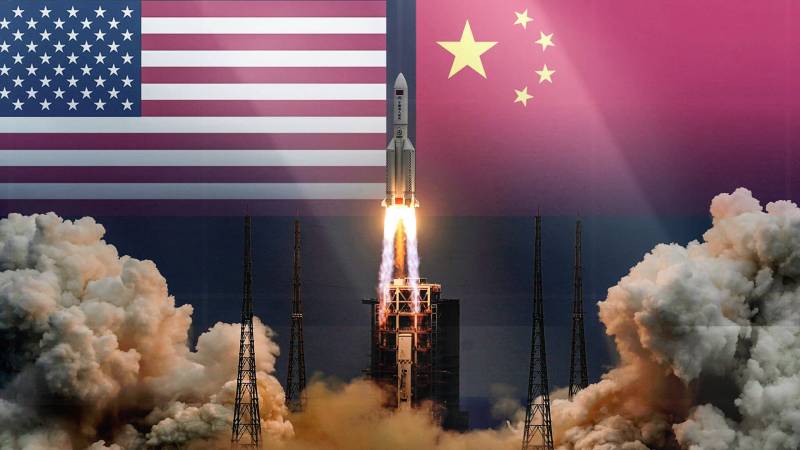

The next major contest in the growing space rivalry between the United States and China may be fought not through rocket launches but at a global regulatory conference scheduled for 2027.
The International Telecommunication Union's World Radiocommunication Conference (WRC-27), to be held in Shanghai, is expected to focus heavily on space and satellite issues, with around 80 percent of its agenda related to communications and activities in space.
The conference comes as China rapidly expands its ambitions in the space sector. Beijing has reportedly filed plans for an additional 200,000 satellites as it seeks to strengthen its position in low Earth orbit satellite constellations, electronic warfare capabilities and the broader space economy.
The United States currently leads in low Earth orbit satellite deployments, largely due to the extensive constellation operated by SpaceX through its Starlink service. Other American companies, including Amazon and AST SpaceMobile, are also developing large satellite networks. However, China is rapidly expanding its own constellations through state-backed projects such as Guowang and Qianfan.
Among the most significant issues expected to be discussed at WRC-27 is the allocation of spectrum for direct-to-device satellite communications, which would allow satellites to connect directly to mobile phones. Regulators are also expected to consider technical rules governing spectrum sharing and operational requirements for such services.
The conference will also examine new spectrum allocations for satellite communications, including frequencies for communications between satellites and future communications systems on and around the Moon. These decisions could influence both the US-led Artemis Program and competing lunar programmes being developed by China.
Another controversial agenda item concerns so-called "unauthorised services" provided by non-geostationary orbit satellite systems. Some countries have proposed requiring satellite operators to disable services over territories where they have not received local authorisation. Critics argue such measures could restrict global satellite connectivity and limit the expansion of international satellite networks.
Regulators are also expected to review technical limits governing power levels for non-geostationary satellites. Industry representatives have argued that existing rules were developed more than two decades ago and no longer reflect current technologies or spectrum-sharing capabilities.
Analysts say the outcome of WRC-27 could influence not only the future of the global space economy but also national security, technological leadership and geopolitical influence.
With preparations for the conference already underway, policymakers and industry leaders are urging closer coordination to shape international regulations governing the next generation of satellite communications and space-based technologies.