
AI system underscores Karachi's critical vulnerabilities to climate change
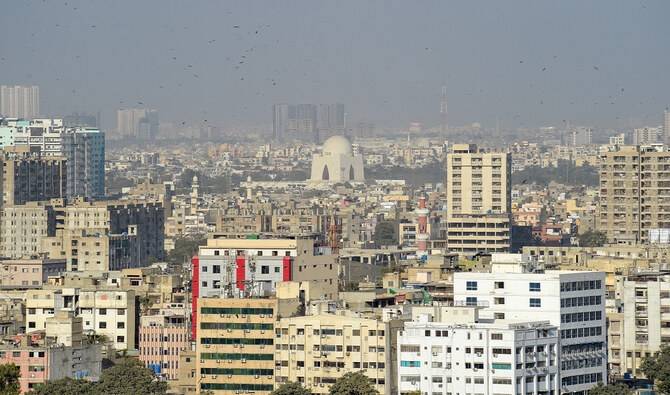

A groundbreaking artificial intelligence (AI) system, developed by researchers from New York University (NYU) and The Aga Khan University (AKU) in Karachi, has revealed significant disparities in urban green spaces across Pakistan’s largest city, underscoring critical vulnerabilities to climate change.
The study, led by Dr. Rumi Chunara, director of the NYU Center for Health Data Science and a member of NYU Tandon’s Visualization Imaging and Data Analysis Center (VIDA), involved a team from both institutions, including Miao Zhang, Hajjra Arshad, Manzar Abbas, Hamzah Jahanzeb, Izza Tahir, Javerya Hassan, and Dr. Zainab Samad from AKU. Using advanced AI techniques, the researchers analyzed satellite imagery to assess the distribution of green spaces in Karachi.
Published in the ACM Journal on Computing and Sustainable Societies, the study found that Karachi averages just 4.17 square meters of green space per capita, less than half of the World Health Organization’s (WHO) recommended nine square meters per person.
“Karachi is the fifth most populous city in the world and has faced deadly heat waves and severe urban flooding in recent years,” said Dr. Zainab Samad from AKU. “The availability of green space varies significantly across the city’s union councils. For instance, Darsanno Channo, Murad Memon, and Gulshan-e-Hadeed have the highest green space values, with over 80 m² per capita, while areas like Darya Abad, Behar Colony, Chishti Nagar, Banaras Colony, and Gulshan Said have less than 0.1 m² per capita.”
Dr. Samad pointed out that areas exceeding WHO’s green space recommendations are generally located on Karachi’s periphery, particularly in the east.
The AI system, which achieved 89.4% accuracy and 90.6% reliability in identifying vegetation, marks a significant improvement over traditional satellite analysis, which typically has an accuracy rate of around 63%.
“To train the AI model, we altered the hues of original satellite images,” explained Dr. Chunara. “This technique helps the model better recognize various types of vegetation.” The process, known as “green augmentation,” enhances the model’s ability to distinguish between trees and grass, even in complex urban settings.
The study also found a correlation between paved roads and increased green space, reflecting broader urban development trends. “In more developed areas with paved roads, higher socioeconomic status often leads to better access to green spaces and urban infrastructure,” Dr. Chunara noted.
The disparity in green space distribution poses significant challenges to public health and environmental sustainability, according to Dr. Samad. Low-income areas, in particular, often lack greenery, contributing to higher temperatures and pollution levels. “AI techniques can not only identify green space deficiencies but also help determine where greening efforts would be most beneficial and how to implement them,” she said.
The researchers stressed the importance of making their findings and the AI system accessible to local authorities in Pakistan. “Ensuring that the AI system and its results are usable by local authorities is crucial,” Dr. Chunara emphasized. “We will provide ongoing support and help integrate this data into their planning processes.”
Policy recommendations based on the research include prioritizing green spaces in urban planning, identifying areas with the greatest need for green space, and exploring possibilities for repurposing underutilized spaces into green areas. “City planning can prioritize green spaces through master plans and zoning,” Dr. Samad said, emphasizing the need for interventions at multiple levels. “Infrastructure initiatives like public parks and tree-planting programs can increase greenery, while community-based actions, such as volunteer maintenance and tree adoption, can foster local engagement.”
The researchers also compared Karachi’s green space situation with that of Singapore, which, despite a similar population density, offers 9.9 square meters of green space per person—well above the WHO target. “Cities like Kathmandu and Perth have implemented urban greening projects, such as the Green Kathmandu Project and the Perth Urban Greening Strategy,” Dr. Chunara noted. “Similarly, Dubai has integrated green space initiatives into its master plans to promote sustainable urban development.”
In Pakistan, however, a significant challenge remains: ensuring that local authorities can effectively utilize AI-driven research despite limited technical resources. Dr. Chunara’s team is working to address this by creating accessible visualizations, data summaries, and tailored reports. “We are committed to making the findings actionable by providing clear visualizations and reports that are easy to understand,” she said. “By collaborating with local authorities in a user-friendly way, we aim to bridge the technical gap and empower them to make informed decisions for the city’s future.”