
Beyond the Office of Numberdar — Lahore High Court’s Landmark Verdict and the Changing Direction of Pakistani Society

The debate over the role of women in Pakistani society is not a new one. In every era, women have struggled for their right to representation, equal opportunities, and social acceptance. At times, this struggle was for the right to education; at others, for employment opportunities, political participation, or simply the recognition of women as equal and empowered citizens. Despite this long journey, there are still many positions in Pakistan that are traditionally viewed as reserved only for men. The office of “Numberdar” is one such example.
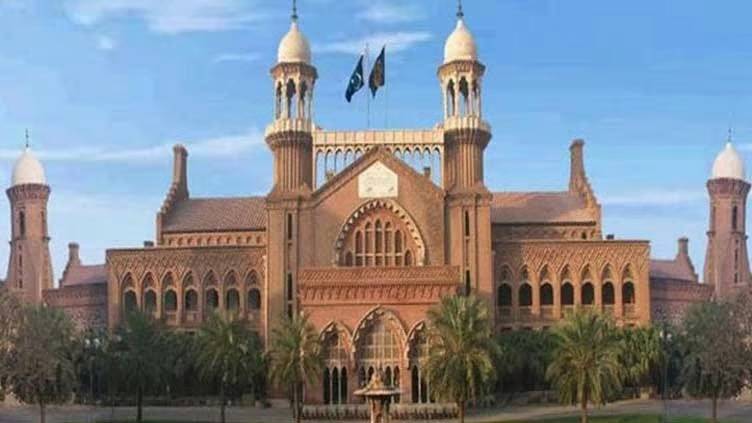
In this context, the recent verdict of the Lahore High Court holds immense significance. The court ordered the appointment of Ms. Kulsoom Akhtar as a permanent Numberdar and declared that providing women equal opportunities in public and administrative offices is a constitutional requirement. Justice Raheel Kamran Sheikh, in his detailed judgment, not only declared the reduction of marks on the basis of community and gender as unlawful but also emphasized that no capable woman can be ignored merely because of social prejudice.
At first glance, the case may appear to be an administrative dispute, but in reality, its implications are far broader. The judgment directly challenges the traditional mindset that administrative authority and positions of influence in rural society belong exclusively to men.
The office of Numberdar is not merely ceremonial in Pakistan’s rural structure. A Numberdar has historically served as a bridge between the state and the village, playing an important role in land matters, revenue collection, and local administration. As a result, this position has long been associated with power, influence, and social status. In such a setting, the appointment of a woman to this office is not just an administrative decision but a symbol of social transformation.
One of the most important aspects of this case was that despite being on merit, Kulsoom Akhtar was pushed aside merely because of gender and biradari (community-based considerations). According to the court, the Assistant Commissioner had ranked her first after a fresh evaluation, but later the Deputy Commissioner reduced her marks on community grounds. This reflects a troubling reality within administrative systems where personal biases and social pressures often overshadow merit and the rule of law.
The court also laid down a crucial principle by observing that “Numberdari is not a hereditary right but a public responsibility.” This statement is, in many ways, a direct challenge to the feudal and hereditary mindset deeply rooted in Pakistani society. Many administrative and political positions in rural Pakistan are effectively treated as family possessions, passed down through generations. By rejecting this notion, the Lahore High Court reinforced the principle that public offices belong to the people and must be filled on merit rather than lineage or influence.
The judgment is equally significant from the perspective of women’s rights. Although the Constitution of Pakistan guarantees equal rights to women, the ground realities often tell a different story. In rural areas especially, women continue to face barriers in inheritance, education, employment, and social participation. In such an environment, when a woman seeks a public office, she not only faces legal hurdles but also social resistance.
This also raises an important question: why does society hesitate to accept women in positions of authority? The answer lies in centuries-old social conditioning that associates leadership, power, and decision-making with men alone. Women, meanwhile, have traditionally been assigned submissive and restricted roles. Consequently, whenever a woman rises to a position of authority, her gender becomes a subject of debate rather than her competence.
The reality, however, is that Pakistani women have proven their capabilities in every field. Women have led political parties, served as judges, become fighter pilots, held senior bureaucratic offices, and represented Pakistan internationally in sports and other professions. If women are capable of governing institutions and leading the nation, then why should the office of a village Numberdar be considered beyond their reach?
Another important aspect of the judgment is the court’s criticism of the Board of Revenue. The court observed that the institution had failed to properly assess legal contradictions and merit. This serves as a warning to administrative bodies that discretionary powers cannot be exercised arbitrarily. If institutions fail to uphold merit and constitutional principles, the very concept of justice becomes weakened.
This verdict is not only a victory for women but also a ray of hope for society as a whole. It sends a strong message that courts are willing to safeguard constitutional rights and that gender prejudice cannot be given legal protection.
However, the real challenge lies beyond the courtroom. Judicial decisions alone cannot transform society unless social attitudes also evolve. Until women are wholeheartedly accepted as equal participants in leadership, authority, and decision-making, true equality will remain incomplete.
Kulsoom Akhtar’s appointment as a permanent Numberdar may appear to be a small development confined to a single village, but in reality, it is part of a much larger struggle for equality, merit, and social justice in Pakistan. This judgment will likely be remembered not only as a judicial precedent but also as the beginning of a gradual shift in societal thinking — a shift away from viewing women as confined to the four walls of the home and toward recognizing them as equal stakeholders in public life.