
Syria school where Assad studied imposes gender segregation
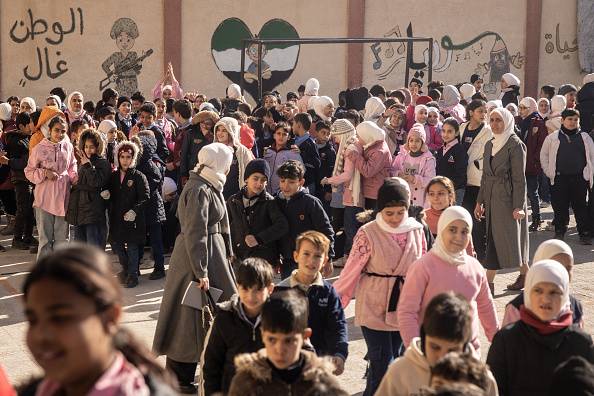

A renowned Syrian school where ousted president Bashar al-Assad studied has decided to segregate boys and girls, an order that has raised concerns over changing social norms under Syria's new Islamist authorities.
The decision sparked controversy on social media, with some expressing fear of a growing influence of conservative religious movements, while others defended the separation based on Islamic principles.
The Al-Hurriya Institute in the capital, Damascus, said in a statement on Monday that "for the best interests of our students... the boys and girls have been separated at the institute".
The school said it had already prepared separate classrooms and courtyards, except for its primary school, meaning children above 11 years old will face segregation.
Its management defended the decision in a later post, citing "many problems regarding harassment and bullying of girls" and saying that "many young men and women wasted their time on romance".
School officials also cited "extreme violence and the drawing of knives" due to jealousy, saying the proportion of girls in the school went down after parents transferred them elsewhere.
Asked by AFP, Syrian Social Affairs and Labour Minister Hind Kabawat, who studied at Al-Hurriya, said that "it's wrong" and that the school should refrain from imposing segregation.
"The DNA of the school is to have mixed classes through high school; if you don't want to send your kids, go to other schools, keep the school as it is," she added.
Kabawat is the only woman and only Christian in Syria's transitional cabinet.
The decision also divided opinions online.
Researcher Muhannad Malek, a school alumnus and an adviser to the higher education minister, wrote on Facebook: "We are the people of Damascus, and mixed schools were a very natural part of our lives and our collective memory".
But Syrian citizen Ali al-Hadi wrote online that the separation was "a responsible educational decision, and prevention is always better than dealing with the consequences after they occur".
Opened by the French Secular Mission in 1925 when Syria was under a French mandate, the school educated Syria's elite including Assad, who was ousted in 2024 by an Islamist-led offensive.
In the 1960s, the Baath Party, which had taken over the country, nationalised the school alongside others and renamed it Al-Hurriya, or freedom.
Questions have been raised over the effect of the country's delicate transition to Islamist rule on personal freedoms.
Four Syrian feminist and civil society organisations last month said that some of the new authorities' decisions "have restricted personal and public freedoms, imposed patterns of social guardianship, and have been reflected particularly on women".
In April 2025, a Damascus hospital decided to separate men and women on buses transporting staff, before reversing the decision after backlash.