
Pope Leo calls cardinals back for more talks in June
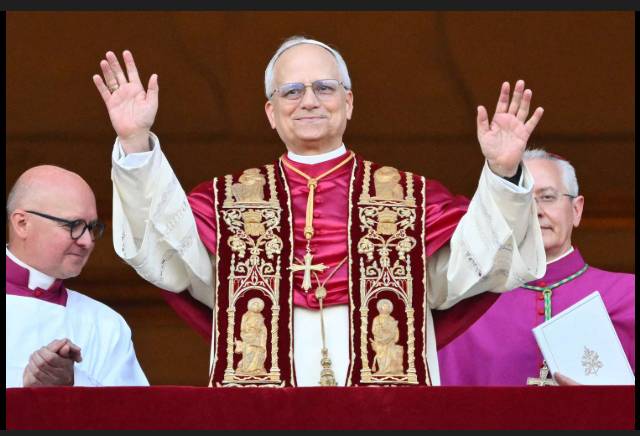

Cardinals from across the world on Thursday ended two days of discussions about the future direction of the Catholic Church under Pope Leo XIV.
The Vatican said Leo, who was elected last year after the death of Pope Francis, had summoned the cardinals for a further meeting in June.
The so-called extraordinary consistory on Wednesday and Thursday was aimed at a more collegial approach to the governance of the Church.
Francis had been criticised for an often too personal approach to running the Church during his 12 years as leader of the world's more than 1.4 billion Catholics.
During preparatory meetings before last May's conclave which saw Leo elected, the cardinals themselves asked for more consultation in decision-making.
This week, the so-called "princes of the Church" were divided into smaller groups to discuss evangelisation and synodality -- governance based on listening and the shared responsibility of the faithful.
"The pope emphasised continuity with the Second Vatican Council (1962-65), which ushered the Church into the modern era," the director of the Holy See press office, Matteo Bruni, told a news conference on Thursday evening.
Leo, the first US pope, invited the cardinals to meet again over two days at the end of June.
"He then decided to make these meetings a permanent annual event, extending them to three or four days," Bruni told reporters.
South African cardinal Stephen Brislin said the pope "wants to be collegial, he wants to listen".
"He wants to work with not only the cardinals but with others as well, in order to serve the Church in the best possible way," he added.
Colombian cardinal Luis Jose Rueda Aparicio said the pope, who worked in Peru as a missionary, had a "deep concern" for the situation in Venezuela and wanted to "encourage dialogue and seek consensus".
After a transitional year, marked by the resumption of the major projects left by his predecessor, notably the 2025 Jubilee, the Church's "Holy Year", this week's meeting marks the start of Leo's own approach to the papacy.
As well as calling ordinary consistories -- ecclesiastical gatherings primarily to create new cardinals -- Leo has the power to convene extraordinary consistories, bringing together the entire College of Cardinals to discuss important matters.