
28 major US cities are sinking, satellite study finds
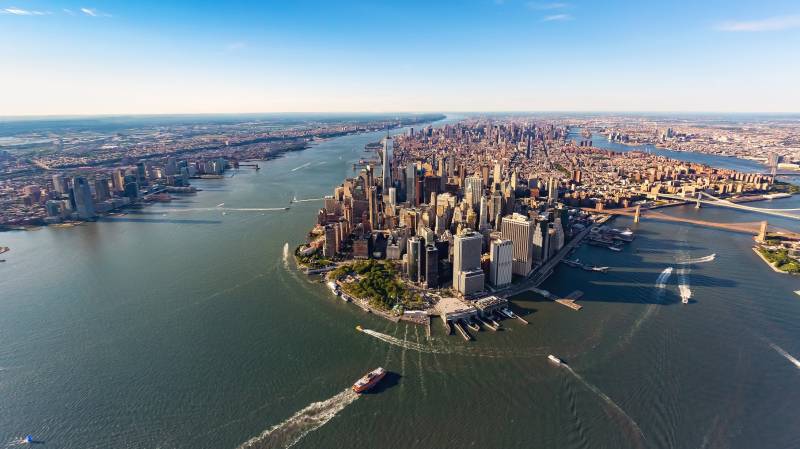

A startling new satellite study has revealed that 28 of America’s largest cities, including New York City, Chicago, Dallas, and Denver, are sinking — in some cases by as much as 10 millimeters (0.4 inches) per year — posing a growing risk to buildings, bridges, railways, and other infrastructure.
The study, published in Nature Cities by researchers at Virginia Tech, used satellite-based radar imaging to create detailed maps of land subsidence — the gradual sinking of Earth’s surface — in urban areas across the country. The findings show that in every city studied, at least 20% of the land is sinking, with 25 cities showing 65% or more of their area subsiding.
Texas cities are sinking the fastest, with Houston seeing the most dramatic rates: 40% of the city is sinking at over 5 mm per year, and 12% is dropping at over 10 mm annually.
“Even slight downward shifts in land can significantly compromise the structural integrity of buildings, roads, bridges, and railways over time,” said Leonard Ohenhen, the study's lead author and a former Virginia Tech graduate student.
While some subsidence is caused by natural geology, the researchers found that a staggering 80% of urban sinking in the U.S. is due to human-driven groundwater removal. As cities continue to expand and extract more groundwater, the problem is expected to worsen — potentially setting the stage for more inland flooding, uneven infrastructure collapse, and long-term economic strain.
“The latent nature of this risk means infrastructure can be silently compromised, with damage only becoming evident when it’s severe or potentially catastrophic,” warned Manoochehr Shirzaei, an associate professor at Virginia Tech’s Earth Observation and Innovation Lab.
To slow the sink, the study recommends enhanced subsidence monitoring, overhauled groundwater management, and more robust resilience planning to protect vulnerable infrastructure.
In a world already grappling with sea level rise and climate volatility, this silent urban descent adds yet another layer of complexity to how we build — and survive — in America’s biggest cities.