
A Life Measured by Generosity: Remembering Chaudhry Naeem Hassan
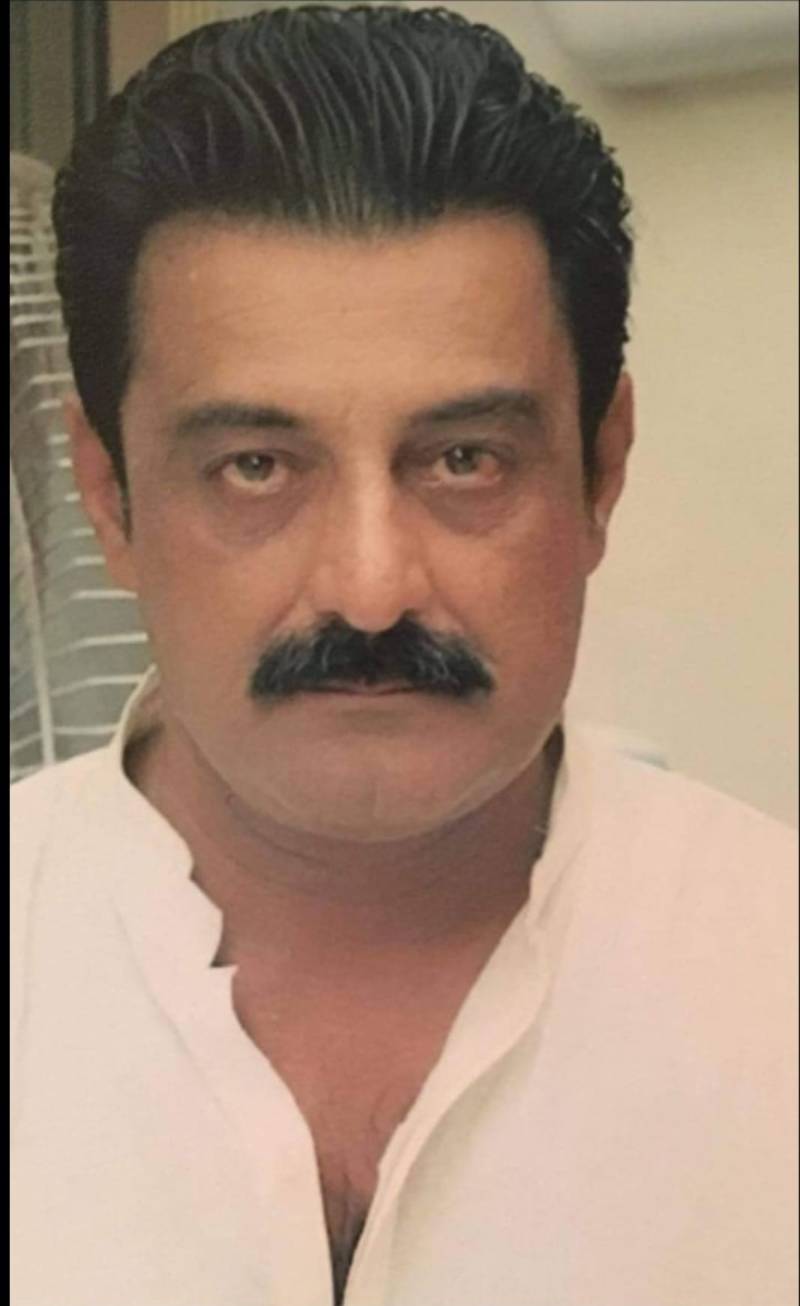
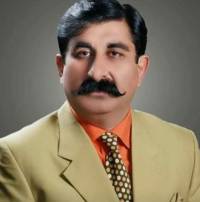
The death of Chaudhry Naeem Hassan, widely known among friends and relatives as “Seth,” has left a profound sense of loss across a family and a circle of friends stretching from Pakistan to Europe and the United States. He died suddenly in Jessheim, Norway, at a relatively young age, after suffering cardiac arrest. His passing is not merely the death of an individual; it is the sudden disappearance of a person around whom family relationships, responsibilities and friendships had quietly revolved for years.
Naeem Hassan was staying at the home of his elder brother, the well-known Norwegian-based poet and writer Chaudhry Afzal Abbas, accompanied by his 18-year-old son, Hussain Naeem. Few could have imagined that an ordinary family stay in Norway would become the setting for a final farewell. For his son, the tragedy carries an especially painful dimension: Hussain had traveled to Norway to spend time with his father and meet relatives, only to experience what would become his last moments with him.
His elder brother's recollection of Naeem perhaps offers the clearest explanation of why he was so deeply loved. According to Afzal Abbas, Naeem had an unusually generous heart. Whenever he encountered someone poor, helpless or in need, he tried to help, even if he did not personally have enough resources. If necessary, he would borrow from his brothers to meet another person's need. This kind of generosity is fundamentally different from charity performed for recognition. It reflects a temperament in which another person's hardship becomes one's own concern.
Naeem belonged to Mojianwala, a well-known village in Mandi Bahauddin district, and came from a landed family. His life, however, was shaped by an unusual connection between Pakistan and Europe. After completing his early education, he traveled to Italy and obtained a residence permit. Like many members of Pakistan's overseas community, he could have chosen to remain permanently in Europe. Yet his attachment to agriculture and his ancestral land eventually drew him back to Pakistan.
The death of his father, Chaudhry Khan Muhammad, in 2012 became a turning point. Naeem returned to Mojianwala to assume responsibility for the family agricultural affairs. He developed a particular interest in modern farming and became involved in managing the family's agricultural activities. His decision illustrates an important but often overlooked dimension of the Pakistani diaspora: migration does not necessarily sever a person's relationship with his homeland. For some, Europe provides opportunity, while the ancestral village remains the place where identity, family responsibility and emotional belonging are rooted.
Naeem's family itself reflected this transnational reality. His children were settled in the United States, while his own life remained connected with Pakistan and Europe. His daughter is pursuing medical studies in America, while his son Hussain was visiting Norway when fate brought father and son together for the last time. Naeem had also recently renewed his Italian residence permit. The irony is heartbreaking: a document intended to extend his European life was obtained shortly before his own life unexpectedly ended.
His sudden death has therefore created a vacuum extending well beyond his immediate household. Family members depended on him in domestic and practical matters, and his responsibilities were not limited to his own nuclear family. He occupied a position within the wider family network that cannot easily be replaced. When such a person dies suddenly, relatives do not simply mourn a loved one; they must also confront the absence of someone who served as a source of advice, assistance, coordination and emotional stability.
What made Naeem particularly memorable, however, was not his property, migration history or social connections. It was his personality. He was remembered as warm-hearted, compassionate, hospitable and responsible. His circle of acquaintances extended across Italy, Norway, Belgium, the United States and Pakistan. Such a geographically dispersed network is remarkable, but its significance lies not in its size. It reflects the number of human relationships he cultivated and maintained throughout his life.
There is another important lesson in his story. In an increasingly individualistic world, where success is often measured through wealth, professional status and material achievement, Naeem's life reminds us that a person's lasting legacy is frequently measured differently. People remember how someone treated them when they were vulnerable, whether a door was opened when they needed help, whether a difficult moment was made easier and whether a friendship remained genuine beyond convenience.
The thousands of Muslims who attended his funeral rites at Tauheed Mosque in Norway demonstrated the breadth of the respect he commanded. A large gathering at a funeral is not necessarily evidence of wealth or status; often it is evidence of human connection. The presence of so many people from different backgrounds suggested that Naeem had touched lives far beyond his immediate family.
His final journey will eventually take him back to Mojianwala, his ancestral village, where his burial and funeral rites will be completed. There is a poignant symmetry in that destination. He had traveled across borders, lived in Europe, maintained connections with America and built friendships across several countries, yet in death he returns to the soil from which his family story began.
Perhaps that is the most appropriate way to understand Chaudhry Naeem Hassan's life. He belonged to several worlds but remained deeply connected to one home. He experienced migration without abandoning his roots, embraced modern agricultural practices without turning away from his ancestral land, and built an international circle of friendships without losing the values of family, hospitality and generosity.
His death leaves grief, but his life leaves a lesson. A person does not become immortal by avoiding death; he becomes memorable through the lives he touches. Naeem's sudden departure has created an undeniable emptiness for his family, relatives and friends. Yet the stories of his generosity, hospitality, responsibility and affection will continue to travel across the same countries that once connected his life.
For his family, the pain will be deepest in the days ahead. For his son, the memory of that final meeting in Norway will remain forever. For his brothers and relatives, the absence will be felt in countless ordinary moments when they instinctively expect his presence or advice. And for those who benefited from his kindness, his memory will survive as a reminder that generosity need not be measured by how much one possesses, but by how much one is willing to share.
Chaudhry Naeem Hassan may have died unexpectedly in Jessheim, but the geography of his life tells a larger story: a Pakistani rooted in his village, connected to Europe, linked to America and remembered by people across borders. His final address will be Mojianwala, but his memory will remain scattered among the people and places he touched.