
If Not Me, Then Who? Why should women stay away from politics?
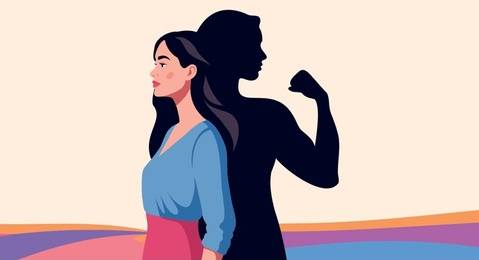
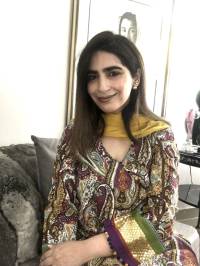
There is a conversation I have had more times than I can count. It happens at dinner tables, in drawing rooms, in the hushed tones of people who love me and mean well. It goes something like this, politics is a dirty game, it is not for decent people, and it is especially not for women. For a long time, I listened. I nodded. I told myself that concern was wisdom and caution was sense. Then one day I asked myself a question that I have not been able to stop thinking about since. If women like me, educated, experienced, concerned, capable, keep staying away from politics because we are told it is too dangerous, too dirty, too unwelcoming, then who exactly is going to make it better? Who is going to walk into those rooms and speak for the women who cannot? Who is going to change the conditions that make it hostile in the first place? Only complaining, I realized, is lame. Change requires presence. There is something seductive about the decision not to engage. It feels principled. It feels clean. If you do not enter the arena, you cannot be tainted by it. You can observe from a safe distance, critique freely, and maintain the moral high ground of someone who never had to make a difficult compromise. Here is what that comfortable distance costs you. Every policy that affects your life, your right to own property, your access to healthcare, your protections in the workplace, the safety of your daughter walking home at night is decided by people who did show up. The legislation that governs the most intimate details of your existence is written in rooms you chose not to enter. Staying away from politics does not exempt you from its consequences. It simply means those consequences are shaped entirely without your voice.
For women in Pakistan, this is not an abstract concern. It is the lived reality of millions who have had their futures determined by assemblies in which they had no meaningful representation, by policies drafted without their experience as a reference point, by a system that has historically treated their absence as consent. When we tell our daughters that politics is not for women, we are telling them something much larger. We are telling them that the most important decisions about their society are not their business. We are telling them that the appropriate response to a flawed system is to watch it from the sidelines rather than to enter and improve it. We are teaching them, without meaning to, that their role is to endure what others decide rather than to shape what is decided. I refuse to believe that is the lesson we intend to pass on. The women who changed the conditions for those who came after them did not stay away because the road was difficult. Benazir Bhutto walked into a parliament that had never seen a woman lead a major political party and became Prime Minister twice. She was not welcomed. She was not made comfortable. She was challenged, undermined, threatened, and ultimately, tragically, silenced. She walked in anyway. Because she did, the conversation about women in Pakistani public life was permanently altered. The road she walked became slightly more possible for every woman who followed. That is how change works. Not through observation. Through presence.
I will not be dishonest about what entering politics asks of a woman. It asks more of her than it asks of her male counterpart, and that is simply the truth. She will be scrutinized not just on her positions and her record but on her appearance, her family life, her tone of voice, her marital status, her ambition itself. She will be told she is too emotional when she shows feeling and too cold when she does not. She will have her competence questioned in rooms where far less competent men speak with unearned confidence. And yet. The women who have endured this scrutiny and kept going have not just survived it, they have used it. They have developed a resilience, a sharpness, a finely tuned ability to read rooms and navigate hostility that becomes, over time, an extraordinary political asset. The very gauntlet that is designed to keep women out ends up forging, in those who persist, exactly the kind of leader that politics desperately needs. Difficulty is not a reason to stay away. In many cases, it is a qualification. Let us talk about what actually changes when women enter political spaces in meaningful numbers. Research across democracies consistently shows that women legislators are more likely to prioritize education, healthcare, child welfare, and anti-corruption measures. They tend to be more collaborative, more constituency-focused, and more likely to seek consensus across party lines. They bring into the room the experience of managing households, raising children, navigating workplaces, and surviving systems that were not designed with them in mind. Pakistan’s political landscape does not lack ambition or rhetoric. What it frequently lacks is empathy translated into policy. It lacks the perspective of the woman who has stood in a government hospital corridor waiting for a doctor. The woman who has tried to register property in her own name. The woman who has fought for basic dignity in a workplace and had to put it in writing because no one would listen otherwise. These experiences are not soft. They are the most rigorous preparation for public service that exists. You do not have to announce yourself as a candidate for the National Assembly to begin. Politics has an ecosystem and entry points exist at every level. Local government, community organizing, party women's wings, public advocacy, opinion writing, each of these is a form of political participation and each builds the visibility, the network, and the credibility that larger roles require.
What matters is the decision to begin. To stop treating engagement as something that happens to other people, braver people, people with fewer things to lose. Because the truth is that we all have things to lose. We also all have things to gain and more importantly, things to contribute. I return, always, to the question I asked myself at the beginning. If not, women like me, then who? If not now, when the need is this visible and the silence this costly, then when? The world of politics is imperfect, occasionally brutal, and badly in need of people who enter it not for power alone but for purpose. Women who have navigated difficulty with grace, who have learned to document injustice rather than absorb it silently, who understand both institutions and human beings, these are not people who should be standing at the edges of public life. These are exactly the people public life is waiting for