
Nepal launches campaigns for first post-uprising polls
Ousted as PM, veteran Marxist leader Oli seeks return
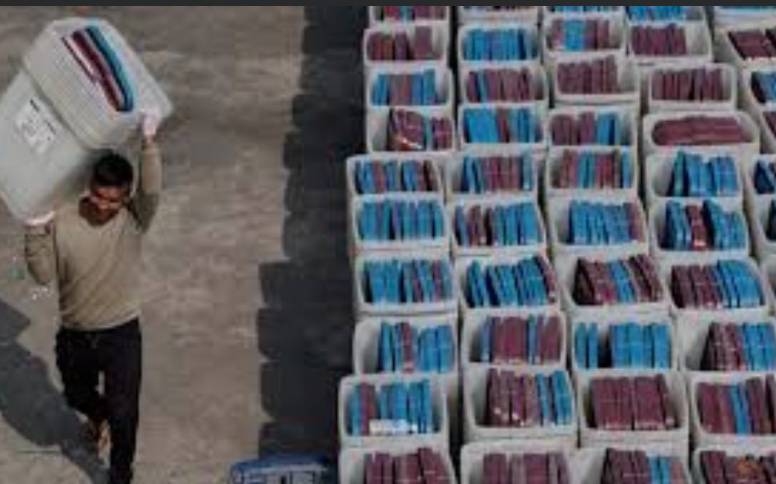

Nepali candidates launch their campaigns on Monday for next month's parliamentary elections, the first since deadly anti‑corruption protests toppled the previous government in 2025.
"This election will draw the future of the country," Sushila Karki, who is serving as interim prime minister until the March 5 vote, said ahead of the launch.
The youth-led protests were triggered by a brief social media ban, but were fuelled by anger at economic stagnation and an ageing elite seen as out of touch.
Over two days in September, 77 people were killed, scores were injured, hundreds of buildings set on fire -- including parliament, courts and a Hilton hotel -- and 73-year-old Marxist leader KP Sharma Oli ousted.
It was the Himalayan nation's worst violence since a decade-long civil war in 2006.
- Young and old -
Two weeks of campaigns will see a host of new, younger candidates promise to offer change, challenging veteran politicians who say they provide stability and security.
A key election clash will see rapper-turned-mayor Balendra Shah, 35, face Oli in a head-to-head battle in the former prime minister's constituency.
Sharply dressed Shah, better known as Balen, has emerged as a symbol of youth-driven political change.
He has joined the Rastriya Swatantra Party (RSP), the fourth biggest in the last parliament.
Also in the race is Nepali Congress, the country’s oldest party.
It was once part of Oli's coalition government, but has elected a new leader since the uprising -- 49‑year‑old Gagan Thapa.
And, at the other end of the spectrum from Gen Z politics, supporters of the ex‑king Gyanendra Shah, 78 -- deposed in 2008, ending 240 years of monarchy -- will also campaign.
The Rastriya Prajatantra Party (RPP), which draws support from royalist nostalgia and frustration with mainstream politics, rallied thousands in Kathmandu on Friday as the ex-king drove through the streets waving from his car.
- 'Way out' -
Nearly 19 million people have registered to vote, including 800,000 taking part for the first time.
They will elect members to the 275-seat House of Representatives, the lower house, with 165 via a direct vote and 110 through proportional representation.
More than 3,400 candidates are competing in the direct vote, 30 percent aged under 40.
Campaign banners and party flags are already being strung up in towns, with a string of rallies planned as candidates seek to woo voters.
"This election is being conducted in a special condition," former chief justice Karki said, as she oversaw polling preparations last week. "This has to give the country a way out."
Nepal's Election Commission has said it is ready to hold the polls as planned despite concerns over weather conditions, as many high-altitude areas may be snowbound that early in the year.
The vote is being held unusually early in the year, due to an accelerated election schedule brought on by the September unrest.
Extra security forces have been drafted to ensure calm, with around 300,000 officers and temporary election police deployed.
Oli seeks return
Tough-talking Nepali leader Khadga Prasad Sharma Oli spent decades in communist politics and served as prime minister four times before he was ousted in 2025 by deadly youth protests.
Less than six months since the September anti-corruption unrest, in which at least 77 people were killed, the 73-year-old is seeking his political comeback.
Oli, leader of the Communist Party of Nepal-Unified Marxist Leninist (CPN-UML), hopes to regain control of parliament in the March 5 elections.
But he faces a direct challenge in his home constituency from 35-year-old rapper-turned-mayor Balendra Shah, who has cast himself as a symbol of youth-driven political change.
Campaigning begins Monday.
Oli spent last week meeting communities and appealing for votes, painting the polls as a "competition between those who burn the country and those who build it".
The protests were triggered by the Oli government's ban on social media, but driven by widespread frustration over economic stagnation and entrenched corruption.
As prime minister, Oli became a lightning rod for protester fury. He resigned on September 9, 2025, as mobs torched his house, parliament and government offices.
In his resignation letter, Oli said he hoped stepping down would help "move towards a political solution and the resolution of the problems".
In January, he gave a statement to a commission established by the interim government to investigate the deadly crackdown on the youth-led uprising.
Oli has denied he had told the police to open fire on protesters.
"I did not give any orders to shoot," he said, in an audio statement posted on his social media in January.
Instead, he has blamed "infiltrators" or "anarchic forces" for igniting violence -- without giving further details.
"The children were led to such a point where the law itself orders shooting," he added.
Despite the turmoil, Oli brushed aside doubts about his political future, winning re-election as CPN-UML chief in December by a landslide.
- Authoritarian streak -
Political journalist Binu Subedi said Oli had an authoritarian streak, and considered his word as "final", rarely accepting criticism or suggestions, even from his own party.
Often known by his first initials "KP", Oli for years carefully crafted a cult-like image as his party's leader, with life-size cutouts and banners of "KP Ba (father), we love you" at rallies.
Oli's political career stretches nearly six decades, a period that saw a decade-long civil war and Nepal's 2008 abolition of its monarchy.
Drawn into underground communist politics as a teenager, he was 21 when arrested in 1973 for campaigning to overthrow the king.
"I was sentenced to harsh imprisonment for 14 years, with four years of solitary confinement", he wrote in a book of selected speeches.
He studied and wrote poetry in detention, penning his verses on cigarette boxes when he couldn't access paper.
"My crime was that I fought against the autocratic regime," Oli added. "But this never deterred me, instead, it emboldened me to continue the struggle."
After his release in 1987, he joined the CPN-UML and rose through the ranks, winning a parliamentary seat.
The veteran politician first became prime minister in 2015, before being re-elected in 2018 and reappointed briefly in 2021 in Nepal's often turbulent parliament.
He previously said he recognises that "Marxism and Leninism cannot be a ready-made solution to every problem".
Oli's most recent stint in power, from 2024 until his ouster, rested on a coalition between the CPN-UML and the centre-left Nepali Congress.
But Congress has since replaced his old ally, five-time prime minister Sher Bahadur Deuba, 79, electing 49‑year‑old Gagan Thapa as its new leader in January.
In the Himalayan republic of some 30 million people, overshadowed by giant neighbours India and China, Oli previously trod a fine balance between the rivals.
But he also stoked populist rhetoric against India, which is often portrayed as acting like an overbearing "big brother" to Nepal.