
LHC exposes flaws in police investigation system
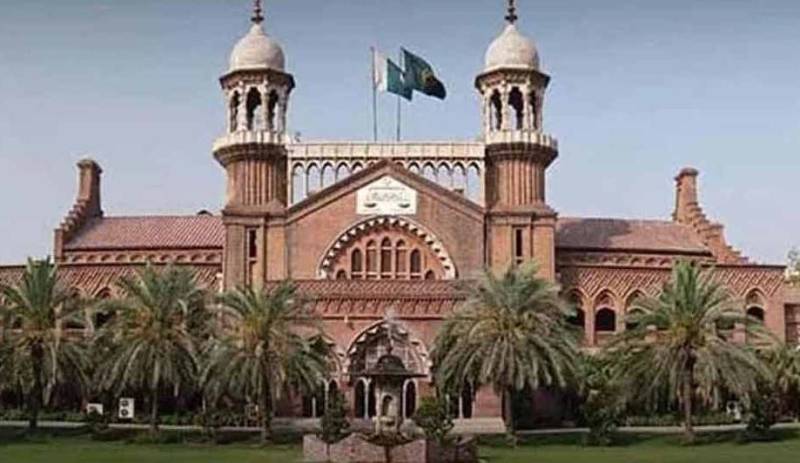

Lahore High Court (LHC) during the hearing of a murder case, raised serious questions about the police investigation system, particularly the practice of recording "supplementary statements" and taking action on the basis of "credible source information."
During the hearing, Additional Inspector General (Investigation) Punjab, Shehzada Sultan, openly acknowledged flaws within the police system and admitted that police officers have been misusing their powers.
LHC Justice M Tariq Nadeem was hearing the bail petition of murder suspect Umar Farooq. On the court's directions, Additional IG (Investigation) Shehzada Sultan and DPO Mandi Bahauddin Kamran Aamir Khan appeared before the court. Deputy Prosecutor General Naveed Umar Bhatti and Sheikh Muhammad Asif represented the prosecution.
At the outset of the hearing, Justice Tariq Nadeem asked the Additional IG whether he had examined the case record. Shehzada Sultan replied that he had reviewed both cases for which the court had summoned him.
The court observed that the alleged supplementary statement referred to by the police was not available in the case file, despite the DPO's repeated assertions that it formed part of the record.
Justice Tariq Nadeem questioned the legal basis of a supplementary statement after an FIR has already been registered on the basis of a written complaint. The court further noted that the accused had not been nominated in the FIR and was later implicated solely on the claim that the complainant identified him on the information of an informer.
At this stage, Additional IG Shehzada Sultan made significant admissions, stating, "There is no legal concept of a supplementary statement. Neither supplementary statements nor action based on information from a so-called credible source have any legal standing, yet we all continue to follow this practice."
He further stated, "We have created the concept of supplementary statements ourselves to protect corruption and dishonest practices. It is used to justify illegal actions. The police have been misusing their authority, which should not happen. Many officers have developed this system for personal gain. I admit that there are numerous flaws within the police department, and all of us share responsibility for them."
Justice Muhammad Tariq Nadeem appreciated the Additional IG's candid acknowledgment, remarking, "At least there is an officer who is willing to admit the mistakes within the police department."
The court observed that everything except the supplementary statement was available in the case file, indicating that it had been deliberately removed. The Additional IG also conceded that the disappearance of the document could be attributed to dishonesty on the part of police officials.
Justice Tariq Nadeem further remarked that it was shocking that a murder case had been investigated on the basis of information allegedly provided by an unnamed informer.
The court observed that such reliance might be understandable in narcotics cases, but not in a murder investigation. The judge pointed out that the eyewitness himself claimed he identified the accused only after being informed by an unnamed informer, whose identity was absent from the entire police record.
The court also expressed displeasure with the DPO of Mandi Bahauddin, observing that despite being repeatedly informed that the supplementary statement was missing from the file, he continued defending his subordinate officers, leaving the court with no option but to summon the Additional IG. Justice Tariq Nadeem remarked that while mistakes are human, they should also be acknowledged.
During the hearing, the court referred to its directions for an audit of police investigation cases. The Additional IG informed the court that investigations conducted over the past ten years were currently being audited.
The court also questioned the inclusion of another accused, Ali Hassan, who had been implicated in the case nearly ten months earlier, yet no effective action had been taken against him and no arrest warrants had been obtained. The Additional IG admitted that the official record confirmed no such proceedings had been initiated. The court observed that no officer had even bothered to review the matter for ten months, despite district police chiefs being responsible for supervising the work of their subordinate officers.
LHC Justice Tariq Nadeem asked the complainant's counsel to identify any legal evidence linking Ali Hassan to the offence. However, counsel failed to satisfy the court. The Additional IG also stated that implicating a person solely on the statement of another accused has no legal basis. After hearing the arguments of all parties and examining the record, the Lahore High Court granted bail to murder suspect Umar Farooq.