
When salaries stop, where does justice go?
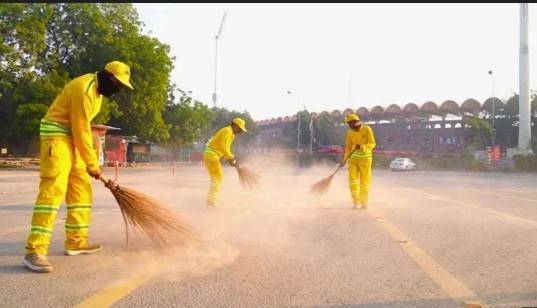

The responsibility of the state is not limited to policymaking alone; ensuring implementation is equally a fundamental duty. When the same state deprives its lowest-tier employees of their rightful salaries, the issue is no longer merely administrative inefficiency — it becomes a matter of justice and human dignity. The case currently under hearing in the Lahore High Court reflects this harsh reality.
More than one hundred Class-IV employees, including sweepers, have been deprived of their salaries for several months. This is a segment of society that already lives under financial constraints and difficult conditions. For them, a salary is not just income but the only means of survival. In such circumstances, the suspension of salaries is not merely a financial issue but a serious social injustice.
The fact that Justice Khalid Ishaq has summoned the Secretary School Education and other officials in person indicates that the court does not consider this matter trivial. The court’s displeasure highlights a systemic failure where clear judicial orders are not being implemented. The granting of a “last opportunity” reflects restraint, but it also carries a strong warning that the rule of law cannot be ignored.
It is also noteworthy that the court had already issued directions on June 18, 2025, for the payment of salaries. Despite this, non-compliance reflects not only negligence but also institutional weakness or lack of seriousness. If even a clear judicial order cannot be enforced, access to justice becomes increasingly difficult for ordinary citizens.
Petitioners like Zahida Bibi represent a larger systemic issue where vulnerable individuals are forced to approach courts for their basic rights. This situation demands that government institutions reassess their responsibilities and resolve such matters before they reach the courts.
This case is not merely about salary payments; it raises a fundamental question: Is the state ensuring justice for its own employees as it claims? If the answer is no, then what is needed is not just correction but urgent reform.
The next hearing will be crucial. If the court’s orders are implemented, it will not only provide relief to over a hundred employees but also send a positive message that the rule of law is intact. Otherwise, contempt proceedings may serve as a stern reminder for the responsible officials as well as the system as a whole.
Ultimately, the true measure of any society lies in how it treats its most vulnerable members. If sweepers and other lower-grade employees are denied their rightful dues in time, it is not merely an administrative failure but a collective one — and such failures require action, not just words.