
Bosnian Serb PM resigns amid growing political turmoil
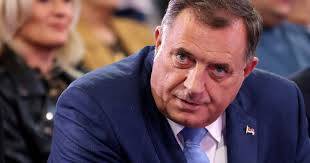

The prime minister of Bosnia's Serbian entity resigned on Monday, triggering a reshuffle of the government as the entity's banned president continues to defy the central government in a deepening political crisis.
The announcement comes days after the Republika Srpska President Milorad Dodik called for a "national unity government" in response to his conviction for flouting decisions made by the international envoy who enforces Bosnia's peace deal.
Bosnia has been split between Serb and Bosniak-Croat political units since the 1992–95 war, which left tens of thousands dead. The country is held together by weak central institutions.
At a press conference in Banja Luka, Prime Minister Radovan Viskovic did not explain why he was resigning after nearly seven years in office, stating only that a new government would be formed.
"I leave my successor a stable Republika Srpska, and I wish the new government success," the 61-year-old said, standing next to Dodik, who remains the de facto leader of the Bosnian Serbs.
Earlier this month, Dodik avoided prison by converting a one-year jail term into a fine.
On Monday, an appeals court upheld a ruling by the Electoral Commission that removed him from the presidency after being banned from political office for six years.
Bosnia's electoral commission is now expected to call early elections for the Presidency of the entity, which must be held within 90 days.
Dodik has said he would block elections in Republika Srpska, announcing instead a series of referendums - the first set for September would decide whether he remains in office.
He also threatened to hold an independence referendum if talks were not held to allow for the return of autonomy that he claims the entity has lost in recent years.
"If it does not happen within a reasonable timeframe, if we do not see an intention to do so, the RS (Republika Srpska) will hold its independence referendum," Dodik told reporters.
Along with Dodik, Viskovic was also suspected earlier this year of undermining the constitutional order of Bosnia and Herzegovina, after Republika Srpska's parliament voted to bar federal police and the judiciary from operating in the Serb entity.
Both have also been sanctioned by the United States for threatening the Dayton Peace Agreement and undermining Bosnia and Herzegovina's sovereignty.
To ensure compliance with the Dayton Peace Agreement -- signed nearly 30 years ago to end the war -- an international High Representative holds sweeping powers, including the ability to impose laws and even dismiss elected officials.
However, the Serb leadership rejects Christian Schmidt's authority as the current High Representative, claiming the former German minister is "illegitimate" because his appointment was not endorsed by the UN Security Council.