
WWF opposes transfer of Pakistan's snow leopards to Russia
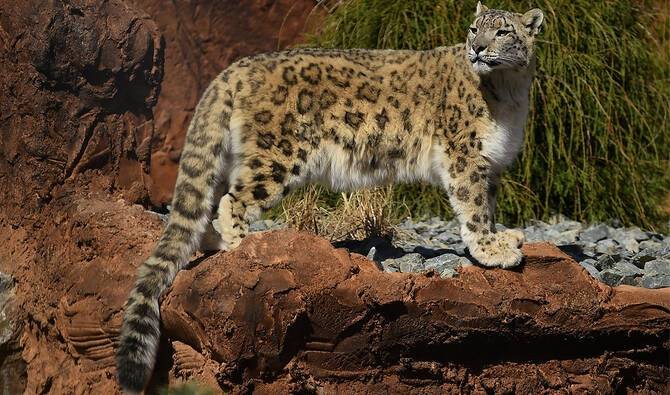

The World Wide Fund for Nature (WWF) Pakistan has voiced strong opposition to a proposed plan to transfer endangered snow leopards from northern Pakistan to Moscow, urging the government to instead invest in strengthening local rehabilitation facilities.
Due to the elusive nature of snow leopards, accurately determining their population across their range in Central and South Asia is challenging. However, a 2020 WWF study estimated that fewer than 7,000 snow leopards remain worldwide, with around 200 to 420 believed to inhabit Pakistan’s northern mountainous regions, including Gilgit-Baltistan, Khyber Pakhtunkhwa (KP), and Azad Jammu and Kashmir (AJK).
In a press release issued Saturday, WWF-Pakistan confirmed that it had sent a letter to the Ministry of Climate Change, formally opposing the proposed transfer of two snow leopards currently housed at the Naltar Rescue and Rehabilitation Center in Gilgit-Baltistan to the Moscow Zoo.
WWF-Pakistan emphasized that such a move would violate both national and international conservation commitments and could set a dangerous precedent for the future export of threatened and iconic wildlife species from Pakistan.
"WWF-Pakistan expresses its deepest concern and strongly opposes this proposed export, calling for its immediate cancellation," the organization stated.
It also urged the government to reaffirm its dedication to protecting Pakistan’s iconic wildlife species and to honor its obligations under global conservation agreements.
The snow leopard, classified as a “vulnerable” species on the IUCN Red List (2017), is granted the highest level of legal protection under Pakistan’s federal and provincial wildlife laws—a status that applies equally in Gilgit-Baltistan and AJK.
Additionally, the species is listed under Appendix I of the Convention on International Trade in Endangered Species of Wild Fauna and Flora (CITES), which prohibits international trade except under exceptional, non-commercial conditions.
WWF-Pakistan further pointed out that there is no compelling conservation reason to move the snow leopards to Russia, a country that already supports a larger wild population of the species.
Instead of exporting the animals, the organization called on Pakistan to demonstrate leadership by protecting its remaining snow leopard populations within its borders.
WWF also expressed concern over the lack of oversight once the animals are transferred, warning it would be difficult to ensure their welfare under Russian jurisdiction.
Hammad Naqi Khan, Director General of WWF-Pakistan, stressed that approving the transfer would undo years of conservation progress and damage Pakistan’s reputation in the global conservation arena.
"Pakistan must uphold its responsibilities under international agreements such as CITES and the Convention on Migratory Species (CMS) by prioritizing in-country protection for vulnerable and critically endangered species," Khan said.