
Tehran threatens missile response if conflict resumes with US
Supreme leader Mojtaba Khamenei warns of continued resistance against adversaries: General Reza says US aggression could lead to a new world war: Khatibzadeh says negotiations stalled over excessive US demands: Iran's missile capability cannot be curtailed
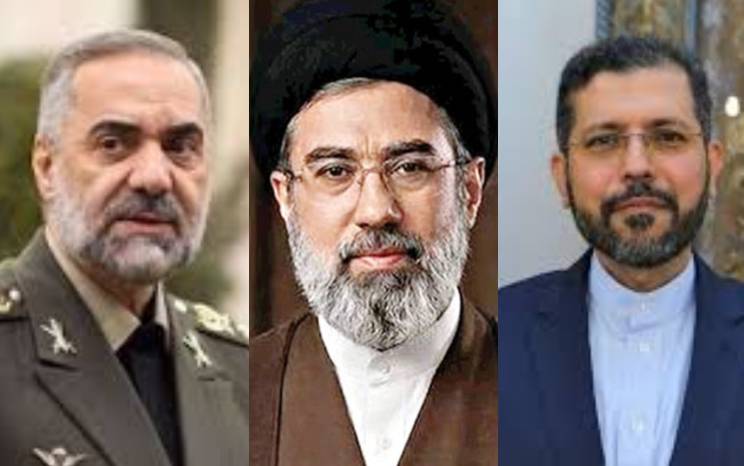

Iran has warned that any renewed aggression against it could escalate into a global conflict, as senior officials signalled readiness to respond with force amid rising tensions with the United States.
According to a report by the 24NewsHD TV channel on Sunday, Iran's Supreme Leader Mojtaba Khamenei said the country’s navy was prepared to inflict further losses on its adversaries.
He added that Iran would continue its resistance and warned of a decisive response if hostilities resumed.
In a message marking Army Day, the Iranian leader praised the performance of the country’s armed forces and said their resistance against attacks by the United States and Israel had exposed the weaknesses of their opponents on the global stage.
Separately, Brigadier General Mohammad Reza warned that if aggression was imposed again, it could lead to a wider war.
He said Iran would respond using missiles developed this month and insisted that the United States could not prevent Iran from advancing its missile capabilities.
Iran’s Deputy Foreign Minister Saeed Khatibzadeh, in a separate statement, said Tehran wished to keep the Strait of Hormuz open but accused Washington of undermining diplomatic efforts.
He criticised US President Donald Trump for making contradictory statements and said Iran had entered talks in good faith but now remained cautious.
Khatibzadeh added that what he described as an era of dominance had come to an end and warned that if conflict resumed, Iran would respond with full force.
Khatibzadeh has said that the country is no longer prepared to engage in further direct negotiations with the United States, warning that international law cannot be applied selectively.
He stated that there cannot be one set of global rules for the world and another for Iran, adding that Tehran would only agree to arrangements in which its rights are fully guaranteed under international law.
Khatibzadeh clarified that no date has been set for a second round of talks with Washington. He said any future negotiations could only take place once both sides agree on a common framework.
According to him, there had been some progress in earlier discussions, but he accused the United States of introducing excessive demands, which he said led to the breakdown in understanding between the two sides.
He further stated that Iran would not agree to hand over its enriched uranium, describing such a demand as unacceptable under any circumstances.
The remarks highlight continuing uncertainty in diplomatic efforts between Tehran and Washington, with both sides yet to bridge key differences needed to move talks forward.