
Sheikh Mujib’s house vandalized as violence erupts in Bangladesh after youth leader dies
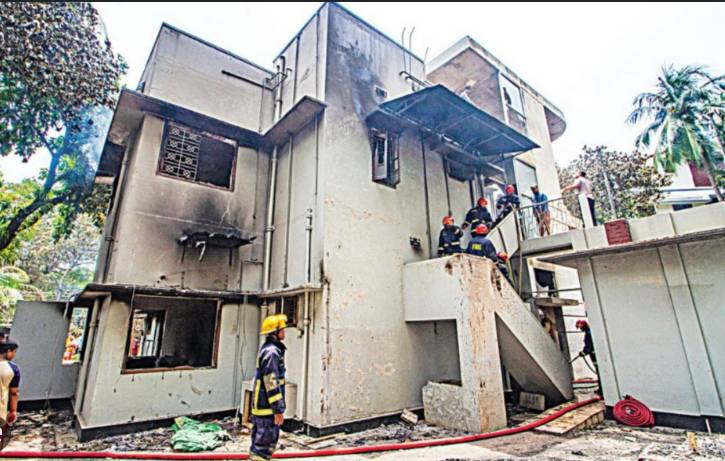

Violence broke out in Bangladesh's capital early Friday after a youth leader of the country's 2024 pro-democracy uprising who was injured in an assassination attempt died in a hospital in Singapore.
Thousands of protesters took to the streets of Dhaka after the death of Sharif Osman Hadi, 32, was announced, to demand that his killers be arrested.
The ancestral house of Bangladesh's first president Sheikh Mujibur Rahman, father of ousted prime minister Sheikh Hasina, was vandalised again.
Several buildings in the capital, including those housing the country's two leading newspapers, were set on fire, according to authorities, with staff trapped inside.
In a Facebook post around 9:40pm Thursday, Inqilab Moncho first announced the death. "In the struggle against Indian hegemony, Allah has accepted the great revolutionary Osman Hadi as a martyr."
Warning of a sit-in in Shahbagh until the attackers are arrested, the platform said, "As Osman Hadi responds to the call of his Creator and joins the ranks of martyrs, the oppressed and freedom-seeking people of Bangladesh are requested to gather at Shahbagh to ensure sovereignty," adding that they will bring the country to standstill until the demand is met.
"If the killers flee to India, they must be arrested and brought back at any cost through discussions with the Indian government."
Hadi was a key figure in last year's uprising that ended the autocratic rule of prime minister Sheikh Hasina and sent her fleeing to India. He was running for a parliament seat in the February 2026 national election.
On December 12, Hadi was shot by masked assailants as he was leaving a mosque in Dhaka. He was airlifted to a hospital in Singapore for treatment, where he succumbed to his injuries on Thursday.
At least three cases of arson were reported in Dhaka after the news of his death spread early Friday, a spokesperson for the Fire Brigade and Civil Defence force told AFP, including a fire at the Daily Star building and another at a building housing the Prothom Alo newspaper.
The two papers are the largest in the South Asian country, but protesters accused them of being aligned with neighbouring India, where Hasina has taken refuge.
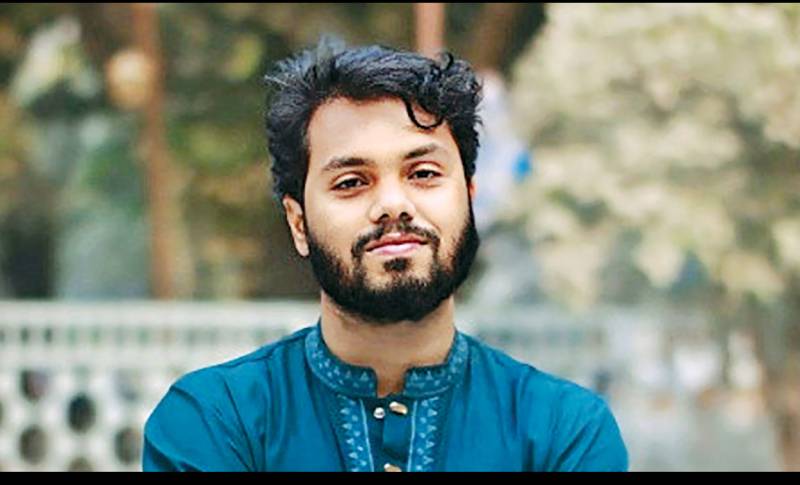
Inqilab Moncho leader Sharif Osman Hadi.
Zyma Islam, a reporter for the Daily Star, said she was trapped inside the burning building. "I can't breathe anymore. There's too much smoke. I am inside. You are killing me," she wrote on her Facebook page.
The fire at the Daily Star building was brought under control at 1:40 am (1940 GMT on Thursday), firefighting officials said.
However, 27 employees were still inside. "We took refuge at the rear of the building and could hear them chanting slogans," Ahmed Deepto, a Star reporter, told AFP, referring to protesters.
The house of India's deputy ambassador to Bangladesh was also surrounded by hundreds of people who were trying to demonstrate in a sit-in, but police lobbed tear gas shells to disperse the crowd, according to local news reports.
In addition, protesters blocked a key highway leading from the capital and attacked the residence of a former minister in Chittagong in the country's southeast, according to footage shown on local television.
Protesters also attacked Chhayanaut, a center in Dhaka devoted to Bengali culture.
- 'An irreparable loss to the nation' -
Earlier Friday, Singaporean authorities announced that Hadi had died in a local hospital.
"Despite the best efforts of the doctors..., Mr Hadi succumbed to his injuries," Singapore's foreign affairs ministry said in a statement, adding that it was assisting Bangladeshi authorities with repatriating his body.
In Dhaka, the interim government headed by Nobel laureate Muhammad Yunus confirmed Hadi's death.
"His demise is an irreparable loss for the nation," Yunus said in a televised speech.
"The country's march toward democracy cannot be halted through fear, terror, or bloodshed."
The government also announced special prayers at mosques on Friday and a half-day of mourning on Saturday.
Hadi, a senior leader of the student protest group Inqilab Mancha, was an outspoken critic of India, where Hasina remains in self-imposed exile.
- Manhunt for gunmen -
Bangladeshi police meanwhile have launched a manhunt for Hadi's shooters, releasing photographs of two key suspects and offering a reward of five million taka (about $42,000) for information leading to their arrest.
Yunus, the 85-year-old Nobel Peace Prize winner leading Bangladesh until the February 12 vote, has called the shooting a premeditated attack carried out by a powerful network aimed at derailing the election.
Muslim-majority Bangladesh, a nation of 170 million people, will directly vote for 300 lawmakers for its parliament, with another 50 selected on a women's list.
The last elections, held in January 2024, gave Hasina a fourth straight term and her Awami League 222 seats, but were decried by opposition parties as a sham.
The Bangladesh Nationalist Party (BNP), led by three-time former prime minister Khaleda Zia, is widely tipped to win the upcoming vote.
Zia is in intensive care in Dhaka, and her son and political heir Tarique Rahman, is set to return from exile in Britain after 17 years on December 25.
Arsonists target newspapers
Firefighters pulled journalists from their burning newsroom on Friday after the building was set ablaze during violent demonstrations in Bangladesh's capital.
Thousands of protesters were brought to the streets by the assassination of a youth leader running for parliament in upcoming national elections.
A key figure in last year's uprising, Sharif Osman Hadi, 32, was shot by masked gunmen while leaving a mosque in Dhaka last week.
After he died in hospital on Thursday, his supporters gathered in Dhaka demanding the killers be brought to justice.
Several buildings, including those housing leading newspapers Prothom Alo and the Daily Star, were set on fire and vandalised, according to authorities.
Staff trapped in the Daily Star newsroom described being unable to escape as the building filled with smoke.
"I can't breathe anymore. There's too much smoke. I am inside. You are killing me," reporter Zyma Islam wrote on her Facebook page.
Firefighters managed to bring the blaze under control at 1:40 am (1940 GMT on Thursday), with 27 employees rescued from the smouldering building.
"For the first time in the newspaper's history, the publication had to be halted," consulting editor Kamal Ahmed told AFP.
At the Prothom Alo, executive editor Sajjad Sharif said he was "deeply saddened" that the newspaper could not be published due to vandalism and arson.
"This attack is not merely an attack on Prothom Alo and the Daily Star, it's an attack on freedom of the press, expression, dissent and diversity of opinion," he said.
Critics of the papers, the largest in the South Asian country, accuse them of favouring neighbouring India, where Bangladesh's ousted prime minister Sheikh Hasina has taken refuge since quitting in 2024.
The Committee to Protect Journalists (CPJ) said it was alarmed by the violence against the press.
"CPJ is monitoring the situation and urges Bangladeshi authorities to ensure the safety of news outlets and journalists, and to hold those responsible accountable," it said in a statement.
Hadi, a leader of the student protest group Inqilab Mancha, was also an outspoken critic of India.
After he was shot in Dhaka on December 12, he was airlifted to Singapore, where authorities later announced he had succumbed to his wounds.
Inqilab Mancha distanced itself from the violence that erupted at the Dhaka protests, blaming opportunists for trying to derail the demonstrations.
"They essentially want to turn Bangladesh into a dysfunctional state through vandalism and arson," the group said in a statement posted to social media.
"They want to endanger the independence and sovereignty of this country."
Bangladeshi police have launched a manhunt for Hadi's shooters, releasing photographs of two key suspects and offering a reward of five million taka (about $42,000) for information leading to their arrest.–Agencies