
Pakistan to build Rs3 billion aquaculture park to boost blue economy
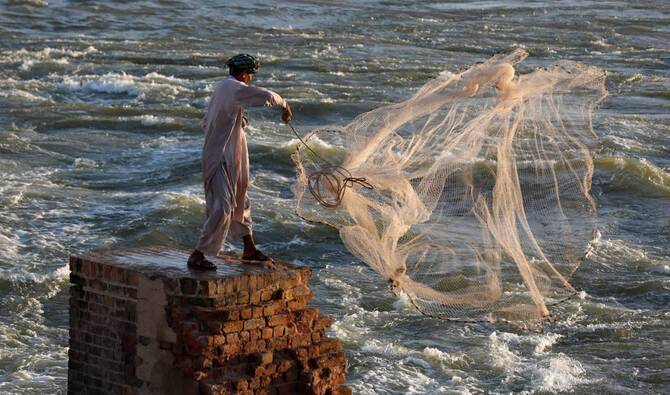

Pakistan plans to build a Rs3 billion ($10.5 million) aquaculture park in the southern port city of Karachi, Maritime Affairs Minister Junaid Anwar Chaudhry announced on Saturday. The initiative is part of broader efforts to strengthen the country’s blue economy.
The blue economy, as defined by the World Bank, involves the sustainable use of ocean resources for economic growth, job creation, and improved livelihoods, while ensuring the long-term health of marine ecosystems.
As part of this strategy, Pakistan is working to modernize its port infrastructure, enhance cargo handling, digitalize port operations, and encourage public-private partnerships to position itself as a key player in regional trade.
Speaking at a meeting to review progress on maritime development, Minister Chaudhry said the new aquaculture park will span 120 acres in Karachi. He directed the Qur'angi Fish Harbor Authority to submit a detailed project report within 10 days.
“Pakistan’s coastal waters are highly suitable for aquaculture,” he said in a statement released by the Ministry of Maritime Affairs. “This project, developed under a public-private partnership model, will significantly boost seafood exports.”
According to official data, Pakistan’s exports of fish and fish products reached $465.4 million in the fiscal year ending June 2025—an increase of 13.4% from $410.3 million the previous year.
Authorities are currently focusing on unlocking the potential of Pakistan’s fisheries, logistics, and marine services sectors while minimizing environmental impacts.
“Investment in aquaculture and port infrastructure is critical to national development,” Chaudhry told representatives from Gwadar Port, Qur'angi Fish Harbor, Marine Fisheries, and the Balochistan Chambers of Commerce and Industry during the meeting. He added that a similar aquaculture model would also be introduced in Balochistan.
In May, the government launched the Maritime Chamber of Commerce and Industry (MCCI), aimed at bringing together stakeholders across the maritime sector to support sustainable development and long-term economic resilience.
“This chamber will promote investment and innovation in maritime industries, prioritize sustainability at ports, encourage green technologies, and support carbon reduction strategies,” Chaudhry said at the time.