
The Real Objective of War

U.S. President Trump has stated that Iranian Supreme Leader Khamenei is an "easy target," adding, "We know where he is hiding, but we are not currently planning to assassinate the Iranian leader. We have complete control over Iran’s airspace. We do not just seek a ceasefire; we want a complete end to the Iran conflict."
The most dangerous aspect of the Iran-Israel war is the unusually heightened activity of Mossad’s network. From the very beginning of Israel’s attacks, Iranian military leadership has been targeted and continues to be targeted not just based on satellite intelligence but also through extensive human intelligence operations. It has become clear that the attack on Iran was carried out at America’s behest and will continue until Iran is stripped of its nuclear assets. The possibility of regime change has also begun to loom in this entire operation.
Before the attack, an atmosphere was carefully crafted when the International Atomic Energy Agency (IAEA) passed a resolution accusing Iran of violating its commitments. Subsequently, the recent G7 summit expressed support for Israel and labelled Iran as a source of instability. While the joint statement emphasised reducing widespread tensions in the Middle East, it also asserted that Iran must not acquire nuclear weapons and that Israel has the right to defend itself.
It is important to note that, along with the G7’s clear tilt toward Israel, Russia, China, and even Muslim nations do not want Iran to become a nuclear power for various reasons. Not long ago, Iranian officials repeatedly boasted that Beirut, Baghdad, Damascus, and Sana’a were under their control and that they were advancing further. Their interference in Muslim nations escalated to the point where relations with Malaysia, Indonesia, and African governments became strained. Saudi Arabia had to mediate through China to ease tensions and reconcile with Iran.
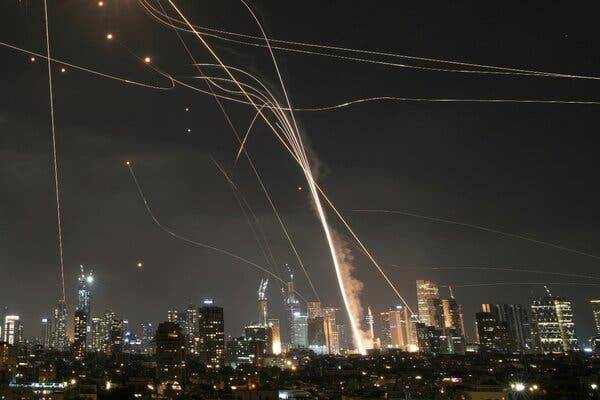
At one point, the Iranian military even launched missiles into Pakistan, but a swift and effective response settled the matter. Despite all this, no Muslim country today wants to see Iran defeated. In the recent conflict, the destruction caused by Iranian missiles in Israel sent a wave of satisfaction across the Muslim world, Palestinians and beyond. Those who vowed to turn Gaza into hell found their territories burning instead.
On the other hand, it is worth noting that Israel attacked a country 75 times its size, striking targets across all regions, yet failed to completely destroy Iran’s nuclear facilities, which are buried deep beneath mountains. This is precisely why the U.S. is likely to enter this war directly at any moment. Meanwhile, mediation offers from Europe and other nations will primarily demand Iran’s withdrawal from its nuclear program.
As for the duration of the war and the possibility of regime change, no definitive predictions can be made. Who could have imagined on October 7, 2023, that the conflict triggered by Hamas’ attack on Israel would still be raging today? Even as Palestinians face genocide and their land is seized, the flames of war have spread far and wide. The Iran-Israel war is simply the next phase of this ongoing battle.
During wars, major and regional powers have their interests. An aggressor doesn't need to have the entire world’s support to achieve all its objectives. History teaches us that a nation must fight its own battles alone—until the heat of war begins to threaten another country’s defence interests or territorial integrity.
When the Soviet Union invaded Afghanistan, nearly the entire world united against the aggressor (with a few exceptions). After 9/11, NATO nations launched a full-scale offensive. But when interests diverge, even allied nations hesitate to go beyond a certain point. On the issues of Iran’s territorial integrity and regime change, the U.S., Israel, and their allies may not remain on the same page. China, Russia, and regional countries will also determine their roles and support based on their own strategic and future considerations.
If the war drags on, regional nations will undoubtedly suffer the most. As for whether the conflict will escalate or trigger World War III, it is too early to say. Let me reiterate: Unless another country’s sovereignty or defence is directly at stake, it will not openly join the war.
As for the so-called "intellectuals" who sensationalise events for profit, spreading the narrative that "Pakistan is next after Iran"—they know very well that just as Iran is not Palestine, Pakistan is not Iran. Pakistan and the emerging superpower China share many strategic interests. During its war with India, Turkey and Azerbaijan openly stood with Pakistan. The Pakistani military sent a clear message to the world by humiliating the enemy, and the world has taken note.
America, too, recognises Pakistan’s importance. Trump’s White House luncheon with Field Marshal Asim Munir not only reflects Pakistan’s significance but also paves the way for renewed friendship and constructive relations between the two nations. However, we must remain vigilant against internal enemies and traitors.