
Senate panel grills HEC, FUUAST over degrees, salaries
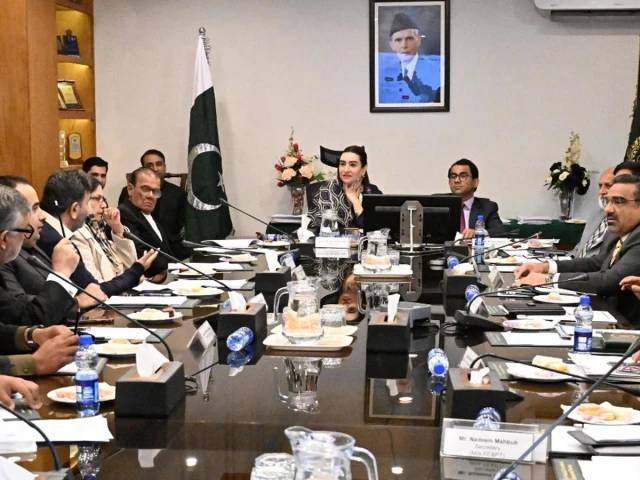

The Senate Standing Committee on Federal Education and Professional Training on Monday took up the long-running dispute over verification of Al-Khair University degrees and the salaries and pensions crisis at the Federal Urdu University, while committee chairperson Senator Bushra Anjum Butt also expressed anger over the absence of senior Education Ministry officials.
The committee met under Senator Bushra Anjum Butt's chairpersonship. The Senate's official schedule listed the committee meeting for September 21, with Al-Khair University and Federal Urdu University matters among issues being pursued by the panel.
At the outset, Senator Butt protested the absence of the federal education minister and questioned what she described as a pattern of senior officials staying away from parliamentary committee meetings.
Senator Kamran Murtaza said ministers were not attending other committees either.
"We are informed an hour before a committee meeting that they cannot attend," Butt said.
A joint secretary informed the committee that an apology from the education secretary had arrived only about an hour before the meeting.
Butt asked officials to check the attendance record to determine when the secretary had last appeared before the committee.
The committee then took up the issue of Higher Education Commission verification of degrees awarded by Al-Khair University, particularly those relating to students enrolled during earlier years.
The HEC chairman told the committee that the commission had ordered the closure of certain institutions affiliated with Al-Khair University, but those institutions continued admitting students despite the directives.
He said Al-Khair University officials had also failed to submit the required records to the commission.
According to the HEC chairman, instructions had been issued that admissions should not be made up to 2018.
Al-Khair University officials, however, told the committee that they had been seeking verification of degrees of students from the 2011-2016 period.
The university's vice chancellor told senators that the forum had previously provided relief to some universities, prompting further discussion over how the disputed degrees should now be handled.
Senator Kamran Murtaza said the committee needed to examine both the findings of the relevant commission and the Supreme Court's judgment before reaching a conclusion.
The HEC chairman told the committee that the commission had decided that the individuals concerned would have to retake the test.
Butt questioned whether it was practical to require former students to sit an examination years after completing their studies.
"Chairman, one cannot pass a test after such a long time; even I wouldn't be able to," she said.
Turning to Senator Murtaza, Butt asked whether he would be able to pass such an examination now.
"I might pass a law exam," Murtaza replied.
Butt argued that the people whose degrees were under question were now much older and would find it difficult to sit academic examinations after such a long gap.
"They have grown old; they have grandchildren," she said.
The HEC chairman said the commission had limited room to act if the requirement flowed from a Supreme Court directive.
"If a directive has been issued by the Supreme Court, there is nothing I can do," he said.
The committee later turned to the continuing financial and administrative problems at the Federal Urdu University of Arts, Science and Technology (FUUAST), including the payment of salaries and pensions and questions surrounding meetings of the university's statutory bodies.
Federal Urdu University Vice Chancellor Dr Zabta Khan Shinwari told the committee that a Senate meeting had not been held, while a meeting of the university's Syndicate had taken place.
Committee members questioned how a Syndicate meeting could have been conducted without the required quorum.
"If you lacked a quorum, how did you hold the meeting?" members asked.
The vice chancellor said the term of the university's Senate was expiring and indicated that a meeting of the existing Senate might not take place.
He said names for constitution of the new Senate would be forwarded to the ministry within a few days.
Shinwari also said approval of the Syndicate was required for work and decisions covering the entire year.
The committee has been examining FUUAST's administrative and financial affairs for several weeks. At a special meeting on September 4, the panel had directed that implementation of decisions taken by an incomplete Syndicate be suspended and raised concerns over unpaid salaries, allowances and pensions.
During Monday's proceedings, the vice chancellor also said the university could not pay salaries to employees who were abroad.
The exchanges prompted a sharp response from Senator Butt, who expressed displeasure over the conduct of vice chancellors of different universities appearing before the committee.
"University vice-chancellors have become uncontrollable and unruly," she said.
Butt said she intended to ensure that university administrations complied with rules and respected parliamentary oversight.
"I will bring these vice-chancellors into line, come what may," she said.
The chairperson also referred to criticism directed at her over her approach towards university administrations.
"It is rumoured about me that I take things personally," she said.
The Federal Urdu University has remained under scrutiny over delayed salaries and pensions, the composition and functioning of its statutory bodies and decisions taken through its Syndicate. At the committee's September 4 meeting, senators had also called for completion of the Syndicate's quorum and ordered a review of the university's administrative and financial affairs.
Reporter: Bilal Khan Niazi