
Washington Times sees US policy shift elevates Pakistan's role
Article author Brig Gen Kimmitt cites end of ‘India First’ approach in his article: Says military performance and leadership reshape Pakistan’s image in US
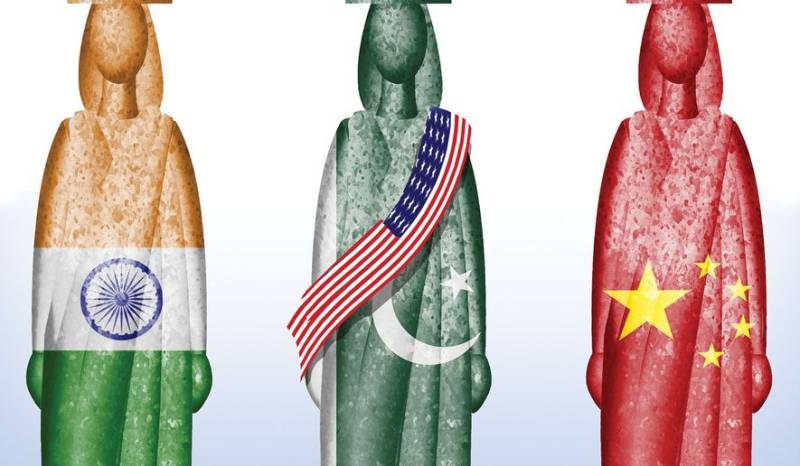

An article published in The Washington Times on Sunday, December 21, has described 2025 as a turning point in Pakistan-United States relations, marking what it called a dramatic transformation in Washington’s strategic outlook toward South Asia.
Written by retired US Army Brigadier General Mark Kimmitt, the article argues that Pakistan has gained clear strategic prominence over India, effectively ending the long-standing “India First” approach in US policy.
According to the author, President Donald Trump’s South Asia strategy has repositioned Pakistan as a central pillar of American regional engagement.
The author writes, "In early January, the U.S. diplomatic and national security relationship with Pakistan was far from cordial.
Islamabad was viewed as being in lockstep with the Taliban, politically questionable and somewhat isolated diplomatically. Despite a gradual recovery from the 2022-2023 floods and recent growth in gross domestic product, its economy still depended on external financing.
Washington saw Pakistan as unreliable and of limited strategic value, while its powerful security establishment was widely considered opaque, prone to double-dealing and unwilling to deliver on counterterrorism commitments.
Analysts warned that Pakistan could face its “most severe” national security challenge in at least a decade and possibly since the 1990s. Yet by the end of 2025, Pakistan appears to have gone from pariah to partner. Few nations have experienced a reputational swing as swift or dramatic. Pakistan has emerged as a pillar of President Trump’s evolving foreign policy vision for South Asia.
Strategically, senior Trump advisers also regarded Pakistan with unease. Its close ties with China especially reinforced these concerns. Pakistani authorities often boast of a friendship with Beijing “deeper than the oceans, taller than the mountains.” The prevailing expectation among Mr. Trump’s emerging foreign policy circle was clear: Double down on India, strengthen the Quad as its Indo-Pacific anchor and, in India’s long-standing interests, sideline Islamabad.
Yet even as Washington leaned into an India-first posture, concerns were mounting about India’s trajectory, from its increasingly majoritarian domestic politics and constraints on civil liberties to its uneven military performance and growing reputation for diplomatic inflexibility. These issues, long ignored or downplayed, were beginning to cast doubt on India’s reliability as regional stabilizer.
The first sign that the icy relationship was beginning to thaw was a series of discreet counterterrorism exchanges, suggesting Islamabad was finally willing to engage in substantive cooperation. When Mr. Trump unexpectedly praised Pakistan’s efforts in a national address in March, Washington was taken aback. The remarks cut directly against long-standing policy, and the infamous “DC Blob” was faced with a new reality regarding Pakistan as a newer and stronger ally.
Islamabad seized the opportunity. Each small gesture of cooperation from Islamabad earned it unexpected credit in Washington, and that credit, in turn, encouraged more engagement. What had long been a brittle, transactional relationship began to take on greater importance as both sides realigned to the new realities.
Trump officials who once dismissed Pakistan now speak of it as responsive, useful, even flexible. A virtuous cycle emerged where more gestures led to more cooperation, cooperation prompted more praise, and the partnership deepened at a pace few in Washington would have believed possible just months earlier.
A decisive turning point came with Pakistan’s unexpected showing in its brief but intense May clash with India, an outcome that reportedly left Mr. Trump stunned. The conflict showcased a level of military discipline, strategic focus and asymmetric capability that Washington had thought unattainable. Officials in Washington who had casually written off Pakistan as a fading power began referring to it once again as a serious regional actor.
For Mr. Trump, the episode redrew the strategic map: Pakistan was now viewed as an emerging asset whose capabilities could anchor his broader South Asia vision.
Pakistan’s military modernization has gained additional momentum from this renewed relevance on the global stage. The armed forces’ command structure has been overhauled, introducing a new top-tier position, the chief of defense forces, now held by Field Marshal Asim Munir, who concurrently serves as army chief.
No less a factor was India’s dismissal and Pakistan’s gratitude for Mr. Trump’s intervention in brokering a ceasefire. To Mr. Trump, a leader who speaks of “ending wars rather than starting wars,” the Indian response to his efforts likely stung deeply. As India damaged its relationship, Pakistan’s stock in Washington soared."