
May 9 riots: Nine-member SC bench to take up pleas against military court trial
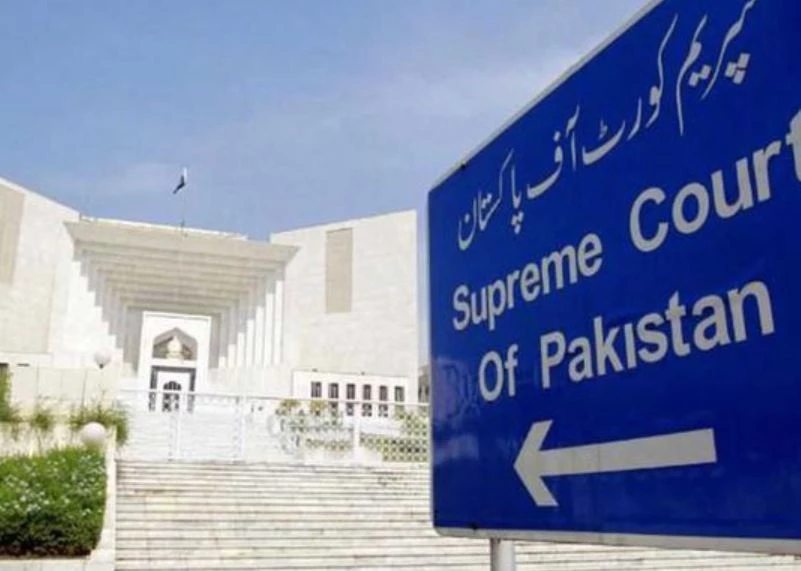

Chief Justice of Pakistan (CJP) Justice Umar Ata Bandial has constituted a nine-judge bench to take up petitions against the trial of May 9 rioters in military courts.
The chief justice is heading the bench while Justice Qazi Faez Isa, Justice Sardar Tariq, Justice Ijazul Ahsan, Justice Mansoor Ali Shah, Justice Munib Akhtar, Justice Yahya Khan Afridi, Justice Mazahar Ali Akbar Naqvi, and Justice Ayesha Malik are its members.
The petitions have been set for hearing tomorrow (June 22).
Last month, PTI activists took to the streets to vent their spleen over the arrest of Imran Khan in a corruption case. They damaged public property, state assets and sensitive installations.
The rioters stormed GHQ in Rawalpindi, Corps Commander House in Lahore and Radio Pakistan.. Innocent people lost their lives and riots left a trail of destruction. The government launched a hunt for the culprits in PTI.
As soon as the decision to try rioters in military court, PTI moved the Supreme Court (SC) against it, calling the decision a ‘clear violation’ of the constitutional guarantees of due process and fair trial.
"Such trials are highly deprecated internationally and widely considered as falling short of providing fair trial," the petition stated.
It stated, "They constitute a violation of Pakistan’s obligations under the International Covenant on Civil and Political Rights (ICCPR) which has been ratified by the country.”
It added, “Trial of thousands of workers of a political party (or a political leader) through such courts is unheard of in the history of this country.
“The workers and supporters now sought to be tried through military courts are not part of any terrorist organisation and pose no threat to national security. Thus, it is contrary to the Constitution to try civilian protesters through military courts.”
Former chief Justice Jawwad S Khawaja too challenged the coalition government’s decision
"This case is also about power flowing from the barrel of a gun. It is about the power of the army. The army controls businesses and land. Historically, it has exercised power and influence over our political dispensation. Its power and reach extend far beyond its constitutional role. If not a state within a state, it is regarded as an entity distinct from the government and referred to as the ‘establishment’.
“The question for our civilian institutions including this court is whether the militarization of justice will be endorsed,” said a 39-page constitution petition filed through Khwaja Ahmad Hosain's advocate.