
Trump’s imperialist desires & international law
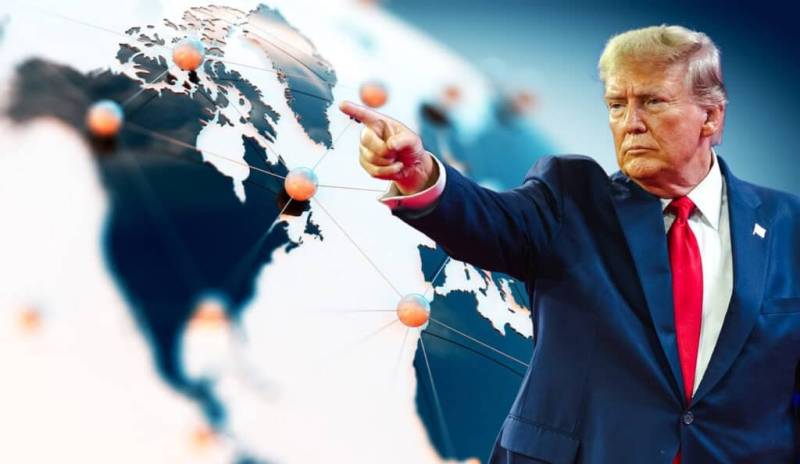

The rise of the United States as a global superpower has often been accompanied by controversial decisions that challenge international norms and laws.
A glaring example of this is the Trump Administration’s aggressive and unilateral actions against Venezuela. These actions are not merely political missteps; they represent a substantial blow to international law and the principles upon which global diplomacy rests.
At the heart of this controversy lies the Trump Administration’s justification for its actions. The President defended the kidnapping of Venezuela’s President, Nicolás Maduro and his wife, claiming they had “stolen” oil that rightfully belonged to the United States. This assertion is not only factually incorrect but also indicative of a troubling mindset, one that views the resources of sovereign nations as extensions of American property. By this rationale, the notion of national sovereignty is under siege, allowing powerful nations to impose their will on weaker states.
Venezuela’s oil reserves, among the largest in the world, belong to its people, not to foreign powers. The argument that the US has a right to administer Venezuela until it “finds capable leadership” echoes historically nefarious actions reminiscent of colonialism. This call for intervention is not merely a misguided attempt to democratize a nation; it is a clear indication of neo-colonialism, where a nation’s resources are seized under the guise of governance. Such actions set a dangerous precedent, raising significant questions about the role of the United States on the global stage and the ethical implications of its foreign policy.
We can imagine if Russia kidnapped the Ukrainian President or China invaded Taiwan—would the United States credibly oppose such actions when its own stance on Venezuela undermines its moral authority? This glaring hypocrisy weakens international law, destabilizes global order and underscores the enduring importance of balance of power. Despite increasing interdependence among nations, strong military and technological capabilities remain essential for states to safeguard sovereignty and territorial integrity. In this context, Pakistan’s military capabilities stand out as a remarkable element in current geopolitical dynamics. Pakistan’s defence forces are not merely a functional military unit; they represent a testament to strategic adaptability and resilience in an increasingly challenging global climate. The Pakistani military has proven capable of addressing varied threats, demonstrating effectiveness in conventional warfare while also embracing modern defensive technologies and strategies.
South Asia’s security landscape is fraught with complexities that require an agile and forward-thinking military strategy. Pakistan’s military, regarded as a guarantor of national survival, plays a crucial role in sustaining the country’s existence amidst external threats. The need for readiness remains paramount and Pakistan has consistently demonstrated commitment to strengthening its defence capabilities. Emphasis on indigenous arms production and technological advancements underscores the nation’s dedication to maintaining sovereignty in the face of external challenges.
Recent advancements in Pakistan’s military technology, from drone capabilities to missile defence systems, illustrate the country’s commitment to enhancing its defensive posture. Such developments not only bolster national security but also contribute to regional stability, as a robust Pakistan serves as a counterbalance to potential aggression. With India as an arch-rival, maintaining a formidable military presence is essential. Continuous enhancement of military capabilities is not just a necessity; it is a strategic imperative ensuring Pakistan’s relevance in South Asia’s evolving security calculus.
While military power is undeniably important, it should not overshadow the necessity for diplomatic engagement and conflict resolution. The international community must rise above aggressive unilateral actions and strive for cooperative solutions that respect the sovereignty of nations. The path to a more stable world order lies not through coercion or conquest but through collaboration and mutual respect among states.
For Pakistan, significant military capability positions it as a critical player in regional politics, ensuring a deterrent effect against any aggressive posturing from neighbours. The robust nature of Pakistan’s defence forces instills confidence among citizens and maintains peace through strength. This is not merely about defence; it is about projecting a narrative of stability and security that resonates beyond borders.
Ultimately, lessons from US actions toward Venezuela must resonate globally. Blatant violations of international law and disregard for territorial integrity place the concept of state sovereignty under threat. The dangers of neo-colonialism are real and require vigilant opposition from the international community. Nations must uphold international norms, ensuring their actions reflect justice and respect for sovereignty.
As the world navigates this complex landscape, awareness of power dynamics is essential. The balance of power, though evolving, remains crucial for state survival. Nations must strengthen military capabilities while engaging in reimagined discourse on international relations that emphasizes cooperation and mutual respect.
While military strength is a key component of survival, it also embodies a broader narrative of resilience. Pakistan’s military prowess, backed by technological advancements, establishes it as an essential player regionally and globally. The commitment to defend sovereignty while maintaining peace reflects the maturity of a nation ready to champion its interests on the world stage. Observing the evolving geopolitical landscape, countries like Pakistan, equipped with strong military capabilities and resolve, are indispensable to a balanced and orderly international system.