
Nationalism vs Patriotism
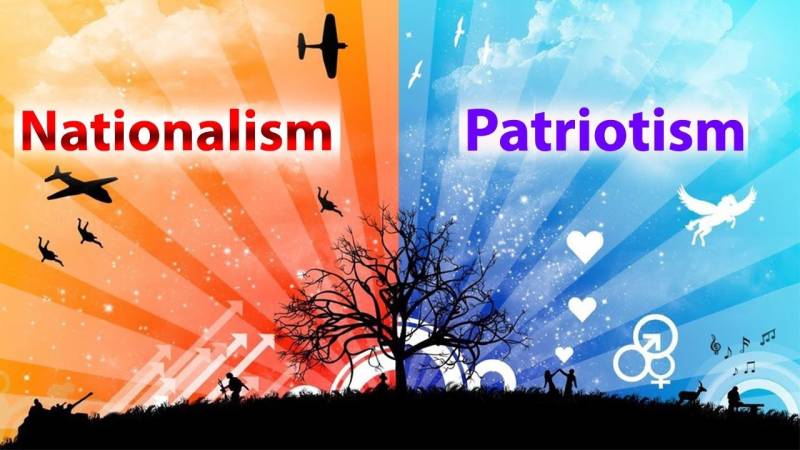

Few concepts in Pakistani political life are more frequently confused, or more consequentially conflated, than nationalism and patriotism. Both are invoked at Independence Day celebrations, both are claimed by competing political movements, both are etched into the rhetoric of parties across the spectrum. Yet beneath the surface, they describe fundamentally different orientations, different in their emotional character, their relationship to reason and ethics, and their implications for how Pakistan treats its own citizens and the wider world. This distinction is not merely academic. For a country still navigating the profound question of what it means to be Pakistani, getting it right may be one of the most important acts of political clarity available to us.
Patriotism, at its core, is love. It is the affection a person feels for the place they come from, for the Karakorums in the north and the mangroves of the Indus delta, for the streets of old Lahore and the chai-stall conversations that define daily life across the country. The patriot cherishes Pakistan in the way one might cherish a family, not because it is superior to all others, but because it is theirs, and because the bonds of shared experience carry genuine emotional and moral weight. Crucially, this kind of love is compatible with honest self-appraisal. A patriot can look at Pakistan's history and acknowledge its failures, the military operations against Bengali civilians in 1971, the suppression of Baloch and Pashtun political movements, the persecution of Ahmadis and other minorities, without that acknowledgement extinguishing their love. The capacity to hold a country's contradictions in view while remaining committed to its future is precisely what distinguishes the genuine patriot from the mere flag-waver. Muhammad Ali Jinnah modelled something like this when he stood before the Constituent Assembly on August 11, 1947, just three days before independence, and insisted that religion would have nothing to do with the business of the state, that every citizen, regardless of faith, would be equal before the law. His speech was not that of a man satisfied with whatever Pakistan happened to become. It was the speech of someone who believed in what Pakistan could be, and who was willing to say, in the intoxicating first days of nationhood, that the country still had work to do. That is the patriot's essential disposition, I love this country, and because I love it, I want it to be worthy of that love.
Nationalism is something else entirely. Where patriotism begins with love, nationalism begins with identity and specifically with the assertion that one's national or communal identity is not merely meaningful but superior. The nationalist does not simply feel attached to Pakistan; they feel that Pakistan, or a particular vision of what Pakistan should be, occupies a privileged position relative to others. In Pakistan's case, nationalism has historically been entangled with religion in ways that make it both potent and dangerous. The idea that Pakistan was created as a homeland for Muslims has sometimes been stretched far beyond anything Jinnah articulated into the claim that "true" Pakistanis are Muslim, that non-Muslim citizens are guests at best. This is nationalism's signature move, to narrow the definition of who genuinely belongs until only a purified core remains. Nationalism also cultivates a particular kind of historical blindness. To acknowledge that Pakistan has committed serious wrongs, in East Pakistan in 1971, in its treatment of ethnic minorities, in the state-sanctioned marginalisation of religious communities, is to threaten the premise of national virtue upon which nationalist pride depends. So, Pakistan's nationalist discourse has often produced sanitised versions of history in which the army is always heroic, the separation of Bangladesh was India's doing rather than a consequence of domestic political failure, and those who raise uncomfortable questions are branded as traitors rather than engaged as citizens. The real-world consequences of this distinction are not abstract. Internally, nationalism draws sharp lines between those who "truly" belong and those who do not. In Pakistan, these lines have been drawn along religious, ethnic, and linguistic boundaries with devastating results. Ahmadis have been constitutionally declared non-Muslim and face routine persecution. Baloch activists who question state policy have been missing or killed. Sindhi cultural identity has at times been treated as a provincial inconvenience rather than a legitimate thread in the national fabric. The nationalist question, "Are you really one of us?" , has cost Pakistan dearly in internal cohesion and in the trust of its own citizens. Patriotism, by contrast, can be held by a Hindu farmer in Tharparkar as readily as by a Punjabi officer in Rawalpindi. It asks only that one be genuinely invested in the shared project of national life. Internationally, nationalism has pushed Pakistan into postures that have often been costly. The zero-sum framing of relations with India, in which any accommodation is weakness and any concession is betrayal, has sustained a military rivalry that consumes resources both countries desperately need for development and human welfare. A more patriotic orientation, one genuinely focused on the well-being of ordinary Pakistanis rather than on national prestige, would ask hard questions about whether perpetual confrontation serves the people it claims to protect. The patriot can recognize that India's gains in literacy or economic growth are not Pakistani defeats. The nationalist cannot afford that recognition.
George Orwell, writing in 1945, made a distinction that still holds. Patriotism, he argued, is defensive, a devotion to a particular way of life, with no wish to impose it on others. Nationalism is a hunger for power and prestige, in which the individual becomes fused with a collective identity they feel permanently compelled to assert. Pakistan's political culture has far too often rewarded the second orientation over the first. Pakistan is a young country with an extraordinary diversity of peoples, languages, and traditions, Punjabi and Baloch, Sindhi and Gilgiti, Shia and Sunni, Muslim and Hindu and Christian and Sikh. Holding that diversity together requires a patriotism capacious enough to include everyone. Nationalism, which always demands a purer core and always requires an enemy, is precisely the wrong tool for the job. A Pakistan that cultivates patriotism asks its citizens what they can do to make this country better. A Pakistan captured by nationalism asks only why it is not already great. These are very different questions, and in my view, they lead to very different futures, one worth choosing, and one worth refusing.