
How to update your CNIC under new NADRA rules!
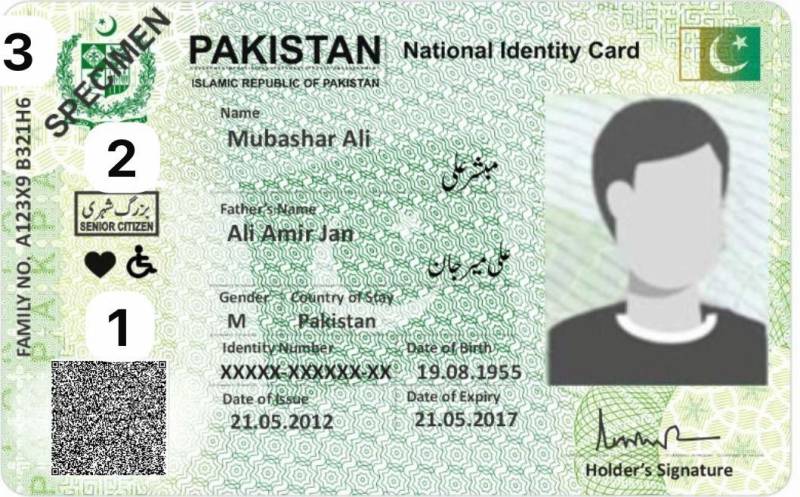

The latest amendments to the National Identity Card Rules, 2002 and the Pakistan Origin Card Rules, 2002 are aimed at modernising Pakistan’s identity document framework by legally embedding QR-based verification, strengthening authentication controls across digital services, expanding biometric recognition, and updating card formats for key citizen categories. These amendments have been introduced under the vision of “One Nation - One Identity”.
QR code legally embedded as security feature
A core reform is the introduction of the Quick Response (QR) code as a defined security and verification feature. The Rules now legally define the QR code as a secure, machine-readable, two-dimensional barcode capable of storing encoded information and converting it into usable identity verification data when scanned.
The amendments authorize the use of “QR code or any other technological feature,” in lieu of the current microchip, enabling National Database and Registration Authority to adopt evolving verification technologies without repeated rule amendments. This will enable all citizens to carry a similar card instead of the currently prevalent two types of national identity cards — one with a microchip and the other without.
Boost to digital id ecosystem and fraud prevention
The QR-enabled capability strengthens Pakistan’s Digital ID ecosystem and supports interoperability through the National Data Exchange Layer. QR-based credentials allow rapid front-end validation of identity attributes while enabling back-end systems to confirm authenticity and status through trusted exchanges.
This is expected to improve speed, transparency, and consistency of identity verification across government entities and regulated sectors, reduce manual handling, and lower the risk of fraud and impersonation.
The amendments also reinforce the enforcement effect of card suspension. The Rules clarify that where a card is suspended, all verification, authentication, and related services linked to that card shall stand suspended forthwith, ensuring it cannot continue to be used through digital verification channels or institutional authentication processes.
Expanded biometric recognition and senior citizen facilitation
Biometric scope has been reinforced through explicit recognition of fingerprints and iris scan within the Rules, reflecting a stronger and more modern multi-modal biometric foundation for identity assurance.
For citizen facilitation, the amendments introduce lifetime validity for senior citizens. Residents or non-resident citizens aged sixty years and above will be issued cards carrying a distinct senior citizen logo with lifetime validity. This reduces renewal burden, improves convenience, and reflects a service-oriented approach for elderly citizens.
Updated formats for AJK residents and special categories
The amendments introduce standardized identification for residents of Azad Jammu and Kashmir by requiring an inscription indicating “Resident of Azad Jammu and Kashmir” in the manner specified by the Authority, ensuring uniform geographic identification.
The Schedules have also been comprehensively updated through substitution of specimen formats for various document categories. Updated smart formats now cover resident citizens, overseas Pakistanis, child registration certificates, persons with disabilities, organ donors, combined categories, and AJK residents. These updated formats visibly incorporate QR codes and enhanced security layouts, standardizing a modern identity document architecture across categories.
Overall, the amendments strengthen the legal and technological foundations of Pakistan’s identity system by enabling secure QR-based verification, reinforcing digital authentication services, improving biometric assurance, reducing fraud risk through immediate service suspension controls, and delivering facilitation measures such as lifetime validity for senior citizens, as referenced in the Gazette Notification dated 24 February 2026.