
Dangers of fake news and misinformation
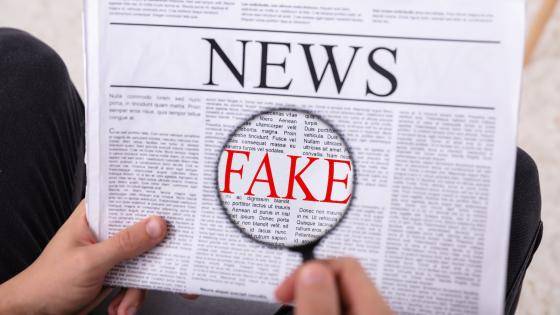

When we wake up in the morning and connect to Wi-Fi to check important work-related messages on WhatsApp, we are immediately flooded with notifications. Messages and alerts from various apps fill our screens one after another. We are confronted with many shocking stories as soon as we open Instagram, Facebook, or any other digital platform to catch up on the news. Often, these stories make us question their authenticity, leaving us to wonder whether they are true or just sensationalized.
When a news is sensational or its truth is questionable, we typically seek to uncover the facts. However, before we can discover the truth behind the news, that information begins circulating on every platform, and we tend to accept it as true. When the real truth emerges, we find ourselves ensnared in a web of misinformation. This issue is becoming increasingly serious every day.
Throughout history, rumours and fake news have been common in every era. The main purpose of spreading false information has been to manipulate public perception, ultimately damaging the reputation of a state or individual to serve political, commercial, or personal interests. In the past, the methods of spreading rumors were slower; people used posters and announcements to disseminate false news to achieve their harmful goals. Today, however, technology enables such information to spread instantly, rather than taking several minutes.
Furthermore, the spread of fake news has significantly increased with the rise of digital media, driven by several key factors. First, nearly everyone now has access to a mobile phone. Second, the Internet is available 24/7, allowing for constant information sharing. Third, many individuals lack digital literacy, making it difficult to identify credible sources. Additionally, people often use social media primarily for entertainment. When they come across news that evokes strong emotions, they tend to share it without verifying its accuracy. This unchecked sharing enables misinformation to spread rapidly around the globe, and the consequences can sometimes be severe.
For example, during the COVID-19 pandemic, many false stories began circulating. One notable instance involved a video shared on social media that showcased ration bags placed on the street to assist those in need. This video garnered over 10 million views. While the post claimed that the video was recorded in Turkey, some users argued that it was actually from Iraq or India. Upon investigation, it was discovered that the video was old and that the rations were intended for earthquake victims and were unrelated to the coronavirus pandemic. Following the launch of the COVID-19 vaccine in the UK and the US, numerous false claims emerged. Some individuals spread the rumour that the COVID-19 vaccine contained a microchip intended to control the minds of vaccinated individuals.
Additionally, during the war in Ukraine, biased reporting and misleading narratives were also prevalent, with several fake Twitter accounts surfacing. A video went viral on social media showing Russian soldiers celebrating the start of the war; however, it was later proven to be a 2018 video of Uzbek soldiers during a military parade in Tashkent.
When fake news spreads, it creates significant challenges for both a country's administration and its public. A recent example is the Jaffer Express incident in Pakistan, where false rumors were propagated by India with the intent to damage Pakistan's reputation and influence public opinion. India even utilized AI to spread this fake news. Undoubtedly, the rise of artificial intelligence in today's world has significantly contributed to the spread of fake news. AI enables individuals to replicate not only someone's appearance but also their voice, posing a serious threat.
Furthermore, in 2022, a rumour surfaced on social media that a female doctor in Rawalpindi had been dismissed for drinking human blood. Various social media accounts shared this information without verification, causing the rumor to gain traction rapidly. Honestly, can anyone believe this?
Research shows that Facebook, X (formerly Twitter), YouTube, TikTok, and WhatsApp are among the world's most popular digital platforms for rapidly circulating news. Of these, WhatsApp is considered relatively more secure due to its end-to-end encryption, which keeps messages confidential between users. With over two billion users worldwide, it has become an effective means of transmitting information. However, this same privacy also facilitates the spread of fake news and rumors, which has become a serious concern. In 2018, the dissemination of false information on WhatsApp in India led to violent incidents that resulted in the loss of lives.
Last year, Gallup Pakistan conducted a survey to determine how many people in Pakistan use social media and which platform is the most popular. A survey indicates that in Pakistan, approximately 31.54% to 40% of the population use social media, with a significant number preferring WhatsApp as their platform of choice.
Not long ago, a post on Facebook claimed that all WhatsApp groups and phone calls in Pakistan would be on "Privacy Mode," indicating they would be monitored. It alleged that all calls would be recorded and that sending messages on any political or religious topics would be scrutinized. In response to this claim, government officials and digital experts confirmed that the government does not possess any such privacy mode and lacks the capability to monitor WhatsApp calls and messages. Due to end-to-end encryption, the government cannot monitor WhatsApp communications on a large scale.
In essence, false rumors and misleading news are widespread on digital platforms, undermining the authenticity of information. As citizens, it is our responsibility to combat the spread of fake news by verifying information before sharing it. Considering everything, anyone can fall for fake news, so it's important to verify suspicious information from reliable sources or seek legal guidance. If someone on social media tries to harm you or witnesses injustice towards someone else, seek legal help immediately.
The PECA Act (The Prevention of Electronic Crimes Act 2016) aims to combat online fake news and cybercrimes. Sharing unverified news on social media can lead to legal action under this act. Therefore, think carefully before posting objectionable content on social media. For example, recently, police filed a case against over 34 social media users under the PECA Act 2016 for disseminating false information and rumors about bomb blasts in the city of Dadu, Sindh province.
From this, we learn that harming a country or individual to achieve nefarious goals is not only against moral values, but it also reflects negatively on humanity.