
US no longer in position to 'dictate' policy to others: Iran
US Secretary of State Rubio says Iran’s offer to reopen Strait of Hormuz is unacceptable: Tehran is trying to ‘buy themselves more time’: Trump meets his national security team on Iran’s proposal: Tehran slams US seizures of ships in Persian Gulf: Death toll in Middle East nears 6,000: First LNG tanker leaves Gulf: Iran turns to Caspian Sea route for food suppliers
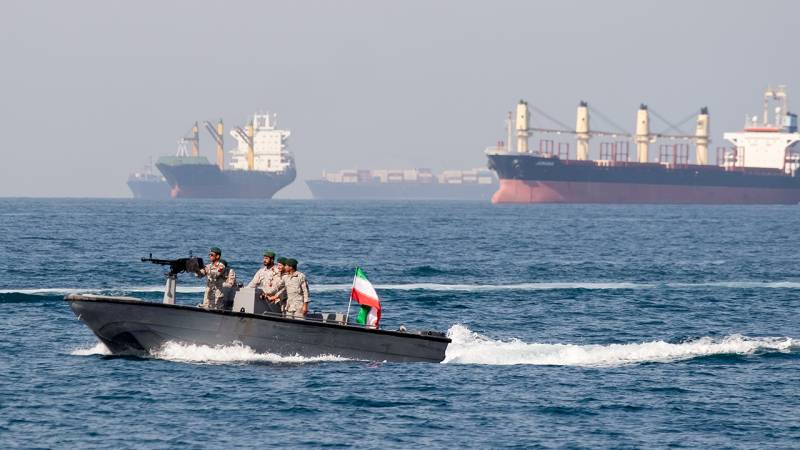

Iran said on Tuesday that the United States was no longer able to "dictate" what other countries do, as Washington weighed a new proposal from Tehran on unblocking the Strait of Hormuz.
Iran has effectively sealed off the strategic waterway since early in the war with the United States and Israel, sending shockwaves through global energy markets and putting the strait at the centre of negotiations to end the conflict.
"The United States is no longer in a position to dictate its policy to independent nations," defence ministry spokesman Reza Talaei-Nik said, according to state TV, adding Washington would "accept that it must abandon its illegal and irrational demands".
While a ceasefire has halted the fighting between Iran, the US and Israel, talks on bringing a permanent conclusion to the conflict have been inconclusive.
The proposal being considered in Washington would reportedly reopen the Strait of Hormuz -- a vital conduit for global oil and gas shipments -- as broader negotiations on the war continue.
Talaei-Nik, speaking ahead of a Shanghai Cooperation Organisation defence ministers' meeting, said Iran was also "ready to share its defensive military capabilities with independent countries, especially the member states" of the SCO.
Iran proposal unacceptable: Rubio
US Secretary of State Marco Rubio has said that the United States would reject a deal Iran offered to reopen the Strait of Hormuz if the US lifts its naval blockade of Iranian ports and ships and agrees to end the war. President Donald Trump hasn’t publicly commented on the offer.
Iranian Foreign Minister Abbas Araghchi meanwhile met with Russian President Vladimir Putin in Moscow after traveling to Pakistan over the weekend.
Secretary of State Marco Rubio said on Monday that Iran’s offer to reopen the Strait of Hormuz in exchange for an end to the US naval blockade of key ports is not acceptable. “What they mean by opening the straits is, yes, the straits are open, as long as you coordinate with Iran, get our permission, or we’ll blow you up and you pay us,” Rubio said during an interview with Fox News.
Rubio said the Strait of Hormuz is a shared international waterway and thus “a system in which the Iranians decide who gets to use an international waterway and how much you have to pay them to use it” cannot be tolerated by the US or other countries that rely on the maritime choke point.
Asked if Iran is serious about reaching a deal for lasting peace, Rubio said, “I think the Iranians are serious about getting themselves out of the mess that they’re in.”
Rubio said Iran is “worse off and weaker” than it was before the US and Israel launched their joint military campaign against the country. He noted that Iran is still contending with economic turmoil after the country’s currency, the rial, collapsed late last year.
With fighting paused, the US has focused on further crippling Iran’s economy by blocking its essential ports in the Strait of Hormuz and interdicting vessels believed to be transporting sanctioned Iranian oil.
Rubio expressed optimism about the impact those efforts have made on Iran’s negotiating tactics. But he said the regime is likely to offer peace deals that do not meet the Trump administration’s demands that Iran halt and never resurrect any nuclear enrichment programmes.
“I think they’re serious about figuring out, how can they buy themselves more time?” Rubio said. “We can’t let them get away with it. They’re very good negotiators. They’re very experienced negotiators. We have to ensure that any deal that is made, any agreement that is made, is one that definitively prevents them from sprinting towards a nuclear weapon at any point.”
Trump meets national security team on Iran’s proposal
President Trump met with his national security team to discuss Iran’s offer to reopen the Strait of Hormuz in exchange for an end to the US naval blockade, White House press secretary Karoline Leavitt said Monday afternoon.
“The meeting may be ongoing, maybe not,” Leavitt said at a press briefing when asked if Trump was considering Iran’s proposal. She said the proposal was being discussed.
US says examining latest Iran proposal
The White House said on Monday that it was examining Iran's latest proposal to unblock the Strait of Hormuz, two months after a US and Israeli offensive sent shockwaves through the global economy.
Peace talks between the United States and Iran to end the Middle East war and fully reopen the vital strait have so far proven inconclusive since a ceasefire came into force.
Trump met with top security advisors on Monday to discuss an Iranian proposal after Tehran passed "written messages" to Washington via Pakistan, spelling out its red lines in negotiations, including on nuclear issues and the Strait of Hormuz, the Fars news agency reported.
The proposal was "being discussed," spokeswoman Karoline Leavitt told a White House briefing.
First LNG tanker leaves Gulf
A ship fully loaded with liquefied natural gas (LNG) has passed through the Strait of Hormuz for the first time since the Middle East war virtually closed the route in early March, marine tracking firm Kpler said.
The LNG carrier Mubaraz, controlled by the Emirati national oil company Adnoc, left the Gulf in April with 132,890 cubic metres of LNG on board, having loaded at Das Island in the United Arab Emirates on March 2, according to Kpler data analysed by AFP.
- Iran security guarantees -
Iran needs guarantees against another US-Israeli attack before it can ensure security in the oil-rich Gulf, Tehran's envoy to the United Nations said Monday.
"A durable and permanent cessation of aggression against Iran supplemented by credible guarantees of non-recurrence and full respect for the legitimate sovereign rights and interests of Iran" were needed, Amir Saeid Iravani told a Security Council session.
- Four dead in Lebanon -
Lebanon's health ministry said Israeli strikes on the country's south on Monday killed four people including a woman and wounded 51 others, three of them children, despite a ceasefire between Israel and Hezbollah.
Axios was first to report that Trump was slated to hold a classified meeting on Iran with his national security and foreign policy advisers.
Iran’s proposal seeks a permanent end to the war and the hostilities in the strait, the closure of which has caused a global energy crisis. But Washington’s acceptance of the agreement would mean Trump would lose some leverage to force the Iranian regime to relinquish its stockpile of enriched uranium.
The president and Rubio have said Iranian leaders are divided over which nuclear concessions the country should make to bring an end to the conflict.
Asked about the next phase of the stalled diplomatic negotiations between the US and Iran, Leavitt said, “I don’t want to get ahead of the president or his national security team.”
Iran slams US seizures of ships in Persian Gulf
Iran’s Foreign Ministry condemned the US military’s recent interdictions of vessels believed to be carrying sanctioned Iranian oil as “the outright legalization of piracy and armed robbery on the high seas.”
“The United States must be held fully accountable for this brazenly lawless behaviour, which strikes at the heart of international law and international free trade, and threatens the basic principles of maritime security,” the foreign ministry’s spokesperson, Esmaeil Baqaei, said in a post on X.
The Pentagon said last week that US forces had boarded the “sanctioned stateless vessel M/T Majestic X transporting oil from Iran” in the Indian Ocean.
Baqaei was responding to a post on X from Jeanine Pirro, the US attorney for the District of Columbia, who said her office submitted a seizure warrant that allowed US forces to interdict the alleged dark fleet vessel.
Death toll in Middle East nears 6,000
More than 5,900 people have died in the Middle East, almost all within Iran and Lebanon, since the Iran war began in late February.
The death toll stands at about 2,509 people in Lebanon, the country’s ministry of public health reported, and more than 3,375 in Iran, according to the non-profit Human Rights Activists News Agency.
Roughly 3.2 million Iranians and 1.1 million Lebanese have been displaced by the fighting, according to the UN refugee agency. More than a dozen people have died in Gulf Arab states, and at least 23 have died in Israel.
Thirteen US service members, one French military officer, one Turkish soldier and two Turkish defence contractors have died in the war.
Iran turns to Caspian Sea route for food suppliers
As the US attempts to cripple Iran’s economy by blocking its essential ports in the Strait of Hormuz, Iran is turning to the Caspian Sea for transport of essential goods, including food, to the country.
Mohammad Reza Mortazavi, head of the Iranian Food Industry Association, said that maritime traffic had increased in the Caspian Sea as food suppliers rely on the waterway to deliver “essential goods.”
Mortazavi said that there is “no problem in the country’s food security,” but added that contending with the closure of the Strait of Hormuz “requires precise planning and greater coordination between the government and the private sector,” according to the Islamic Republic of Iran Broadcasting, an official state-owned television station.
The Caspian Sea, the largest inland body of water in the world, stretches for hundreds of miles across northern Iran.