
Minimal agreement on WTO reform in sight in Yaounde
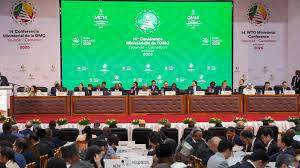

Negotiations towards launching much-needed reform of the World Trade Organization appeared to be heading towards an agreement on the last day of talks in Yaounde Sunday, although nothing was yet finalised.
The conclusion of the agreement will depend on the outcome of another, thorny negotiation between India and the United States over duties on e-commerce, experts and diplomats said.
Over four days of intense negotiations in the Cameroonian capital, trade ministers and delegates have been heavily focused on developing an action plan to revitalise a WTO weakened by geopolitical strains, stalled negotiations and rising protectionism.
The talks, taking place against a backdrop of heightened trade tensions and global economic turmoil linked to the Middle East war, were wrapping up Sunday with negotiators emerging from an all-night session with a text in hand.
In the draft declaration, seen by AFP, trade ministers "commit to work urgently and in good faith ... to advance reforms", following the WTO's 14th ministerial conference (MC14) -- its biennial decision-making ministerial meeting.
"We instruct our officials to intensify their work with a view to providing concrete and substantive recommendations for action by MC15," the draft declaration said.
WTO's ministerial meetings are typically held every two years, but no date or location have yet been set for the next one.
So far, only Saudi Arabia has put itself forward as a candidate to host MC15.
Horse-trading
The 166-member WTO, which struggles to reach agreements because of the requirement for consensus, must undergo far-reaching reforms to emerge from a deep crisis that has raised questions over its central role in regulating international trade.
The draft text does not specify what the reform should do.
It only indicates that countries preparing the ministerial conference had discussions in various areas, including on decision-making, special treatment for developing countries, and ensuring a level playing field for trade.
A major sticking point for years has been the WTO's dispute settlement system, which has seen its appeals body paralysed since 2019 by the United States blocking the appointment of new judges.
The draft ministerial declaration and its agreement on a roadmap towards eventual reforms will meanwhile only be adopted if other issues up for debate in Yaounde.
Observers described intense "horse-trading" going on in the final day of the talks.
E-commerce
As with every WTO ministerial since 1998, countries have been negotiating the extension of a moratorium banning customs duties on electronic transmissions.
The moratorium had risked lapsing when its latest two-year extension was set to expire on March 31, amid resistance from India.
The moratorium is highly important for the United States and other developed countries, who this time wanted to make it permanent.
But India and other developing countries have opposed this, fearing a loss of tax revenues.
Sources close to the talks said India on Saturday lifted its veto on extending the moratorium, but it remained unclear if Washington would be satisfied with kicking the can down the road once again.
A draft text, seen by AFP, proposes a compromise of sorts: extending the moratorium for another five years, instead of two, until June 30, 2031.
However, there was still no consensus on that text.
According to several sources, discussions were also difficult on the touchy issue of agriculture, which has been negotiated since 2000 without much progress.
Countries had set the bar low -- only hoping to issue a joint declaration aimed at laying the groundwork for future negotiations -- but several sources said that was not expected to materialise.