
Situation back to normal at borders with India, says CJCSC
General Sahir Shamshad says Pakistan and India are close to completing border troop reduction: Warns of threat of escalation in future and there might not be enough time for future international mediation: Rules out any meeting with Indian defence chief in Singapore
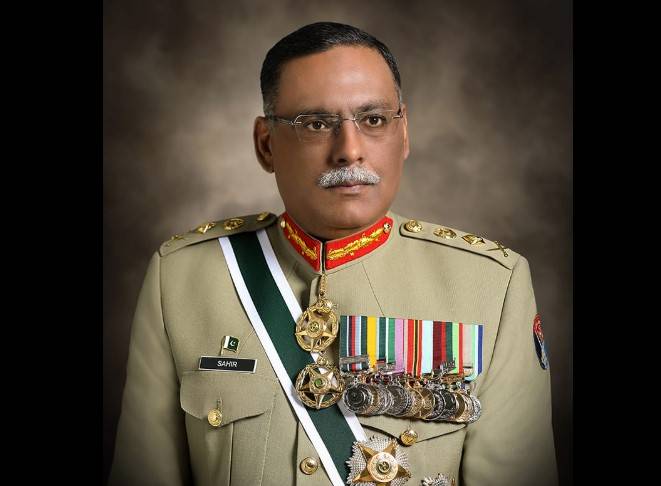

Chairman Joint Chiefs of Staff Committee (CJCSC) General Sahir Shamshad Mirza has said that Pakistan and India are close to reducing the troop build-up along their border to levels before conflict erupted between the nuclear-armed neighbours this month.
In an interview with a British news agency on Friday, General Mirza although warned the crisis had increased the risk of escalation in the future.
Both sides used fighter jets, missiles, drones and artillery in four days of clashes, their worst fighting in decades, before a ceasefire was announced by US President Donald Trump.
The spark for the latest fighting between the old enemies was an April 22 attack in Indian-occupied Kashmir that killed 26 people, most of them tourists. New Delhi blamed the incident on Pakistan, a charge denied by Islamabad.
On May 7, India launched missiles at what it said were "terrorist infrastructure" sites across the border and as Pakistan responded with its own attacks, both countries built up additional forces along the frontier.
General Mirza told Reuters news agency that the two militaries had started the process of drawing down troop levels. "We have almost come back to the pre-22nd April situation... we are approaching that, or we must have approached that by now," said General Mirza, the most senior Pakistani military official to speak publicly since the conflict.
India's ministry of defence and the office of the Indian chief of defence staff did not immediately respond to Reuters' requests for comment on the remarks by General Mirza.
General Mirza, who is in Singapore to attend the Shangri-La Dialogue forum, said while there was no move towards nuclear weapons during this conflict, it was a dangerous situation. "Nothing happened this time," he said and added "But you can't rule out any strategic miscalculation at any time, because when the crisis is on, the responses are different."
The CJCSC also said the risk of escalation in the future had increased since the fighting this time was not limited to the disputed territory of Kashmir, the scenic region in the Himalayas that both nations rule in part but claim in full. The two sides attacked military installations in their mainlands but neither has acknowledged any serious damage.
"This (conflict) lowers the threshold between two countries who are contiguous nuclear powers...in the future, it will not be restricted to the disputed territory. It would come down to (the) whole of India and (the) whole of Pakistan," General Mirza said, adding "This is a very dangerous trend."
General Mirza warned that international mediation might be difficult in the future because of a lack of crisis management mechanisms between the countries. "The time window for the international community to intervene would now be very less, and I would say that damage and destruction may take place even before that time window is exploited by the international community," he said.
Pakistan was open to dialogue, he added, but beyond a crisis hotline between the directors general of military operations and some hotlines at the tactical level on the border, there was no other communication between the two countries.
General Mirza said there were no backchannel discussions, or informal talks, to ease tensions. He also said he had no plans to meet General Anil Chauhan, India's chief of defence staff, who is also in Singapore for the Shangri-La forum. "These issues can only be resolved by dialogue and consultations, on the table. They cannot be resolved on the battlefield," General Mirza said.