
Trump slashes Pakistan tariff to 19%
US president slaps dozens of trading partners with steep tariffs including 35% duty on many goods from Canada, 50% for Brazil, 25% for India, 20% for Taiwan, 39% for Switzerland: New tariffs to take effect in week’s time
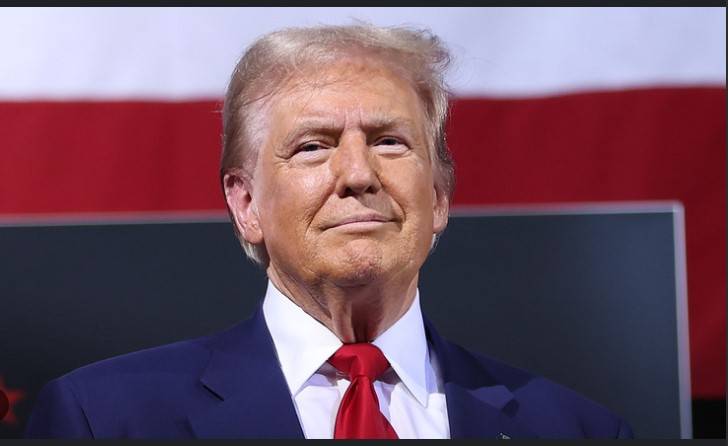

US President Donald Trump on Friday unveiled an array of import levies that ranged as high as 50 percent on Brazil and 41 percent on Syria, and included a hike on Canadian imports from the current 25 percent to 35 percent. Rates for India remained unchanged at 25 percent, as announced by Trump earlier this week, but the duties for Pakistan have been slashed to 19 percent, from the earlier 29 percent, reported 24NewsHD TV channel.
This came after Trump said the US has struck a deal with Pakistan to jointly develop its oil reserves.
A range of new tariffs is due to take effect in one week, with separate sector-specific duties -- on copper -- also being implemented on trading partners.
As per Trump's order, the “universal” tariff for goods coming into the US will remain at 10 percent, the same level that was implemented on April 2. However, that 10 percent rate will apply only to countries with which the US has a trade surplus.
Trump signed the sweeping executive order imposing sharply higher tariffs on 69 trading partners, with import duties rising as high as 50 percent.
The new tariffs are part of what the White House calls a “reciprocal tariff” regime designed to counter what Trump described as persistent trade imbalances and national security risks.
The tariffs are a demonstration of raw economic power that Trump sees putting US exporters in a stronger position while encouraging domestic manufacturing by keeping out foreign imports.
But the muscular approach has raised fears of inflation and other economic fallout in the world's biggest economy.
And with questions hanging over the effectiveness of bilateral trade deals already struck -- including with the European Union and Japan -- the outcome of Trump's plan remained uncertain.
Trump's new measures in an executive order raises duties on nearly 70 economies, from a current 10 percent level imposed in April when he unleashed "reciprocal" tariffs citing unfair trade practices.
The steeper levels, varying by trading partner, go as high as 41 percent.
Trump also adjusted some tariff levels threatened in April, with Switzerland now facing a higher 39 percent duty and Thailand a lower 19 percent rate.
The tariff on Taiwanese products was revised down to 20 percent, but its President Lai Ching-te vowed to seek an even lower level.
Trump separately hiked tariffs on Canadian goods to 35 percent, though indicating in an NBC interview he was open to further talks. Canada and Mexico face a separate tariff regime. But exemptions remain for imports entering the United States under a North American trade pact.
"No doubt about it -- the executive order and related agreements concluded over the past few months tears up the trade rule book that has governed international trade since World War II," said Wendy Cutler, senior vice president of the Asia Society Policy Institute.
"Whether our partners can preserve it without the United states is an open question," she added.
- Frantic negotiations -
The elevated duties come after Washington twice postponed their implementation amid a frantic series of negotiations, alongside announcements of new duties and deals with partners.
Just Thursday, Trump announced he was delaying a tariff hike on Mexican products, keeping levels at 25 percent with existing exemptions. The 90-day postponement followed talks with his counterpart Claudia Sheinbaum.
The 79-year-old Republican has made tariffs core to his protectionist brand of hard-right politics. On Thursday, he claimed that the US economy had "no chance of survival or success" without tariffs.
But the latest salvo came amid legal challenges against Trump's use of emergency economic powers. After a lower court said the president exceeded his authority, the US Court of Appeals heard arguments Thursday in cases against Trump's blanket tariffs targeting different countries.
While Trump has touted a surge in customs revenues this year, economists warn the duties could fuel inflation.
Proponents of his policy argue their impact will be one-off, but analysts are awaiting further data to gauge for more persistent effects.
- China question mark -
Those who managed to strike deals with Washington to avert steeper threatened levies were Vietnam, Japan, Indonesia, the Philippines, South Korea and the EU.
Britain also reached a pact with the United States, although it was not originally targeted by higher "reciprocal" tariffs.
For Canada, transshipped goods to evade its 35 percent duty would face even higher levels, said a White House fact sheet. Its trade ties with Washington faced renewed threat after Prime Minister Mark Carney announced plans to recognize a Palestinian state at the UN General Assembly in September.
Trump's latest order however appeared to raise tariffs on several countries not initially targeted in April -- to 15 percent -- including Ecuador, Ghana and Iceland.
Notably excluded from the drama was China, which faces an August 12 deadline instead, when duties could bounce back to higher levels.
Washington and Beijing at one point brought tit-for-tat tariffs to triple-digit levels, but both countries have agreed to temporarily lower these duties and are working to extend their truce.–Agencies