
APBF urges govt to facilitate small enterprises in budget
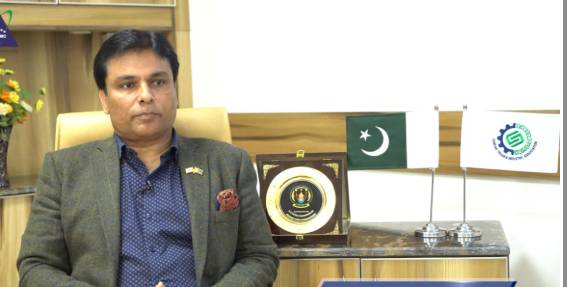

All Pakistan Business Forum (APBF) has urged the federal government to facilitate small and medium-sized enterprises (SMEs) during Federal Budget 2025-26.
After chairing a policy meeting in Lahore to finalize recommendations for upcoming fiscal budget, Business Forum President Syed Maaz Mahmood has demanded of the government to take tangible steps to revive and protect the SME sector, which represents over 90% of Pakistan’s 5.2 million business enterprises and was contributing 40pc to the GDP and employs more than 78% of non-agricultural labor force.
Business Forum chief said SME sector cannot survive without real support in the form of tax relief, access to financing, and a business-friendly regulatory environment.
Syed Maaz Mahmood said, “We expect the federal government to design Budget 2025-26 with a strong focus on job creation through industrialization, ease of doing business, and SME revival.”
The APBF recommended a visible reduction in indirect taxes, including lowering sales tax to single digits and cutting the corporate tax rate to foster formalization and growth. It also urged the Ministry of Finance to promote regionally competitive energy tariffs, speed up sales tax refunds, and provide interest-free or low-interest credit schemes without collateral, particularly for youth-led startups and newly registered SMEs.
APBF leaders stressed that the high cost of doing business, combined with inflation, energy shortages, and a tight monetary policy, has pushed many small businesses to the brink. The forum proposed a temporary five-year tax holiday for newly registered SMEs and exemption from audits during this period to encourage formal registration and investment.
APBF Chairman Ibrahim Qureshi highlighted that while Pakistan requires 1.5 to 2 million new jobs annually, the current economic structure lacks the capacity to deliver without SME empowerment. “The SME sector was the hardest hit during the COVID-19 pandemic and has yet to fully recover. Government financing to SMEs still accounts for less than 7% of total private sector lending, and SME borrowers remain below 250,000 nationwide. This must change,” he said.
The APBF also called for rationalizing the policy interest rate, currently among the highest in the region, which continues to stifle business expansion and capital formation. “The key policy rate must be slashed to single digits to stimulate investment and production,” said Syed Maaz.
The business forum also emphasized the need to widen the tax base by reducing tax rates and simplifying procedures, which would help curb the informal economy and improve compliance.
Syed Maaz further stressed that foreign direct investment (FDI) should be actively pursued through liberal investment policies, faster approval processes, and reliable infrastructure. In its detailed submission to the Ministry of Finance, APBF also urged the government to introduce sector-specific relief packages, especially for export-oriented SMEs, and to ensure energy and raw material availability at consistent and affordable rates.