
Nadia Afgan calls attention to psychological cost of ‘toxic households’
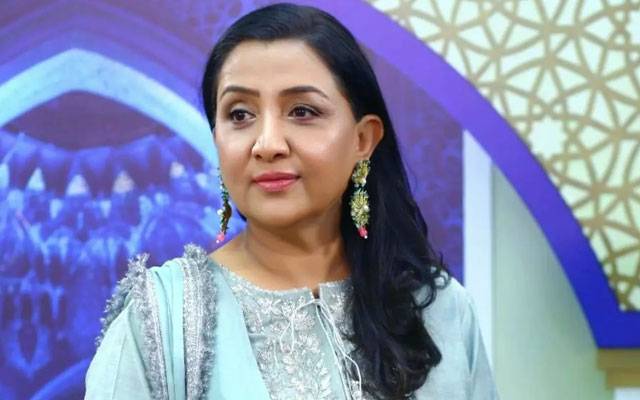

Pakistani actress Nadia Afgan has sparked an important conversation about mental health and childhood trauma after sharing a thought provoking message on social media.
The actress highlighted the often overlooked psychological impact of growing up in emotionally unhealthy households, particularly within South Asian families where such issues are rarely discussed openly.
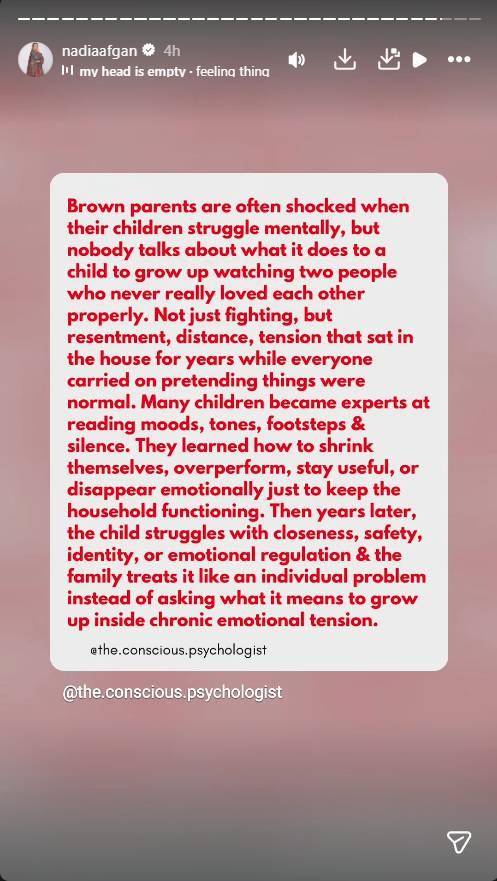
Taking to her Instagram handle, Nadia reposted a statement that shed light on the emotional burden many children carry while growing up in homes marked by constant tension, resentment, and unresolved conflicts.
The story read: “Brown parents are often shocked when their children struggle mentally, but nobody talks about what it does to a child to grow up watching two people who never really loved each other properly. Not just fighting, but resentment, distance, tension that sat in the house for years while everyone carried on pretending things were normal.
Many children became experts at reading moods, tones, footsteps & silence. They learned how to shrink themselves, overperform, stay useful, or disappear emotionally just to keep the household functioning.
Then years later, the child struggles with closeness, safety, identity, or emotional regulation & the family treats it like an individual problem instead of asking what it means to grow up inside chronic emotional tension.”
According to 24NewsHD, conversations surrounding mental health in South Asian societies are gradually becoming more common, but there is still a long way to go. Emotional wounds are not always caused by loud arguments or dramatic incidents; sometimes they stem from years of silence, neglect, unresolved resentment, and an environment where children constantly feel the need to adapt for survival.
Also Read: Once a heroine always a heroine, Saima Noor turns head with dance moves
As awareness around mental health continues to grow, experts increasingly stress the importance of healthy communication, emotional support, and stable family environments.
Also Read: You need treatment, Fazila Qazi's ‘brutal dig’ at Iqrar Ul Hassan