
Naseeruddin Shah stands firmly by Diljit Dosanjh over casting Hania Aamir
Veteran actor slams ‘dirty tricks department’ of ruling BJP; Lashes out at efforts to limit people-to-people contact
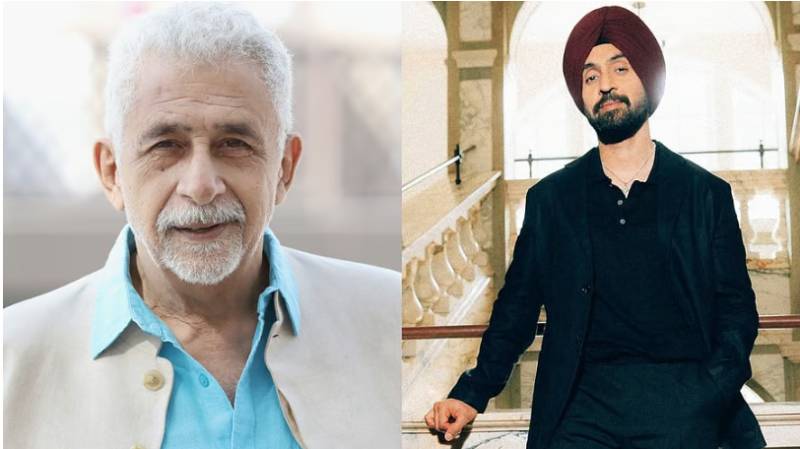

Celebrated Bollywood actor Naseeruddin Shah has come out strongly in support of Indian Punjab star Diljit Dosanjh, who has been facing online backlash and political trolling over his association with the film, Sardar Ji 3, involving Pakistani talent Hania Aamir.
In a brave and bold statement, Shah slammed the smear campaign allegedly orchestrated by the ‘dirty tricks department’ of what he referred to as the ‘Jumla Party’– a term often used to mock the ruling BJP government in India.
“I stand firmly with Diljit Dosanjh. The dirty tricks department of Jumla Party has been awaiting a chance to attack him. They think they've got it at last,” Shah said.
The controversy stems from Diljit’s involvement in a film that features Pakistani artists, leading to renewed calls from right-wing trolls and political voices demanding a cultural boycott.
Shah clarified that Diljit had no hand in the casting decisions, saying: “He was not responsible for the casting of the film, the director was. But no one knows who the director is, whereas Diljit is known the world over. He agreed to the cast because his mind is not poisoned.”
The veteran actor lashed out at efforts to limit people-to-people contact between India and Pakistan.
“What these goons want is to put an end to personal interaction between the people of India and Pakistan,” he said.
Shah added, “I have close relatives and some dear friends there, and no one can stop me from meeting them or sending them love whenever I feel like it.”
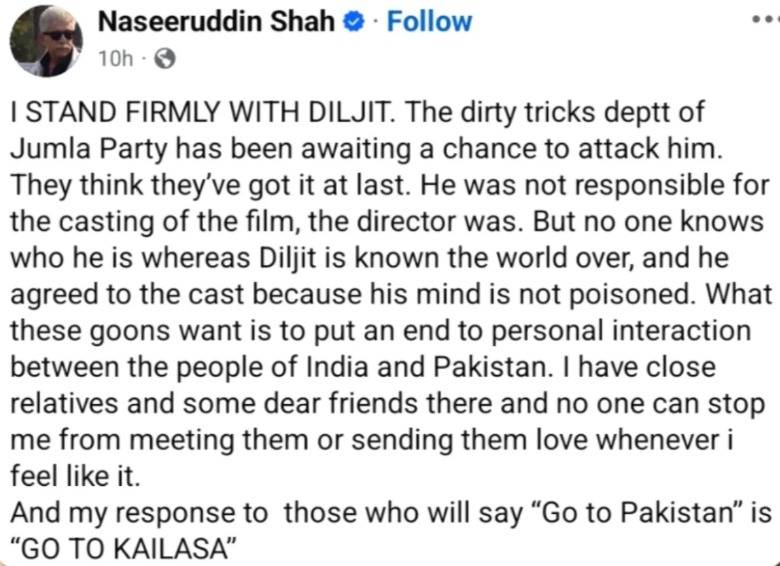
In a final jab to those telling critics to "Go to Pakistan," Shah quipped, “My response to those who will say ‘Go to Pakistan’ is: ‘Go to Kailasa’”– a reference to the self-declared 'nation' created by fugitive godman Nithyananda.
Shah’s statement has been widely circulated on social media, with many applauding his stance at a time when artists increasingly face pressure over political and cross-border sensitivities.