
Everybody hates you now: Trump clashes with ‘crazy’ Netanyahu over Lebanon
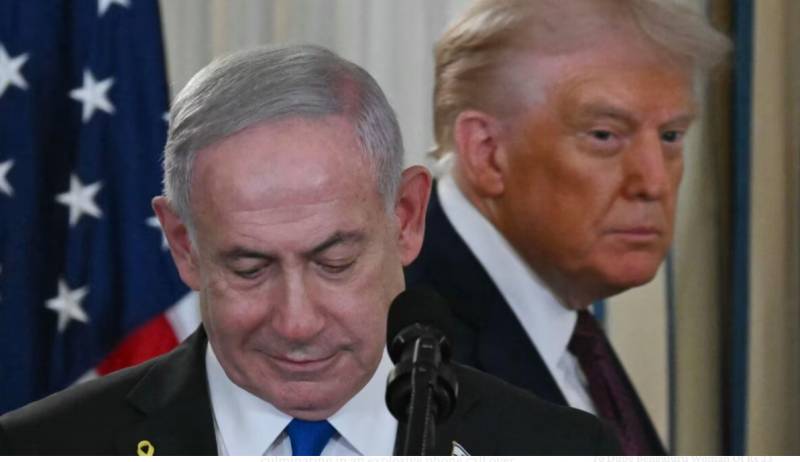

When Donald Trump returned to the White House for his second term, many assumed Israeli Prime Minister Benjamin Netanyahu had found his strongest ally yet.
Trump backed Israel through the Iran war, repeatedly defended its military actions, and positioned himself as one of the most pro-Israel presidents in modern US history. But a series of developments over the past two months, culminating in an explosive phone call over Lebanon this week, suggests the relationship may be entering a more complicated phase.
According to Axios, Trump erupted at Netanyahu during a June 1 phone call after Israel threatened to expand military operations in Lebanon and strike targets in Beirut. Citing US officials familiar with the conversation, Axios reported that Trump accused the Israeli prime minister of jeopardising broader American interests in the region and warned that further escalation would leave Israel increasingly isolated.
A US official briefed on the call quoted Trump as saying: “You’re f***ing crazy. You’d be in prison if it weren’t for me. I’m saving your a**. Everybody hates you now. Everybody hates Israel because of this." Another source said Trump was visibly furious and at one point shouted at Netanyahu, asking: “What the f*** are you doing?"
The exchange was remarkable not just for its language, but for what it revealed: for perhaps the first time since Trump’s return to office, Washington’s diplomatic priorities appear to be colliding with Netanyahu’s military strategy.
The Trump-Netanyahu relationship has long been portrayed as one of the closest partnerships between an American president and an Israeli prime minister.
"During the call, he even mentioned to Netanyahu, when he asked him to stand down and to not go forward with the strikes in Beirut, he told him, 'If it weren't for me, you would have been in prison by now," @BarakRavid reports. pic.twitter.com/A7AVk8sRj4
— Kaitlan Collins (@kaitlancollins) June 2, 2026
During Trump’s first term, the US recognised Jerusalem as Israel’s capital, moved its embassy there, recognised Israeli sovereignty over the Golan Heights and brokered the Abraham Accords. Netanyahu often described Trump as Israel’s greatest friend in the White House.
Even after Trump returned to office in 2025, the two leaders initially appeared aligned on almost every major issue, particularly Iran.
However, Axios, quoting sources, says tensions have been building for weeks. On May 20, Axios reported that a phone call between the two leaders over a potential Iran agreement had become unusually difficult, with one source describing Netanyahu as having his “hair on fire" over Trump’s pursuit of diplomacy with Tehran.
The disagreement has become increasingly clear—Netanyahu sees Iran primarily as a military threat to be contained through pressure, while Trump increasingly appears interested in converting battlefield gains into a broader diplomatic settlement.
The latest clash centred on Lebanon, but the dispute was really about Iran.
According to Axios, Trump’s anger was driven by concerns that Israeli escalation against Hezbollah could derail ongoing US-Iran negotiations. Tehran had reportedly warned that continued Israeli attacks in Lebanon could jeopardise talks with Washington.
In an interview with Axios in April, Trump said he had urged Netanyahu to limit Israeli action to “surgical" operations and avoid a broader war. At the time, Washington was trying to preserve a fragile ceasefire between Israel and Hezbollah while also opening direct talks between Israel and Lebanon.
Reuters reported in April that the Trump administration had brokered a 10-day ceasefire between Israel and Lebanon and pushed both sides towards direct negotiations in the most significant diplomatic engagement between the two countries in decades.
For Trump, Lebanon is no longer a separate conflict. It has become tied to a much larger objective: stabilising the region sufficiently to secure a broader understanding with Iran.
The irony is that Trump remains one of Israel’s strongest supporters.
The latest dispute does not resemble the ideological clashes that defined relations between Netanyahu and former presidents such as Barack Obama or Joe Biden. Instead, the disagreement is tactical.
Trump appears convinced that the military phase of the regional conflict has already achieved most of its objectives. His focus now is on turning those gains into diplomatic agreements.
In recent weeks, US officials have pursued multiple tracks simultaneously: preserving the Iran ceasefire, advancing indirect talks with Tehran, maintaining the Lebanon ceasefire and encouraging direct Israel-Lebanon negotiations.–Agencies