
Earthquake jolts Pakistan, tremors felt across multiple cities
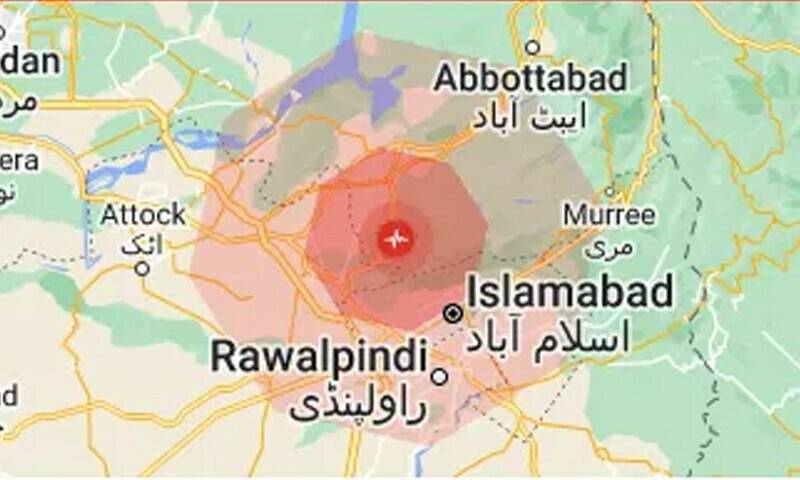

A powerful earthquake measuring 6.3 on the Richter scale struck Pakistan late Friday evening, sending shockwaves across large parts of the country and neighboring Afghanistan, causing widespread panic among residents.
According to the Pakistan Meteorological Department, the earthquake was recorded at 9:13 PM PST on April 3, 2026. The quake had a depth of 190 kilometers, with its epicenter located in the Hindu Kush Region at coordinates 36.48°N latitude and 70.84°E longitude.
Strong tremors were felt in several cities, including Islamabad, Peshawar, Chitral, Swat, and Shangla. Reports of strong shaking also emerged from Rawalpindi, Lahore, Faisalabad, Sargodha, and Gujranwala.
In Khyber Pakhtunkhwa, severe tremors were reported in Mardan, Swabi, Nowshera, Haripur, Abbottabad and Bajaur. Tremors were also felt in Battagram, Kohistan and Balakot.
In the federal capital and surrounding areas, including Bani Gala, residents reported intense shaking, forcing people to rush out of homes and offices. Similar scenes were witnessed in various cities where citizens evacuated buildings in fear.
The earthquake also impacted areas of Azad Kashmir, including Muzaffarabad, Rawalakot, Hattian Bala, Chinari, Chakothi, Neelum, and Haveli Kahuta, where strong tremors caused fear and panic among residents.
Further reports confirmed tremors in Attock, Mandi Bahauddin, and parts of Khyber district including Landi Kotal and surrounding areas such as Shinwari and Shalman.
Eyewitnesses across multiple regions reported that people rushed out of their homes, shops, and workplaces, many reciting verses from the Holy Quran and Kalima Tayyaba. In areas like Swat, Shangla, Abbottabad, and Hattian Bala, the tremors were described as particularly strong, intensifying public fear.
No immediate reports of casualties or major damage have been confirmed so far. Authorities are monitoring the situation closely and assessing any potential impact.
The earthquake highlights the region’s vulnerability due to its proximity to seismic zones, particularly the Hindu Kush region, which is known for frequent tectonic activity.