
Indian deputy army chief's speech confirms India's hands down defeat
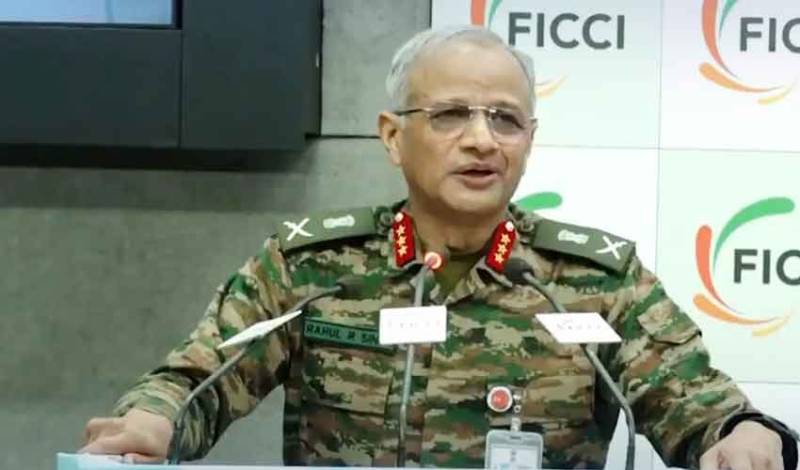

Indian Deputy Army Chief Lt Gen Rahul Singh’s self contradictory speech proves India’s decisive and hands down defeat while leaving behind most telling question; Why India embarked on a war that it was so clearly unprepared for?
In a startling and contradictory statement, India’s Deputy Army Chief, Lt. Gen. Rahul Singh, while attempting to deflect attention from the glaring failure of Operation Sindoor, inadvertently confirmed what the world has come to recognize: India suffered a decisive military setback at the hands of Pakistan.
After two months of narrative manipulation and strategic obfuscation, the Indian military’s senior leadership has now resorted to an unconvincing cocktail of blame, denial, and hyperbole—accusing everyone from China to Türkiye in a desperate attempt to mask its humiliation.
The statement, rather than salvaging India’s bruised image, further erodes its credibility. Having failed to acknowledge defeat with dignity, India now claims it was facing a multilateral threat—a flimsy excuse that only underscores the scale of Pakistan’s success in Operation Bunyanum Marsoos.
Lt. Gen. Singh’s insinuation that foreign support enabled Pakistan’s operational edge is not only factually incorrect but also intellectually insulting. Pakistan’s defense doctrine has, for decades, remained India-centric. Our intelligence, surveillance, and air defense systems are home-grown, highly developed, and independently operated. The Pakistan Air Force tracked Indian fighter jet movements from their engine ignition to their abortive egress—without external assistance.
Equally absurd is the assertion that Pakistan’s use of Chinese-origin equipment somehow constitutes foreign involvement. By this logic, India itself—using platforms and munitions sourced from France, Israel, the U.S., and Russia—was in coalition with half the Western world. This argument is not only juvenile but betrays the intellectual bankruptcy of a military command unable to reconcile with operational failure.
Wars are not won by hardware alone, but by the professionalism, morale, and strategic clarity of those who wield it. Pakistan’s Armed Forces are among the most battle-hardened and professional in the region, with decades of experience confronting asymmetric and conventional threats. In contrast, Indian military leadership has increasingly veered into optics-driven jingoism, mistaking cinematic bravado for strategic competence.
Furthermore, Lt. Gen. Singh’s comments reveal a telling contrast: while India, through a decade of confrontational policies, has alienated its neighbors and militarized its foreign policy, Pakistan has deepened bonds with friendly nations through principled diplomacy, strategic restraint, and regional engagement. China and Türkiye are indeed brotherly nations to Pakistan—but their friendship is not predicated on military intervention.
The most revealing part of the Deputy Army Chief’s remarks is the implicit confession: India initiated a misadventure, underestimated its adversary, suffered a humiliating setback, and is now scrambling for post-facto justifications. Lt. Gen. Singh’s lament about being “one against three” is not a show of strength—it is an admission of poor strategic judgment and operational unpreparedness.
Operation Sindoor was not only ill-conceived, but ill-executed. In contrast, Operation Bunyanum Marsoos demonstrated Pakistan’s superior preparedness, rapid mobilization, and strategic discipline. If India truly sees itself as a “net security provider,” it must first reckon with the reality that its own military now publicly admits urgent deficiencies.
Pakistan desires peace. We remain committed to resolving all outstanding disputes—including the core issue of Jammu and Kashmir—through dialogue and diplomacy. But let there be no ambiguity: any future misadventure will be met with resolute and overwhelming force.
If New Delhi seeks stability, it must introspect, recalibrate, and learn. If it continues to chase illusions of regional hegemony, it will once again confront the hard wall of Pakistani resolve.
In sum, Lt. Gen. Rahul Singh’s statement was less a military analysis and more a diplomatic debacle—an inadvertent admission of defeat, cloaked in deflection. It exposed the very fractures within Indian military thinking that Pakistan has long assessed accurately.
And perhaps the most telling question remains: Why embark on a war you were so clearly unprepared for?