
Report warns of deepening mental health crisis in Indian Occupied Kashmir
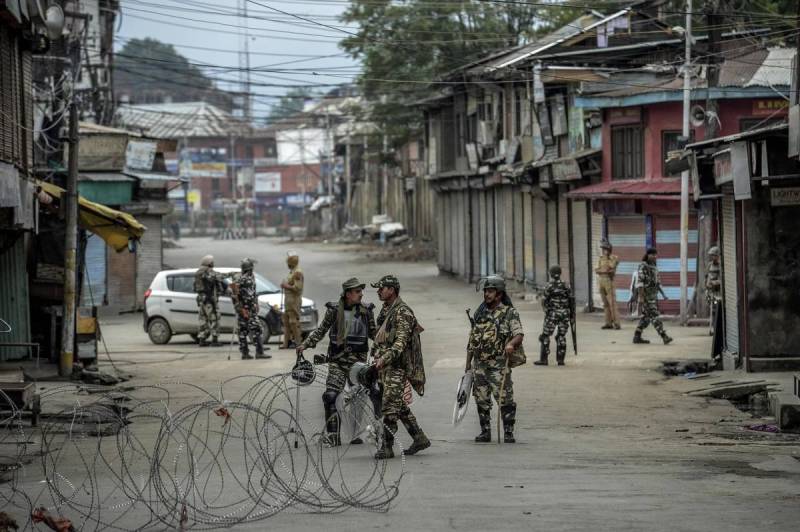

A report by the Kashmir Institute of International Relations (KIIR) has highlighted what it describes as a severe and escalating mental health crisis in Indian Illegally Occupied Jammu and Kashmir (IIOJK), linking it to decades of conflict, human rights violations and political instability.
The report, titled “Mental Health in Occupied Jammu and Kashmir,” states that mental health in the region is closely tied to housing conditions and the guarantee of fundamental human rights. It documents that more than 100,000 people have lost their lives in three decades of armed conflict, while over 8,000 enforced disappearances have been recorded.
According to the report, the abrogation of Articles 370 and 35A on August 5, 2019, was followed by prolonged curfews and what it terms the longest internet shutdown in history, further exacerbating public distress. The region has been described as an “open-air prison” under continued siege.
Citing various studies, the report claims that 45 percent of adults — approximately 1.8 million people — suffer from depression. Anxiety affects 26 percent of the population, while 19 percent experience symptoms of post-traumatic stress disorder (PTSD). Nearly 47 percent of surveyed adults reported experiencing at least one severe traumatic event.
Mental health challenges are also prevalent among children. Psychiatric disorders were found in 22 to 27 percent of children aged 8 to 14. The report further notes that suicide attempts increased by more than 250 percent between 1994 and 2012.
Despite the scale of the crisis, only about 10 percent of patients receive treatment. According to the 2011 census, the population of Jammu and Kashmir stood at 12.5 million, yet there are only 41 psychologists in the entire region, most of them based in Jammu and Srinagar. Mental health services are largely confined to Government Medical College (GMC) Srinagar and SKIMS Hospital, with only 140 psychiatric beds available across ten districts. The number of district-level consultants is reported to be just five to six.
The Institute of Mental Health and Neurosciences (IMHANS) reportedly registered over 77,000 mental health patients in 2020 alone. Dr. Arshad Hussain, cited in the report, observed a noticeable rise in anxiety and depression cases during the COVID-19 pandemic.
The report also highlights gender-specific concerns. According to the National Family Health Survey, 61 percent of women in the region reported reproductive health problems, compared to the national average of 39 percent. A study conducted at SKIMS found that 65 to 70 percent of patients with polycystic ovary syndrome (PCOS) also suffered from psychiatric disorders. Additionally, 75 percent of patients visiting SMHS Hospital and Government Psychiatric Hospital on a daily basis are women, while 91 percent of widows surveyed said they did not consider remarriage.
The report shares individual cases to illustrate the human cost of the conflict, including that of 15-year-old Ishtiaq Ahmed Khande, who was killed on June 29, 2010. His mother, Jamila Bano, was later diagnosed with depression and PTSD.
The KIIR report concludes that without meaningful political resolution, protection of human rights and significant investment in mental health infrastructure, the psychological toll on the people of IIOJK will continue to deepen.