
Islamabad hosts rare singles meet-up in a bid to help them find life partners
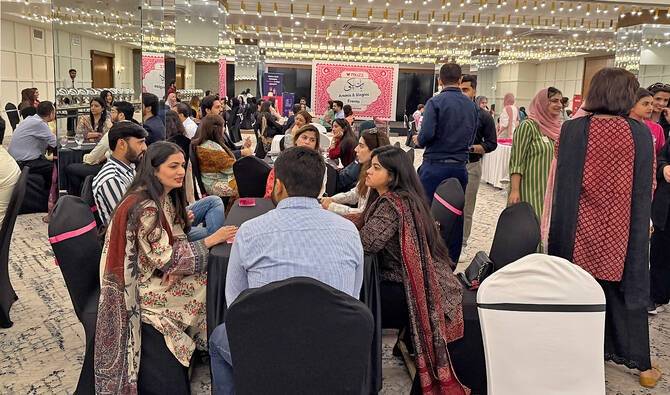

In a society where traditional norms often discourage casual dating, nearly 190 Pakistanis gathered in Islamabad this week for a rare singles meet-up—offering a culturally respectful, yet more open, path to finding a life partner.
The event was organized by Muzz, a Muslim marriage app with over 15 million members globally and more than 2 million users in Pakistan. Branded under the series name “Baat Pakki”—an Urdu phrase signifying a finalized marriage proposal—the gathering marked the launch of multiple matchmaking events across the country.
To respect cultural sensitivities, every participant was required to bring a chaperone, ensuring seriousness and family involvement.
“The aim was to help people from various age groups meet in a comfortable and respectful setting,” said Shahzad Younas, CEO of Muzz. “Our team facilitated conversations to ensure everyone interacted with those they might be compatible with.”
Participants were grouped by age—22–30, 30–40, and 40+—with a dedicated lounge area for family members. Icebreaker questions and support from Muzz staff helped ease conversations. Attendees initially mingled within their age groups before cross-group introductions encouraged broader interaction over the four-hour session.
The event stood out as marriages in Pakistan are typically arranged by families or brokers known as "Rishta Aunties," and prospective brides and grooms rarely meet one-on-one before a proposal is made.
For many families, the new format was a welcome alternative.
“Involving parents makes everything more transparent,” said Nazleen Javed, 65, who accompanied her daughter. “With matchmakers, you don’t know what’s real. A mother can’t lie.”
Others appreciated the opportunity for their children to have more autonomy.
“This way is better—they can see and talk to each other,” said Noreen Khan, who came with her son. “They’re the ones who have to live together.”
Participants echoed similar sentiments.
Maheen, 27, said she disliked the traditional setup where the woman is scrutinized during family visits.
“You walk in with a tray and they judge you—it’s uncomfortable,” she said. “Here, we can talk face-to-face, without that fear of immediate rejection.”
Fariha Khan, 36, who works in the NGO sector in Peshawar, appreciated the event's inclusivity.
“People from different cities and backgrounds were here. It helped break down those social barriers.”
Saad Waheed, a 28-year-old mechanical engineer, admitted he was initially unsure about needing a chaperone.
“It felt strange at first,” he said, “but I realized it ensures everyone is serious. That gave the event more credibility.”
He added that compared to dating apps, in-person events feel more natural.
“This kind of gathering allows you to meet people in a friendly, organic way.”
Muzz’s Pakistan marketing lead, Nayab Nazir, explained that attendees can later review the profiles of people they met through the app.
“You go home, think about who you liked, and reach out directly—no third parties needed.”
Muzz, founded in 2015, has steadily adapted to Pakistan’s unique cultural landscape.
“We found that inviting moms made the process more acceptable,” said CEO Younas. “It helped reduce the stigma around attending a singles event. Plus, it allows families to connect in one place and time.”