
Modern trade faces structural stress test amid geopolitical crisis
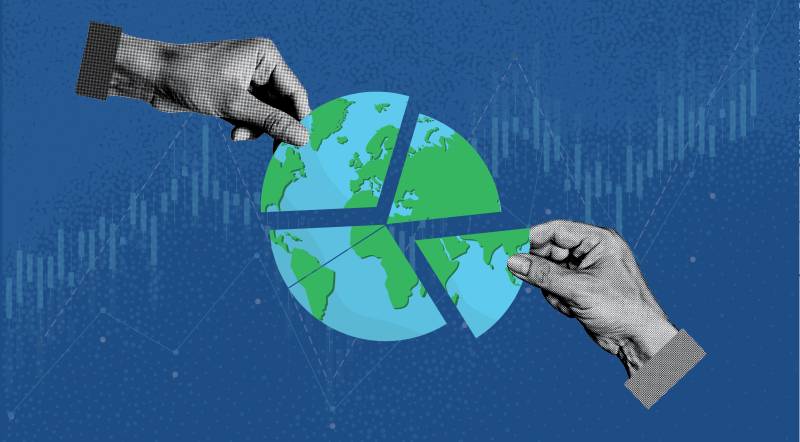

A narrow stretch of water tightens, and oil prices tremble across continents. A virus emerges, and factory lines fall silent oceans away. A mobile application opens, and a small producer begins selling directly into markets once considered unreachable. These are not isolated episodes. They are signals of a deeper shift in how the world trades.
For decades, international trade rested on a quiet confidence. Goods moved along predictable routes, supply chains stretched across borders with remarkable precision, and disruptions were treated as temporary interruptions rather than structural realities. Efficiency was the guiding principle, and it delivered growth, scale, and integration. That confidence has thinned.
The COVID-19 pandemic did not break global trade. It revealed how tightly stretched it had become. Systems designed for speed and cost proved brittle under stress. A single disruption cascaded across continents. Ports stalled, containers disappeared into backlogs, and the illusion of seamless globalisation gave way to a more fragile truth. Efficiency had quietly replaced resilience.
Today, that fragility is being tested again, this time through the Strait of Hormuz, through which roughly a fifth of the world's oil passes. The consequences are no longer speculative. Global supply chains are expected to take months to recover, prolonging output losses and price pressures. Growth, once projected at 3.4 per cent, is now expected to slow to 3.1 per cent. Inflation, which had begun to ease, is rising again, from 3.8 to 4.4 per cent. (UN Global Economic Outlook, 2024)
These are not just numbers. They are signals of strain within a system already operating at its limits.
The warning from António Guterres is stark. The longer critical trade routes remain disrupted, the harder it becomes to reverse the damage. If disruptions persist, inflation could surge beyond 6 per cent while global growth falls towards 2 per cent, territory uncomfortably close to recession. The burden, as always, will not be shared equally. Developing countries, already carrying debt and structural vulnerabilities, face the harshest consequences: lost jobs, rising poverty, deepening food insecurity.
What is unfolding is not merely a geopolitical crisis. It is a structural stress test of modern trade.
At the same time, another transformation is reshaping the system from within. Digital platforms such as Temu and Shein are collapsing the traditional layers of commerce, enabling manufacturers to reach consumers directly, bypassing the distributors, wholesalers, and retailers that once defined international trade. The distance between production and purchase has never been shorter.
On the surface, this appears to expand opportunity. Consumers benefit from lower prices. Smaller producers find entry points into global markets that were previously closed to them.
But the shift is more complex than it appears. The value once distributed across multiple intermediaries has not disappeared. It has been reorganised, and concentrated. Platforms now control what gets seen, what gets priced, and what gets bought. Their algorithms function less like neutral infrastructure and more like gatekeepers, determining which products surface, which producers thrive, and which remain invisible. Access widens, but on someone else's terms. Margins compress even as reach expands.
What connects a disrupted shipping route, a global pandemic, and the rise of digital marketplaces is not coincidence. It is a reconfiguration of trade itself. The system is becoming faster, more interconnected, and more efficient. But it is also more fragile, more concentrated, and more exposed to sudden shocks.
This is the paradox that defines our moment. Trade is becoming more accessible, yet less stable. It is expanding opportunity while concentrating control. The same system that allows a small enterprise to reach global consumers can also expose it to disruptions far beyond its influence.
The deeper concern is not the disruption itself, but its persistence. The pain of conflict and instability does not end with a ceasefire. Its economic consequences linger, reshaping markets, slowing recovery, and amplifying inequality. Temporary shocks calcify into structural setbacks.
For countries like Pakistan, this raises urgent questions. Competitiveness can no longer be measured solely through cost or export volumes. It must be assessed through resilience, adaptability, and the capacity to navigate a system that is increasingly volatile by design. Infrastructure, digital integration, and institutional strength must converge if economies are to absorb what is coming.
More broadly, the vocabulary of trade itself is changing. Comparative advantage remains relevant, but it is no longer sufficient. Exposure to shocks, control over critical nodes, and the speed of response are becoming the variables that matter.
The world is not retreating from trade. It is relearning how to operate within it under strain. The flows continue, but the ground beneath them is shifting. Those who recognise this early will not simply endure the turbulence. They will shape what comes after.