
Ancient settlement with church, gold coins and tombs unearthed in Egypt
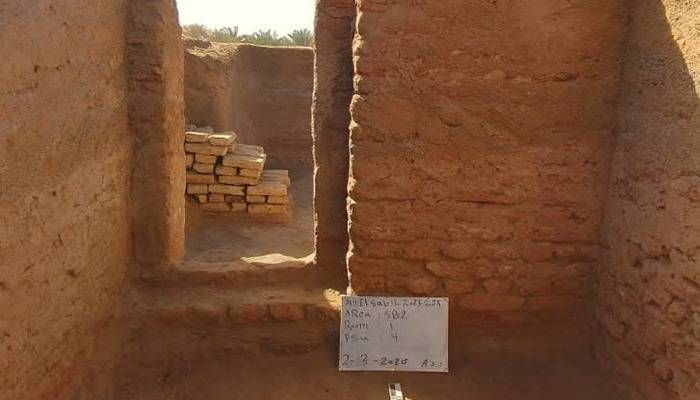

Archaeologists have uncovered a centuries-old city dating back to the Byzantine era in Egypt's western desert, revealing new insights into urban life, religion and trade during the fourth century AD, 24NewsHD TV reported on Sunday.
According to Egypt's Ministry of Tourism and Antiquities, the ancient city was discovered in an oasis in the New Valley Governorate.
The site contains residential buildings, religious structures, roads, public squares and a church located at the heart of the settlement.
Experts said the discovery provides valuable information about daily life, urban planning and economic activity in the region, which was under Byzantine rule during that period.
Excavations have uncovered a wide range of artefacts, including bronze and gold coins, pottery, household tools, ovens, kitchens and grinding implements.
Several homes featured reception halls and arched roofs, while a large fortified structure surrounded by thick defensive walls has also been identified.
Archaeologists also found the remains of two watchtowers, believed to have been built to protect the settlement.
The bronze coins bear the images of Byzantine emperors along with Latin inscriptions and Christian symbols.
Gold coins recovered from the site date to the reign of Roman Emperor Constantius II, who ruled from 337 to 361 AD.
In a separate discovery, archaeologists also unearthed 18 historic tombs about 62 miles west of Alexandria. Eleven of the tombs were carved into rock, while the remaining seven were constructed from limestone.
The burial sites yielded a variety of artefacts, including clay jars, lamps, plates and limestone vessels, offering further insight into the burial customs and daily life of ancient Egypt during the Byzantine period.